

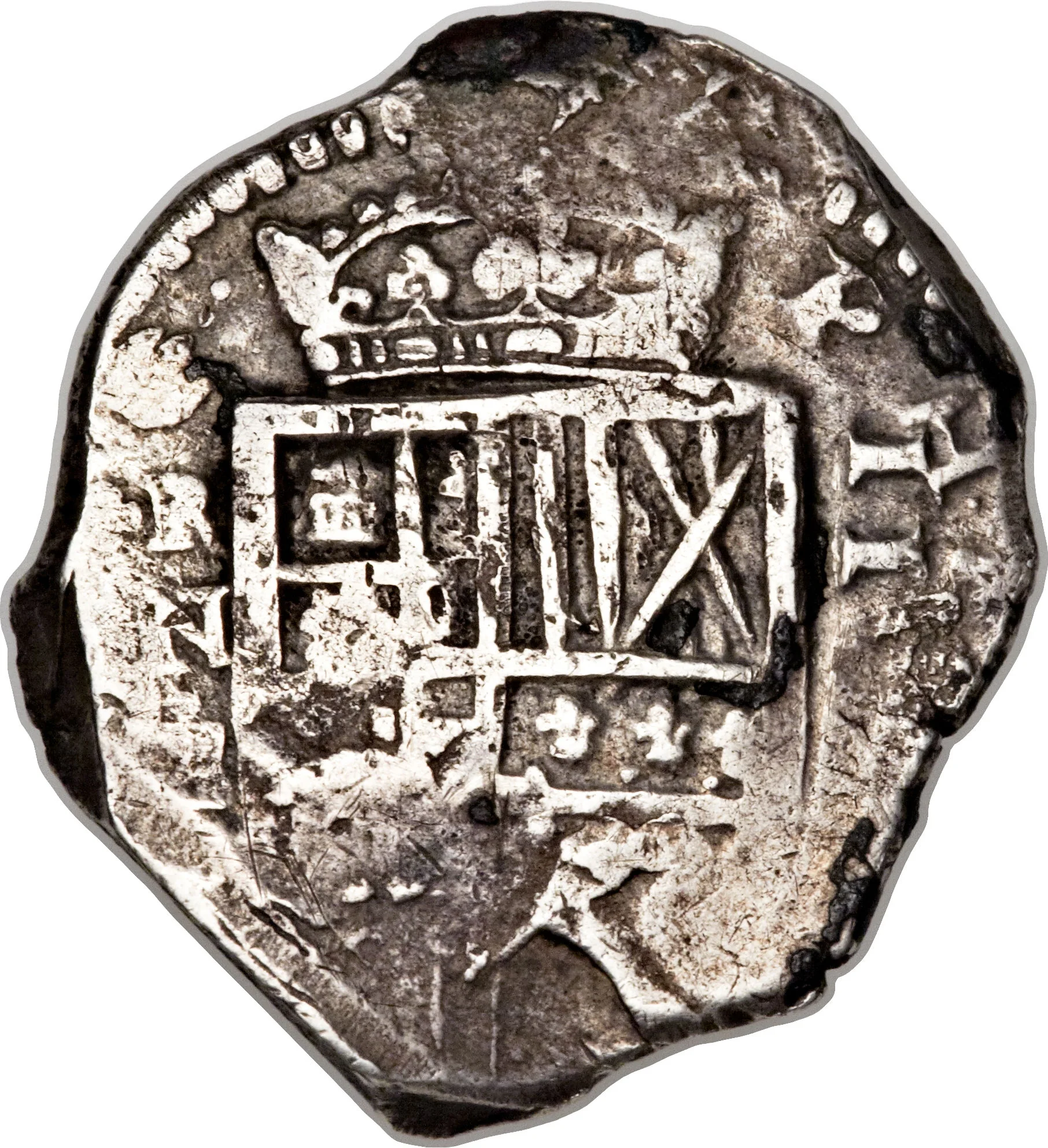
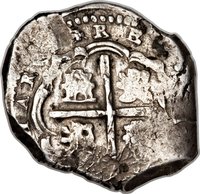
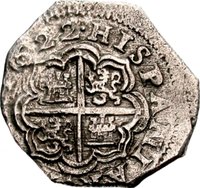
Obverse
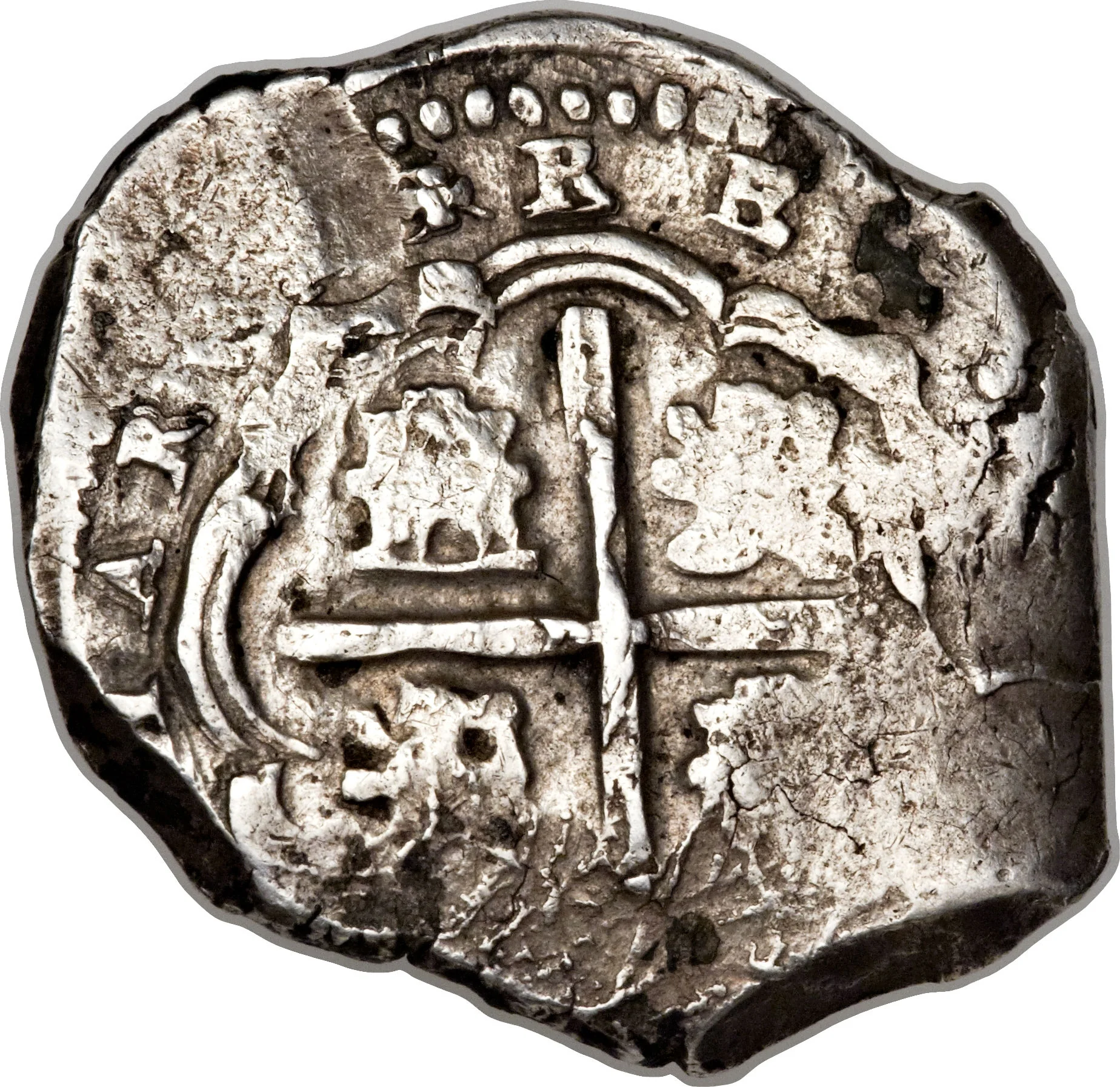
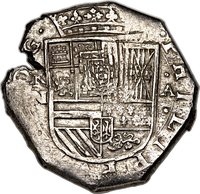
Reverse
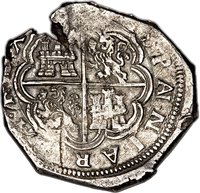
Edge
Categories
| Animal> Feline |
| Building> Castle or fortification |
| Symbol> Crown |
| Symbols> Coat of Arms |
Mintings
| Year | Mint Mark | Mintage | Quality | Collection |
|---|---|---|---|---|
| 1622 | A | — | ||
| 1627 | T | — | ||
| 1628 | P | — | ||
| 1631 | P | — | ||
| 1643 | R | — | ||
| 1644 | R | — | ||
| 1651 | R | — | ||
| 1652 | R | — |
Historical background
In 1622, the currency situation in the Kingdom of New Granada (modern-day Colombia) was characterized by severe scarcity and administrative chaos. The Spanish Crown, facing fiscal crises from its European wars, had consistently prioritized the extraction of silver and gold from its American colonies, particularly from the rich mines of Peru and New Spain (Mexico). While New Granada produced significant gold, especially from the Antioquia region, much of this wealth was immediately shipped to Spain as bullion or used to finance other colonial territories, leaving the local economy chronically short of official coinage.
This scarcity led to a proliferation of unofficial and debased currencies in daily transactions. The most common medium of exchange was macuquina or "cob" coinage—crudely cut and hammered pieces of silver and gold, often irregular in shape and weight, which were easily clipped or adulterated. Furthermore, due to the lack of small change, commodities like cacao beans were still used as a form of currency in some local markets. The official response was ineffective; the Bogotá mint, authorized in 1620, had only begun limited operations and struggled to produce enough coinage to meet demand, failing to stabilize the monetary environment.
Underlying this practical disorder was a rigid mercantilist policy from Madrid that treated the colony as a source of precious metals rather than a functioning economy. Laws tightly controlled trade and the flow of currency, creating a thriving black market and widespread contraband, especially through unguarded Caribbean ports. Consequently, by 1622, the currency situation was one of contradiction: a region abundant in gold wealth suffered from a dysfunctional monetary system that stifled local commerce and encouraged fraud, a direct result of imperial priorities that valued extraction over economic integration.
This scarcity led to a proliferation of unofficial and debased currencies in daily transactions. The most common medium of exchange was macuquina or "cob" coinage—crudely cut and hammered pieces of silver and gold, often irregular in shape and weight, which were easily clipped or adulterated. Furthermore, due to the lack of small change, commodities like cacao beans were still used as a form of currency in some local markets. The official response was ineffective; the Bogotá mint, authorized in 1620, had only begun limited operations and struggled to produce enough coinage to meet demand, failing to stabilize the monetary environment.
Underlying this practical disorder was a rigid mercantilist policy from Madrid that treated the colony as a source of precious metals rather than a functioning economy. Laws tightly controlled trade and the flow of currency, creating a thriving black market and widespread contraband, especially through unguarded Caribbean ports. Consequently, by 1622, the currency situation was one of contradiction: a region abundant in gold wealth suffered from a dysfunctional monetary system that stifled local commerce and encouraged fraud, a direct result of imperial priorities that valued extraction over economic integration.
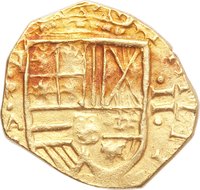
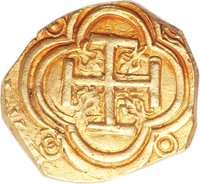
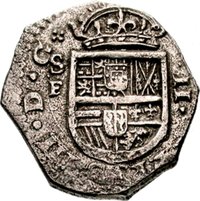
✨ Legendary