

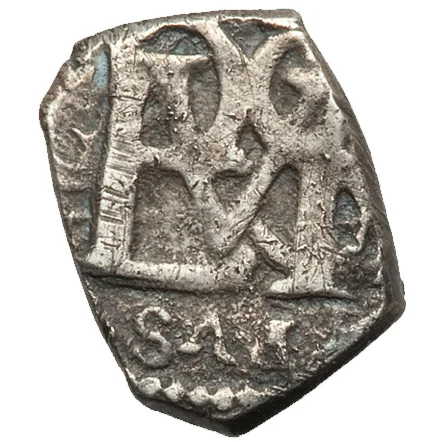
Obverse
Description:
PLVS monogram, crowned.
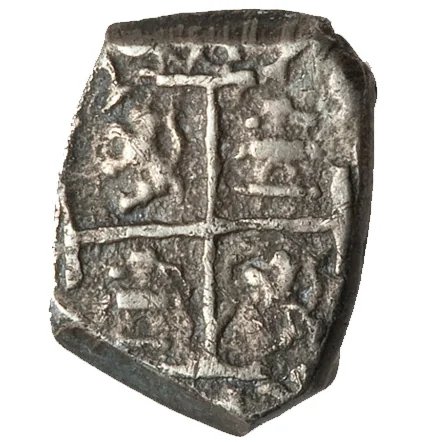
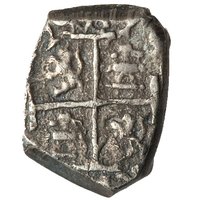
Reverse
Description:
Cross with castles and lions.
Edge
Categories
| Animal> Feline |
| Building> Castle or fortification |
Mints
| Name | Mark |
|---|---|
| Bogota Mint | — |
| Casa de Moneda de Colombia | — |
Mintings
| Year | Mint Mark | Mintage | Quality | Collection |
|---|---|---|---|---|
| — | — | — |
Historical background
In 1619, the currency situation in the Kingdom of New Granada (modern-day Colombia) was characterized by profound scarcity and administrative confusion, a direct legacy of Spanish colonial policy. The Spanish Crown, operating under a mercantilist system, strictly controlled the flow of precious metals, the lifeblood of the colony's economy. While gold was mined extensively in regions like Antioquia and the Chocó, the majority was required to be shipped to Spain as bullion or coin, leaving the local economy chronically starved of official circulating currency. This created a fundamental contradiction: a colony rich in mineral wealth struggled with a day-to-day lack of legal tender.
The primary unit of account was the silver real and the gold escudo, but their physical presence was limited. To facilitate local trade, people relied heavily on cobs (macuquinas)—crude, hand-hammered coins minted in nearby mints like Santa Fe de Bogotá and Cartagena. These irregular coins were often clipped or debased, leading to disputes over their true value. Furthermore, due to the severe shortage, a wide variety of substitute currencies circulated unofficially. These included cacao beans, used extensively by indigenous populations and adopted by Spaniards for small transactions, and even cloth (mantas) in some regions, highlighting the adaptive and fragmented nature of the economy.
This monetary chaos was compounded by the absence of a formal banking system and the Crown's inconsistent fiscal demands. Royal officials collected taxes and tributes in specie, further draining currency from local circulation. The situation in 1619 was therefore one of inherent instability, where the theoretical wealth of the colony did not translate into a functional monetary system for its inhabitants. This environment fostered informal economies, barter, and persistent friction between the colonial administration, which sought to extract wealth, and the settlers and indigenous peoples, who needed a reliable medium of exchange for daily survival.
The primary unit of account was the silver real and the gold escudo, but their physical presence was limited. To facilitate local trade, people relied heavily on cobs (macuquinas)—crude, hand-hammered coins minted in nearby mints like Santa Fe de Bogotá and Cartagena. These irregular coins were often clipped or debased, leading to disputes over their true value. Furthermore, due to the severe shortage, a wide variety of substitute currencies circulated unofficially. These included cacao beans, used extensively by indigenous populations and adopted by Spaniards for small transactions, and even cloth (mantas) in some regions, highlighting the adaptive and fragmented nature of the economy.
This monetary chaos was compounded by the absence of a formal banking system and the Crown's inconsistent fiscal demands. Royal officials collected taxes and tributes in specie, further draining currency from local circulation. The situation in 1619 was therefore one of inherent instability, where the theoretical wealth of the colony did not translate into a functional monetary system for its inhabitants. This environment fostered informal economies, barter, and persistent friction between the colonial administration, which sought to extract wealth, and the settlers and indigenous peoples, who needed a reliable medium of exchange for daily survival.
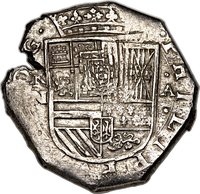
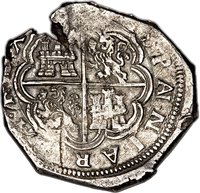
💎 Extremely Rare