

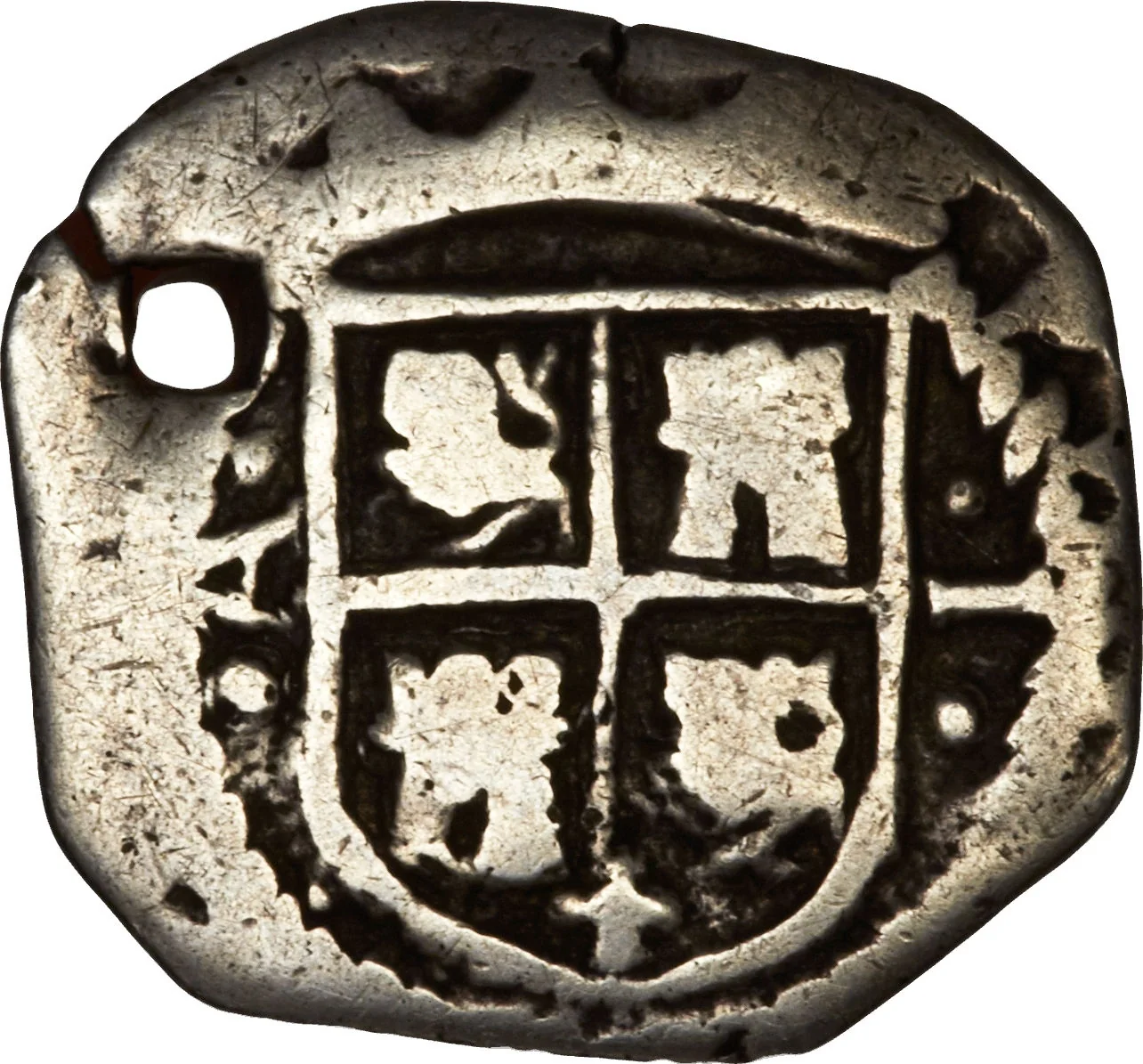
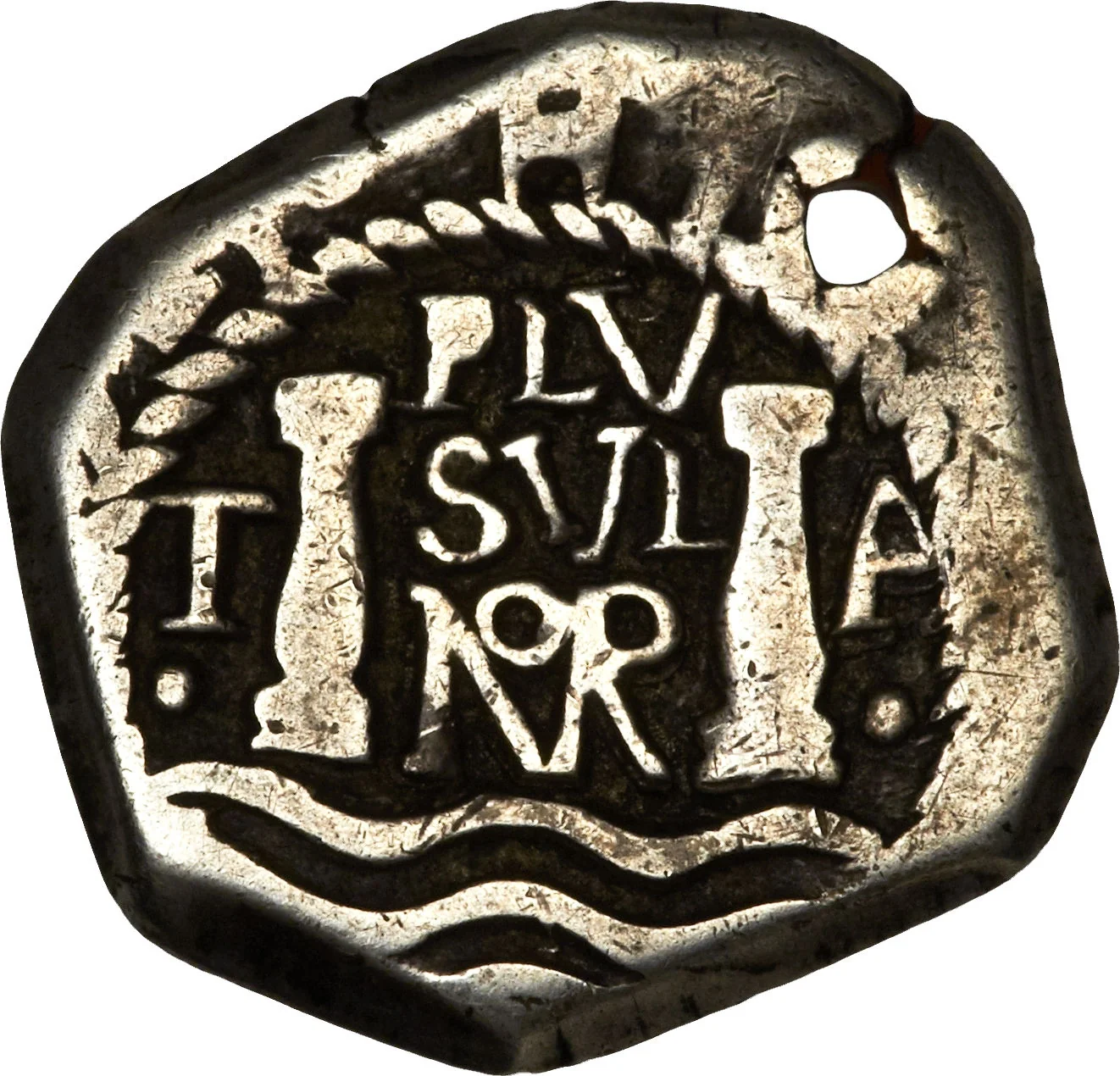
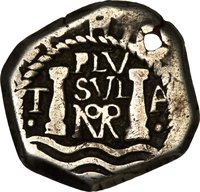
Obverse
Description:
Heraldic emblem.
Script: Latin
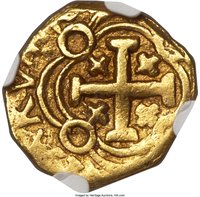
Reverse
Description:
Legend & Pillars
Script: Latin
Edge
Categories
| Animal> Feline |
| Building> Castle or fortification |
| Symbols> Coat of Arms |
Mints
| Name | Mark |
|---|---|
| Bogota Mint | (NoR) |
Mintings
| Year | Mint Mark | Mintage | Quality | Collection |
|---|---|---|---|---|
| 1721 | NoR | — | ||
| 1722 | NoR | — | ||
| — | NoR | — |
Historical background
In 1702, Colombia, then part of the Spanish Viceroyalty of New Granada, operated within a complex and strained monetary system typical of Spain's American colonies. The official currency was Spanish silver, primarily reales minted in coins like the peso de a ocho (piece of eight), which served as the backbone of transatlantic trade. However, the colony suffered from a chronic shortage of official coinage due to Spain's mercantilist policies, which demanded that precious metals be extracted and shipped to the metropolis, leaving the local economy perpetually starved of circulating medium.
This scarcity led to a widespread use of alternative and often inferior currencies. In daily transactions, people relied heavily on gold dust, gold nuggets, and crudely stamped gold tejos or cuñas, especially in the mining regions of the interior like Antioquia. Furthermore, due to the shortage of small change, goods such as cacao beans were still used as a de facto barter currency in some local markets. The situation was exacerbated by the circulation of clipped, counterfeit, and worn foreign coins, particularly from other Spanish territories, creating a chaotic and unreliable monetary environment for commerce.
The underlying cause of this disarray was Spain's rigid and extractive economic control, which prioritized the flow of wealth to Europe over the development of a stable colonial economy. While the Spanish Crown officially forbade local mints, the pressing needs of trade would soon force a change. In fact, just a few years after 1702, in 1720, the scarcity became so acute that it prompted the establishment of the Royal Mint (Casa de la Moneda) in Santa Fe de Bogotá, a pivotal step toward a more formalized currency system for the region.
This scarcity led to a widespread use of alternative and often inferior currencies. In daily transactions, people relied heavily on gold dust, gold nuggets, and crudely stamped gold tejos or cuñas, especially in the mining regions of the interior like Antioquia. Furthermore, due to the shortage of small change, goods such as cacao beans were still used as a de facto barter currency in some local markets. The situation was exacerbated by the circulation of clipped, counterfeit, and worn foreign coins, particularly from other Spanish territories, creating a chaotic and unreliable monetary environment for commerce.
The underlying cause of this disarray was Spain's rigid and extractive economic control, which prioritized the flow of wealth to Europe over the development of a stable colonial economy. While the Spanish Crown officially forbade local mints, the pressing needs of trade would soon force a change. In fact, just a few years after 1702, in 1720, the scarcity became so acute that it prompted the establishment of the Royal Mint (Casa de la Moneda) in Santa Fe de Bogotá, a pivotal step toward a more formalized currency system for the region.
✨ Legendary