

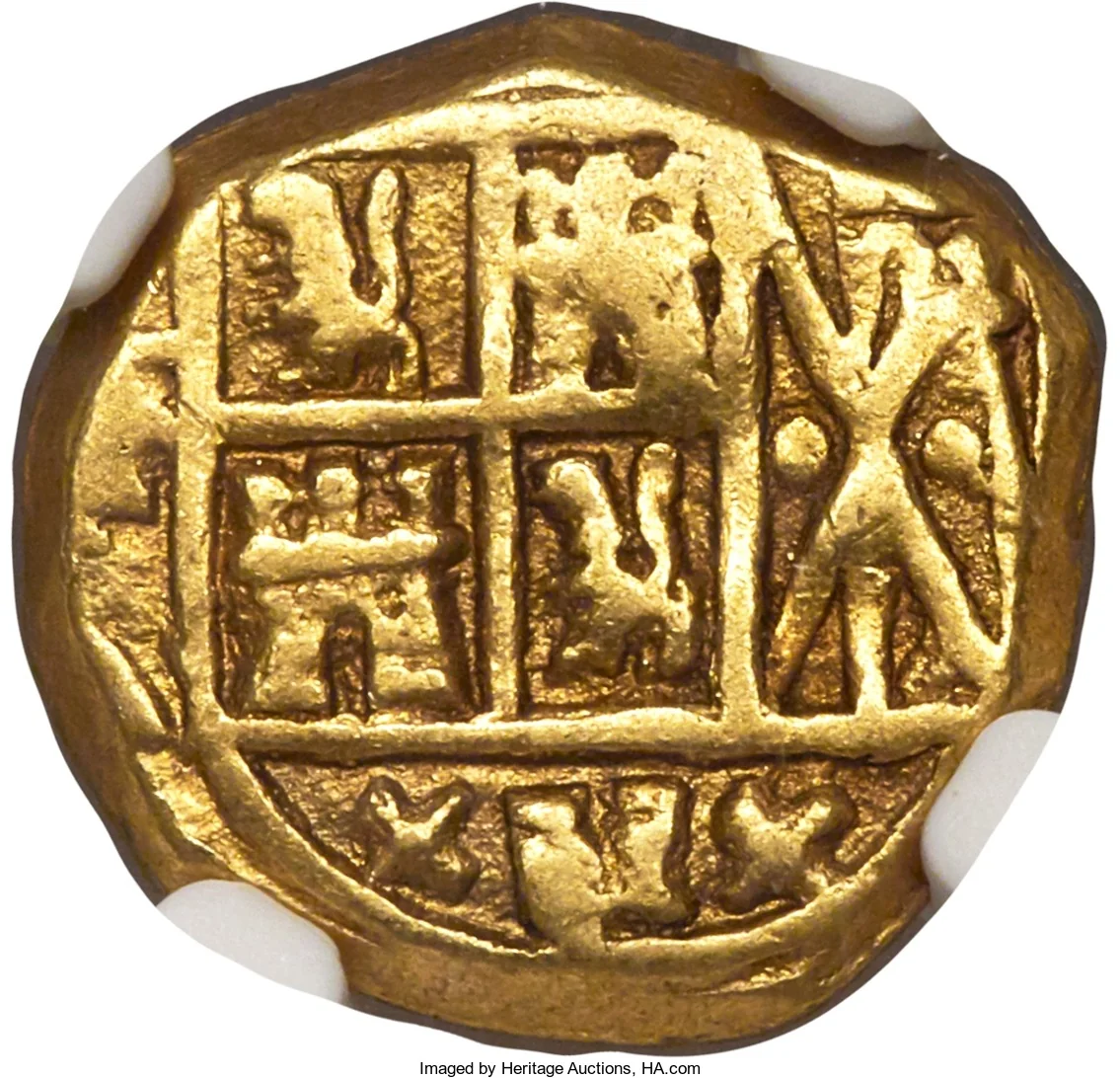
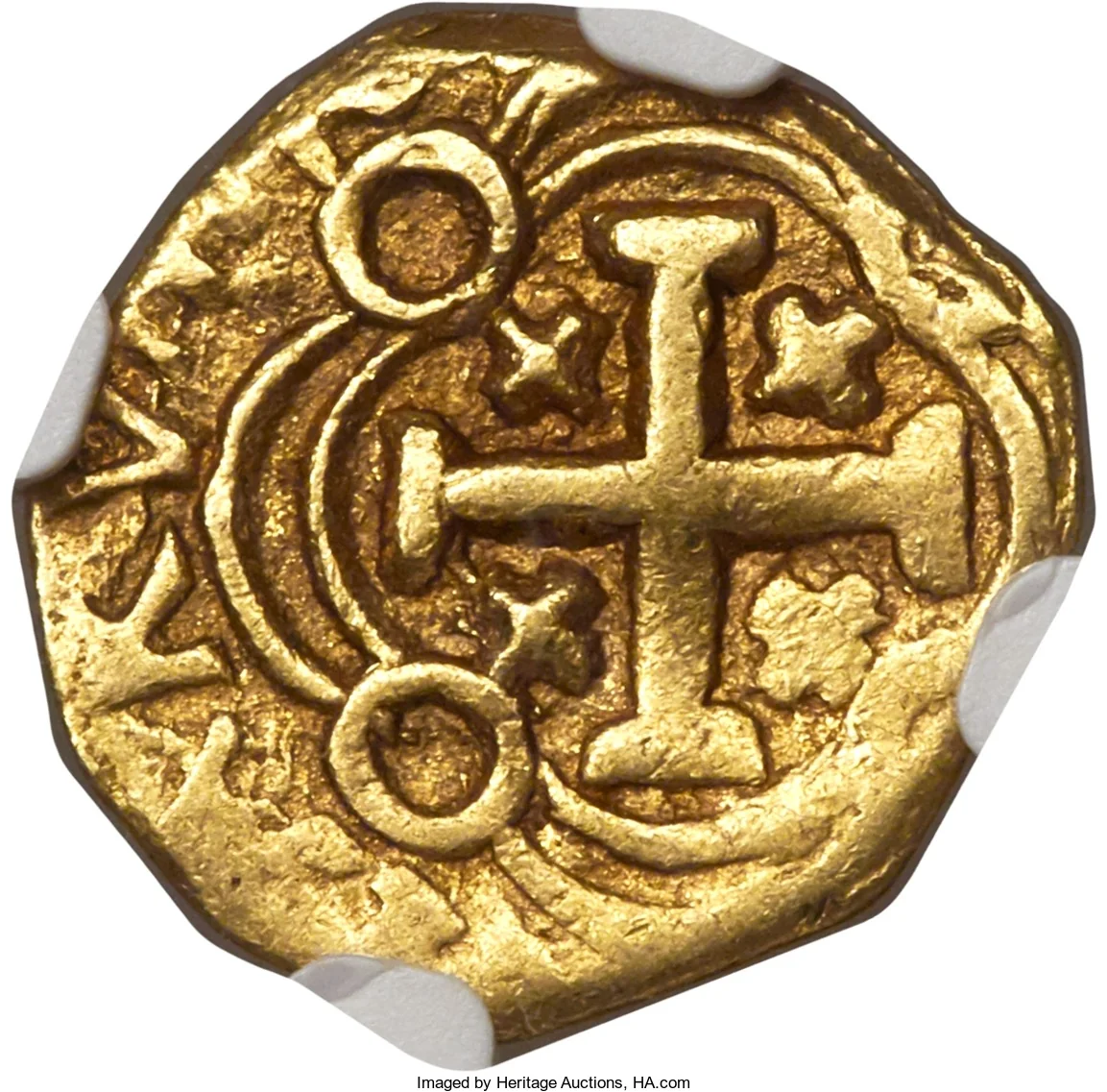
1 Escudo – Colombia
Colombia

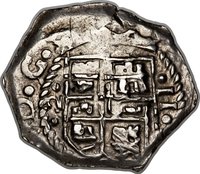
Obverse
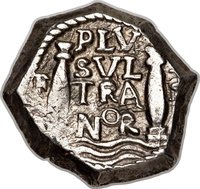
Reverse
Edge
Mintings
| Year | Mint Mark | Mintage | Quality | Collection |
|---|---|---|---|---|
| 1713 | SF | — | ||
| 1715 | SF | — | ||
| 1722 | SF | — | ||
| 1728 | SF | — | ||
| 1732 | SF | — | ||
| 1735 | SF | — | ||
| 1740 | SF | — | ||
| 1744 | SF | — |
Historical background
In 1713, the currency situation in the Kingdom of New Granada (modern-day Colombia) was characterized by severe scarcity, rampant counterfeiting, and administrative chaos. The primary unit of account was the silver peso, but a chronic shortage of official minted coinage from the Bogotá mint crippled daily commerce. This vacuum was filled by a confusing array of alternative mediums, including crude, privately struck macuquinas (cobs), gold dust measured by weight, and most problematically, a flood of debased and counterfeit coins, particularly low-quality silver reales smuggled in from neighboring mints in Peru and Quito. The economy effectively operated on a dual system: a notional "good money" of full-weight coins used for large transactions and taxes, and a degraded circulating medium used for everyday trade.
The root of this crisis lay in Spain's restrictive mercantilist policies and the colony's own structural issues. The Spanish Crown, seeking to control wealth, mandated that all precious metals be sent to official mints and taxed, but the remote and rugged geography made enforcement nearly impossible. Furthermore, much of the legally mined gold was immediately exported to Spain or used to pay for imported goods, draining the local money supply. The Bogotá mint, established in 1622, operated intermittently and could not meet demand, while provincial authorities had little power to regulate the inflow of foreign coin or stem the activities of counterfeiters.
This monetary instability had profound consequences, creating widespread distrust in the market and complicating all fiscal transactions. It fueled inflation for basic goods, hindered tax collection for the colonial state, and fostered economic inefficiency. The year 1713 did not mark a resolution but rather a point of deep entrenchment within this chaotic period. Significant reform would only begin decades later with the Bourbon monetary reforms, which introduced milled, pillar-style coins in the 1750s to combat fraud, though the challenges of currency integration and supply would persist throughout the colonial era.
The root of this crisis lay in Spain's restrictive mercantilist policies and the colony's own structural issues. The Spanish Crown, seeking to control wealth, mandated that all precious metals be sent to official mints and taxed, but the remote and rugged geography made enforcement nearly impossible. Furthermore, much of the legally mined gold was immediately exported to Spain or used to pay for imported goods, draining the local money supply. The Bogotá mint, established in 1622, operated intermittently and could not meet demand, while provincial authorities had little power to regulate the inflow of foreign coin or stem the activities of counterfeiters.
This monetary instability had profound consequences, creating widespread distrust in the market and complicating all fiscal transactions. It fueled inflation for basic goods, hindered tax collection for the colonial state, and fostered economic inefficiency. The year 1713 did not mark a resolution but rather a point of deep entrenchment within this chaotic period. Significant reform would only begin decades later with the Bourbon monetary reforms, which introduced milled, pillar-style coins in the 1750s to combat fraud, though the challenges of currency integration and supply would persist throughout the colonial era.
✨ Legendary