

Obverse
Description:
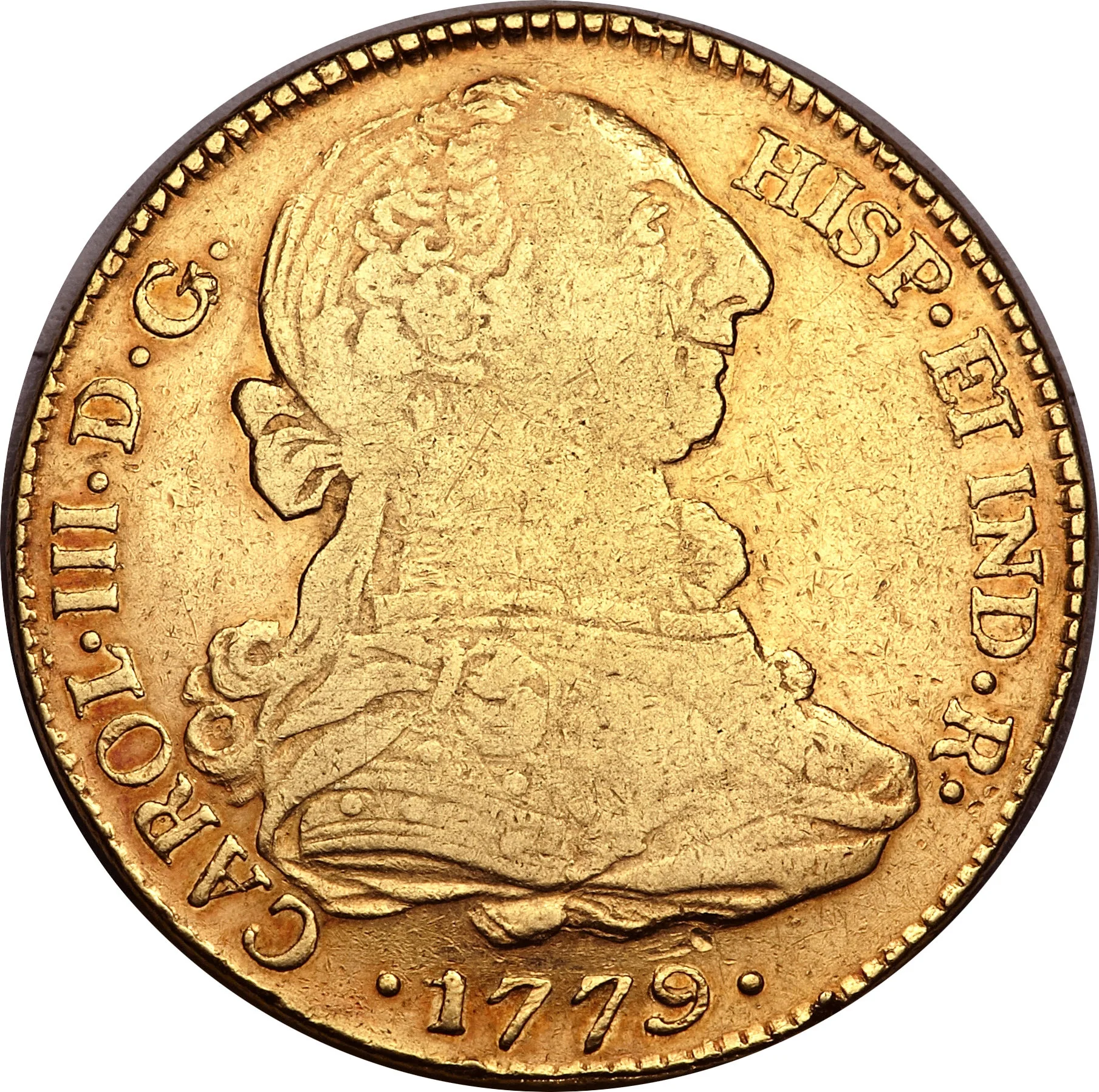
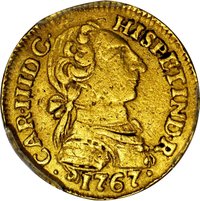
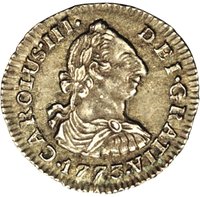
Carlos III bust with legend. Date beneath.
Inscription:
CAROL·III· D·G·
HISP· ET IND·R·
·1780·
HISP· ET IND·R·
·1780·
Script: Latin
Reverse
Description:
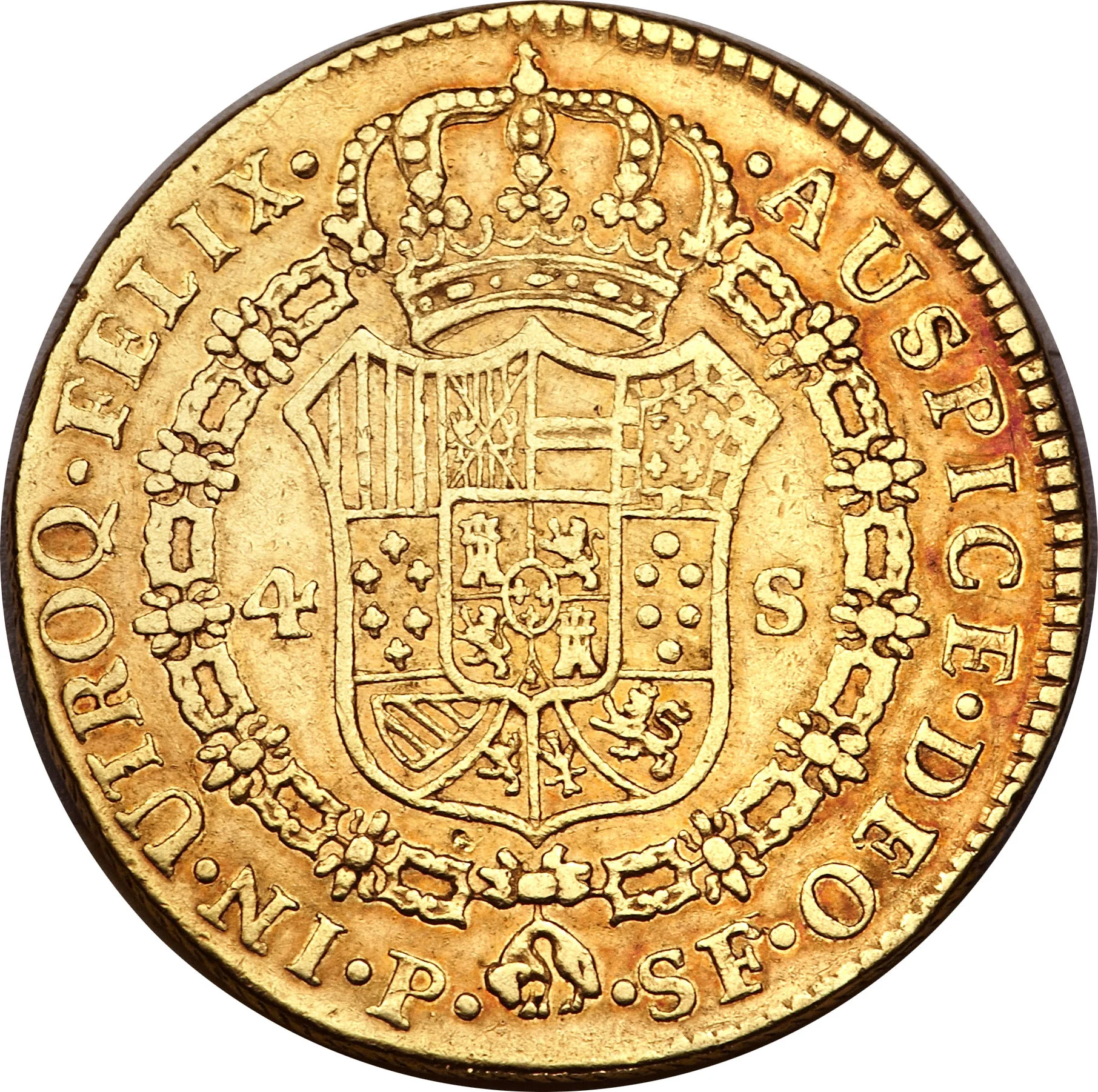
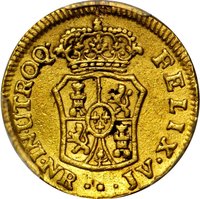
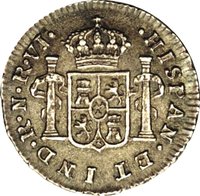
Coat of arms encircled by chain and inscription.
Inscription:
·IN·UTROQ·FELIX· ·AUSPICE·DEO·
4 S
P· ·SF
4 S
P· ·SF
Script: Latin
Edge
Mints
| Name | Mark |
|---|---|
| Bogota Mint | NR |
| Casa de Moneda de Colombia | P |
Mintings
Historical background
In 1769, the currency situation in the Kingdom of New Granada (modern-day Colombia) was characterized by profound scarcity and administrative confusion, a legacy of Spain's restrictive mercantilist policies. The Spanish Crown tightly controlled the supply of specie, primarily silver reales and gold escudos, minted at the royal mints in Bogotá, Popayán, and later Santa Fe. However, the legal coinage was chronically insufficient for local commerce, as much of the precious metal produced by the colony's mines was required to be shipped to Spain. This created a constant drain of official currency, stifling economic activity and forcing regions to rely on inconsistent barter systems and a patchwork of unofficial, often crudely cut, macuquinas (cob coins).
The problem was exacerbated by the circulation of a multitude of foreign coins, particularly from other Spanish colonies like Peru and Mexico, which entered through trade (both legal and contraband) along the Caribbean coast. These coins varied widely in weight and fineness, leading to complex and disputed exchange rates. To bring order, colonial authorities periodically issued tasas (official valuation tables), but these were often ineffective or ignored in practice. The monetary chaos hindered tax collection, complicated large transactions, and created opportunities for fraud, as merchants and officials debated the true value of each coin.
Recognizing the systemic issues, the Spanish Bourbon reforms were beginning to address the problem. In 1753, a new mint had been established in Popayán to better process local gold, and there was a growing push toward minting more uniform, machine-struck columnario coins. However, in 1769, these reforms were still in a transitional phase. The currency landscape remained one of severe shortage, heterogeneity, and frustration, reflecting the broader tensions between a centralized imperial system and the practical needs of a vibrant, yet constrained, colonial economy.
The problem was exacerbated by the circulation of a multitude of foreign coins, particularly from other Spanish colonies like Peru and Mexico, which entered through trade (both legal and contraband) along the Caribbean coast. These coins varied widely in weight and fineness, leading to complex and disputed exchange rates. To bring order, colonial authorities periodically issued tasas (official valuation tables), but these were often ineffective or ignored in practice. The monetary chaos hindered tax collection, complicated large transactions, and created opportunities for fraud, as merchants and officials debated the true value of each coin.
Recognizing the systemic issues, the Spanish Bourbon reforms were beginning to address the problem. In 1753, a new mint had been established in Popayán to better process local gold, and there was a growing push toward minting more uniform, machine-struck columnario coins. However, in 1769, these reforms were still in a transitional phase. The currency landscape remained one of severe shortage, heterogeneity, and frustration, reflecting the broader tensions between a centralized imperial system and the practical needs of a vibrant, yet constrained, colonial economy.
✨ Legendary