

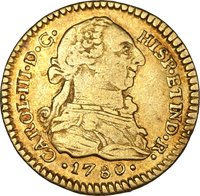
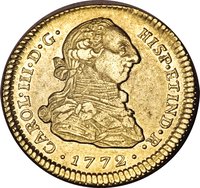
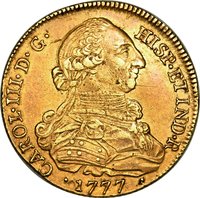
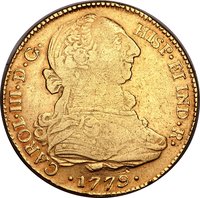
Obverse
Description:
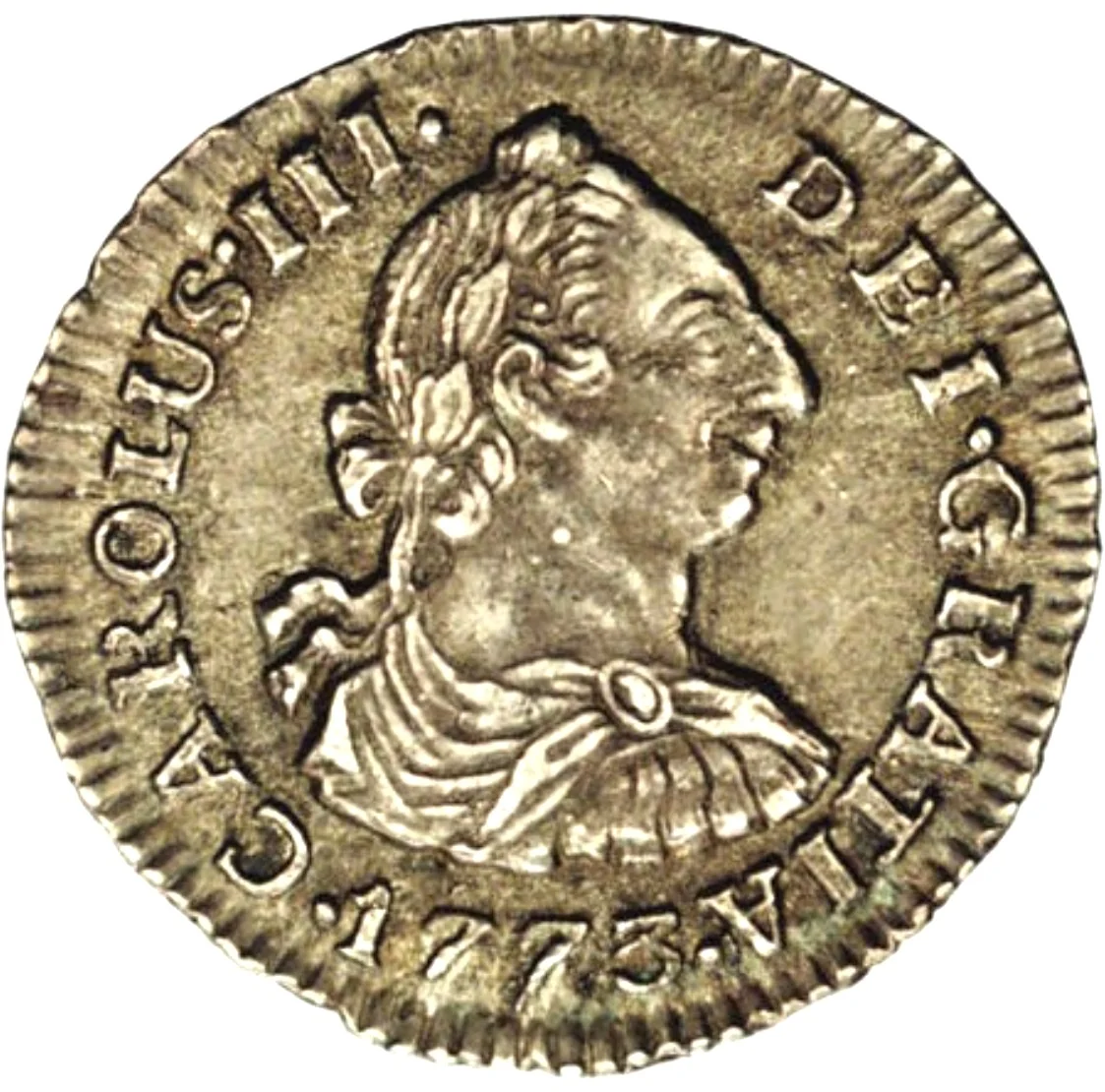
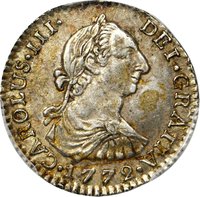
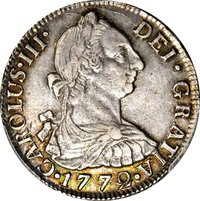
Right-facing bust, monarch left, year below.
Inscription:
·CAROLUS·III· DEI·GRATIA·
1773
1773
Script: Latin
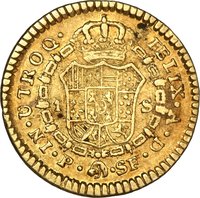
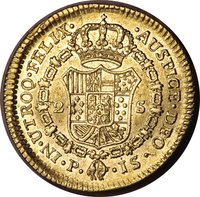
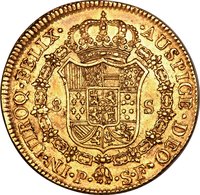
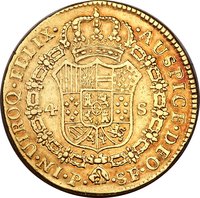
Reverse
Description:
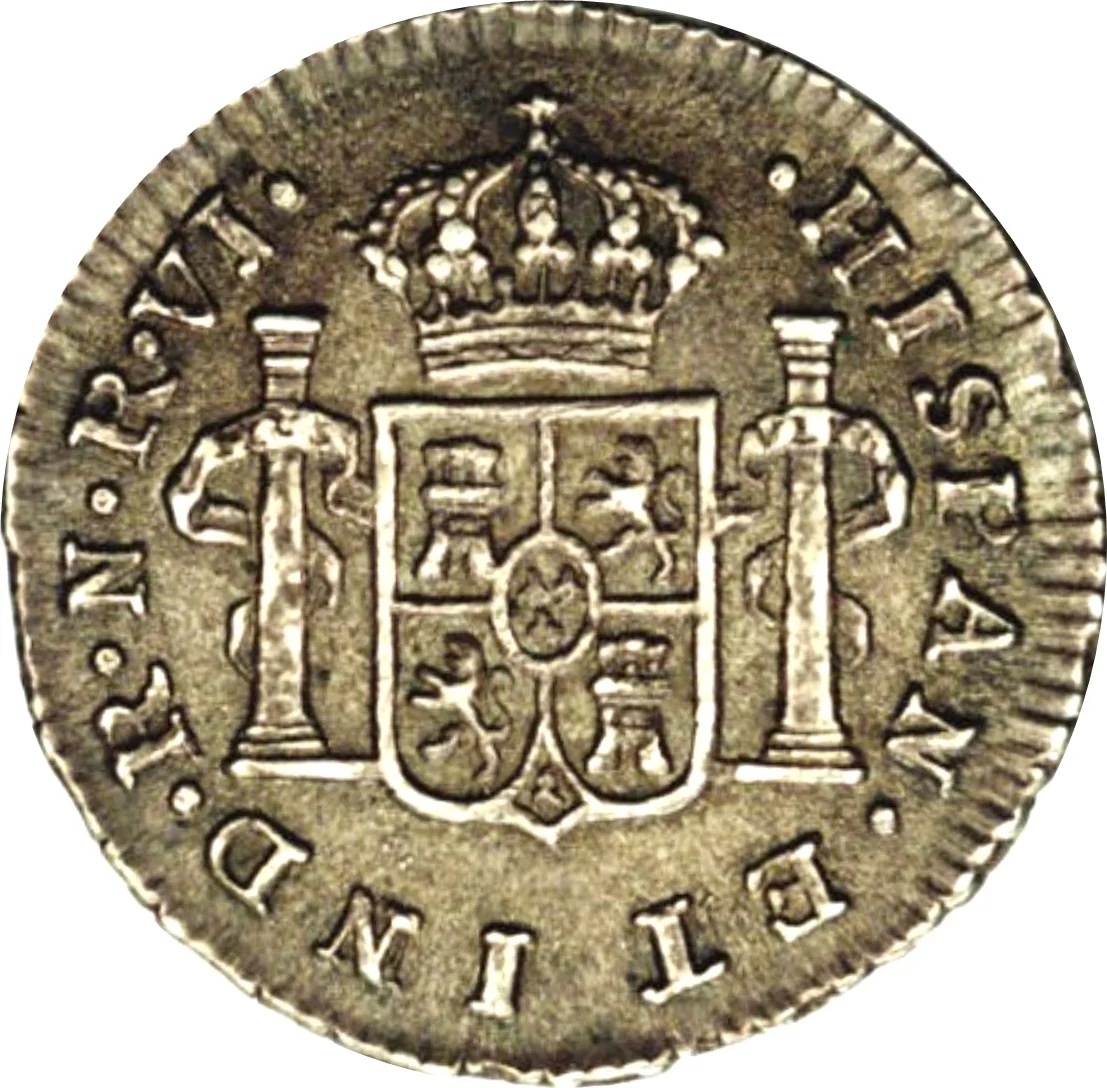
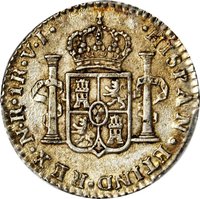
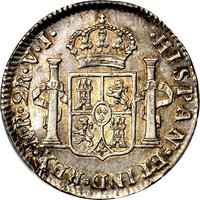
Spanish coat of arms between crowned pillars, encircled by inscription.
Inscription:
HISPAN·ET IND·R·N·R·VJ·
Script: Latin
Edge
Categories
| Symbols> Coat of Arms |
| Animal> Feline |
| Building> Castle or fortification |
| Person> Monarch |
| Symbol> Crown |
Mints
| Name | Mark |
|---|---|
| Bogota Mint | NR |
| Casa de Moneda de Colombia | P |
Mintings
Historical background
In 1772, the currency situation in the Kingdom of New Granada (modern-day Colombia) was characterized by profound scarcity and administrative frustration. The colony operated under a bimetallic system based on the Spanish peso, but a chronic shortage of official minted coinage crippled daily commerce. This scarcity was a long-standing issue, stemming from the Crown's mercantilist policies that drained silver and gold to Spain, combined with the immense costs of maintaining imperial administration and defense. As a result, much of the local economy relied on a confusing patchwork of substitute currencies, including macuquinas (crudely cut and hammered coins), foreign coins (like Peruvian or Mexican pesos), and even cacao beans in some remote areas, all circulating at fluctuating and unofficial values.
The primary response to this crisis was the Royal Mint (Casa de la Moneda) in Santa Fe de Bogotá, which had been operating since 1627. However, by 1772, its output was insufficient and its technology outdated. The mint produced those irregular macuquina coins, which were easily clipped or counterfeited, further eroding trust in the monetary system. The Spanish Crown, under the reforming Bourbon monarchy, was aware of these problems and was in the process of implementing changes. In fact, just a few years prior, in 1759, a new mint machinery had been ordered from Spain, though its delivery and installation faced significant delays, meaning that in 1772 the colony was in a tense period of anticipation for a modernization that had yet to arrive.
Consequently, the monetary landscape of 1772 was one of transition and strain. The Bourbon reforms, aimed at centralizing control and increasing revenue, included monetary standardization as a key goal. Authorities grappled with the practical challenges of suppressing inferior and foreign coins while awaiting the means to produce a new, milled currency that would be harder to counterfeit. This situation created economic uncertainty for merchants, miners, and the general populace, stifling growth and complicating tax collection. Thus, the year stands as a point on the trajectory between a chaotic colonial currency system and the impending, though still unrealized, imposition of a more uniform and controlled royal currency.
The primary response to this crisis was the Royal Mint (Casa de la Moneda) in Santa Fe de Bogotá, which had been operating since 1627. However, by 1772, its output was insufficient and its technology outdated. The mint produced those irregular macuquina coins, which were easily clipped or counterfeited, further eroding trust in the monetary system. The Spanish Crown, under the reforming Bourbon monarchy, was aware of these problems and was in the process of implementing changes. In fact, just a few years prior, in 1759, a new mint machinery had been ordered from Spain, though its delivery and installation faced significant delays, meaning that in 1772 the colony was in a tense period of anticipation for a modernization that had yet to arrive.
Consequently, the monetary landscape of 1772 was one of transition and strain. The Bourbon reforms, aimed at centralizing control and increasing revenue, included monetary standardization as a key goal. Authorities grappled with the practical challenges of suppressing inferior and foreign coins while awaiting the means to produce a new, milled currency that would be harder to counterfeit. This situation created economic uncertainty for merchants, miners, and the general populace, stifling growth and complicating tax collection. Thus, the year stands as a point on the trajectory between a chaotic colonial currency system and the impending, though still unrealized, imposition of a more uniform and controlled royal currency.
Series: 1772 Colombia circulation coins
💎 Extremely Rare