

1 escudo – Colombia
Add to wishlist
Colombia
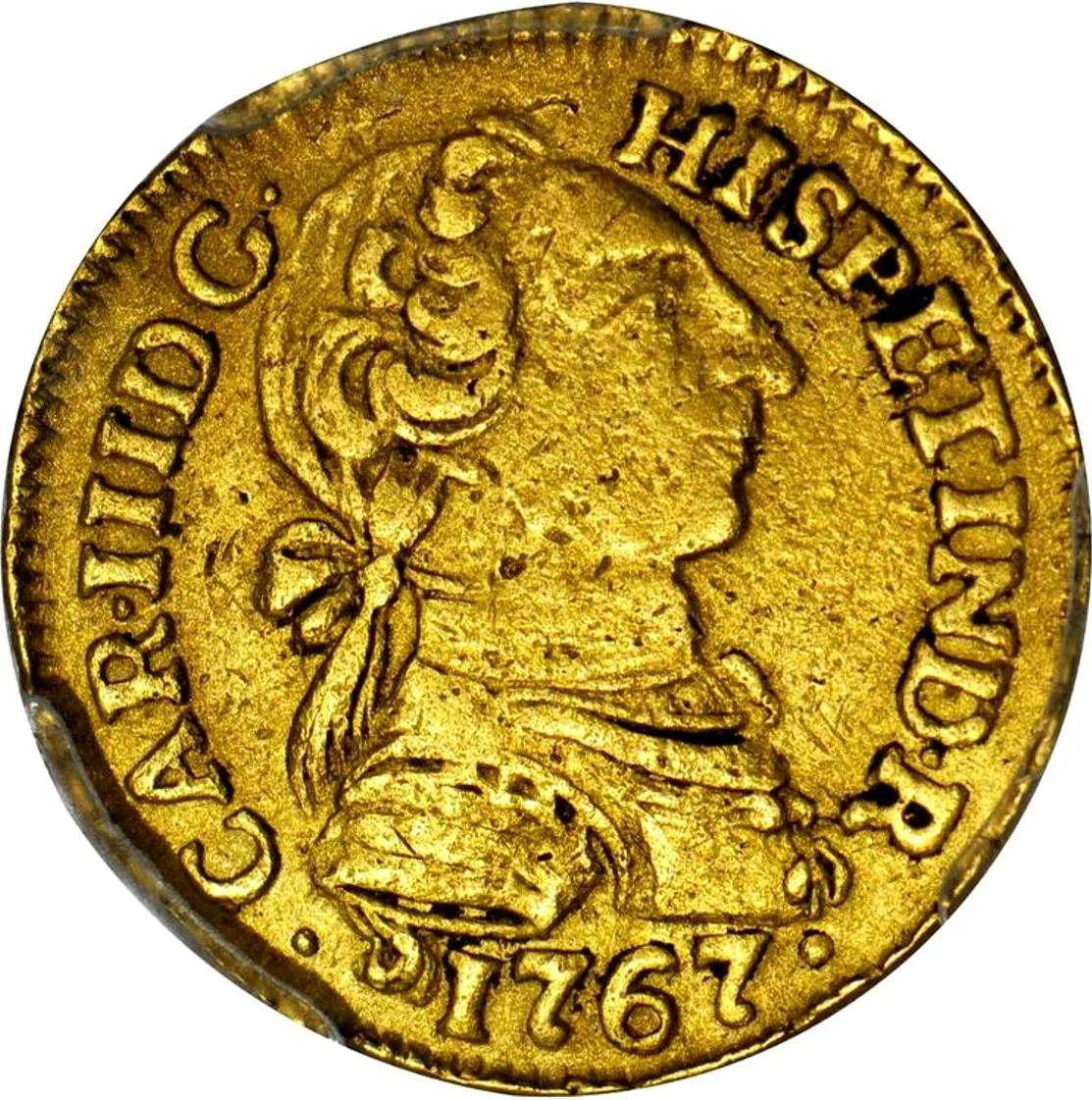
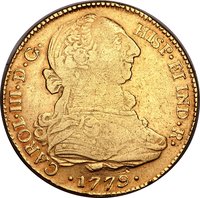
Obverse
Description:
Carlos III bust with legend. Date beneath.
Inscription:
CAR·IIIDG·HISPETIND·R
1767
1767
Script: Latin
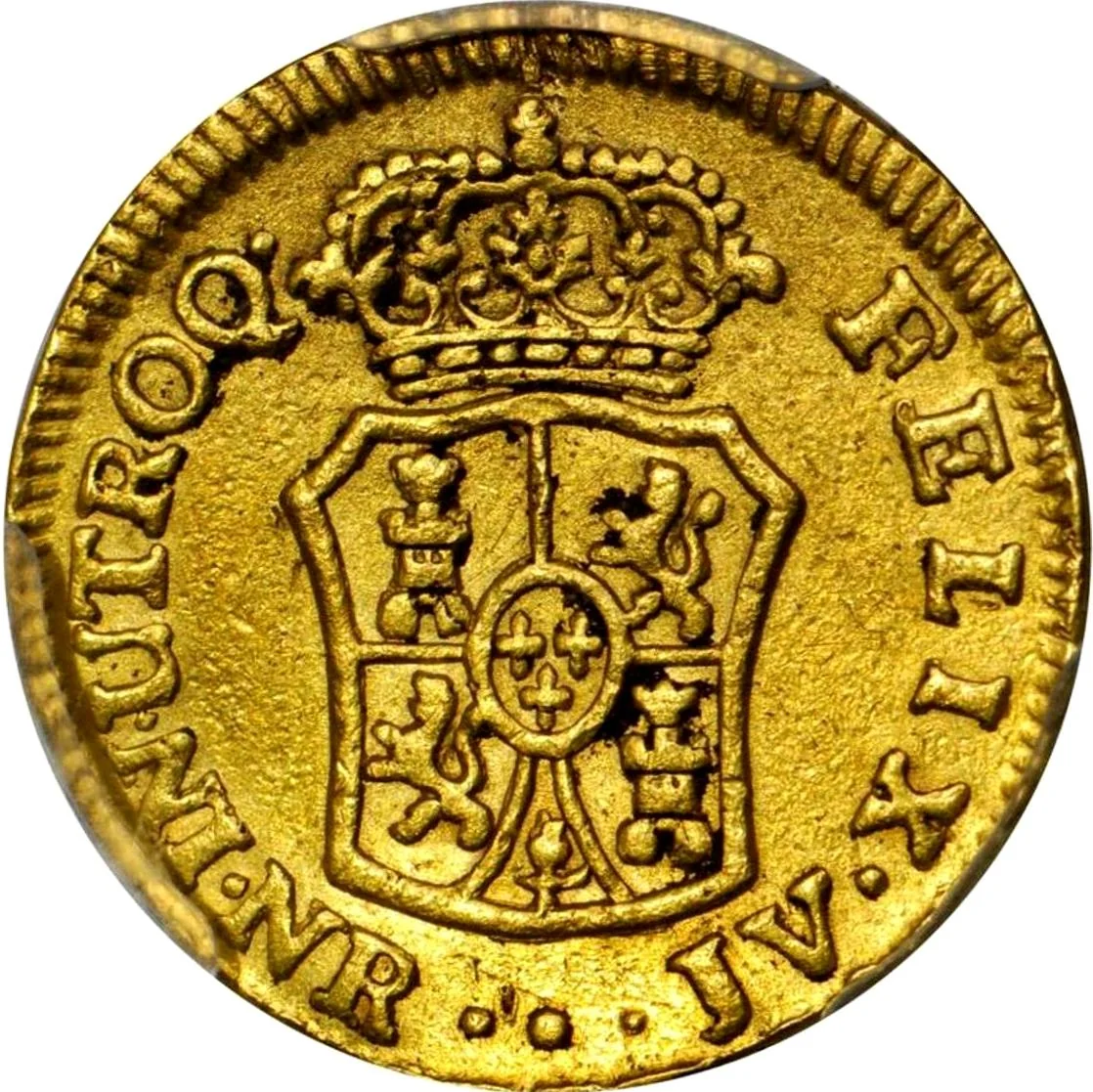
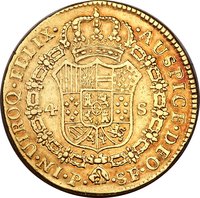
Reverse
Description:
Crowned coat of arms with surrounding legend.
Inscription:
IN·UTROQ·FELIX
NR JV
NR JV
Script: Latin
Edge
Categories
| Symbols> Coat of Arms |
Mints
| Name | Mark |
|---|---|
| Bogota Mint | NR |
Historical background
In 1763, the currency situation in the Kingdom of New Granada (modern Colombia) was characterized by profound scarcity and administrative frustration under Spanish colonial rule. The economy operated primarily on a bimetallic system of gold and silver, but the circulation of physical coin was severely limited. Most large transactions and external trade relied on gold pesos, often in the form of crude, locally minted tejos (ingots) or worn Spanish coins, while a chronic shortage of smaller denomination silver and copper currency crippled everyday commerce. This forced many regions, especially remote areas, to resort to barter or the use of low-value commodities like cacao beans as a substitute currency, hindering economic integration and tax collection.
The root of this monetary crisis lay in Spain's mercantilist policies. The Crown systematically extracted precious metals from its colonies, directing the bulk of mined gold and silver to Spain itself or to other viceroyalties, like Peru, leaving New Granada perpetually starved of official coinage. Furthermore, the primary mint in Bogotá (the Casa de Moneda), established in 1620, had its operations tightly controlled and was often inefficient, unable to meet the colony's demand for standardized currency. This scarcity was exacerbated by widespread smuggling and the hoarding of good-quality coins by merchants and the wealthy.
In response to this dysfunction, colonial authorities made repeated but largely ineffective attempts at reform. Proposals included introducing copper coinage to facilitate small transactions and stricter regulations against the export of coin. However, these measures were often poorly implemented or resisted by local elites. Thus, in 1763, the currency system remained a patchwork of insufficient official coin, crude local gold pieces, and primitive substitutes, reflecting both the colony's mineral wealth and the stifling constraints of imperial control that would continue to fuel economic discontent in the decades leading to independence.
The root of this monetary crisis lay in Spain's mercantilist policies. The Crown systematically extracted precious metals from its colonies, directing the bulk of mined gold and silver to Spain itself or to other viceroyalties, like Peru, leaving New Granada perpetually starved of official coinage. Furthermore, the primary mint in Bogotá (the Casa de Moneda), established in 1620, had its operations tightly controlled and was often inefficient, unable to meet the colony's demand for standardized currency. This scarcity was exacerbated by widespread smuggling and the hoarding of good-quality coins by merchants and the wealthy.
In response to this dysfunction, colonial authorities made repeated but largely ineffective attempts at reform. Proposals included introducing copper coinage to facilitate small transactions and stricter regulations against the export of coin. However, these measures were often poorly implemented or resisted by local elites. Thus, in 1763, the currency system remained a patchwork of insufficient official coin, crude local gold pieces, and primitive substitutes, reflecting both the colony's mineral wealth and the stifling constraints of imperial control that would continue to fuel economic discontent in the decades leading to independence.
✨ Legendary