

1 rupee – Maratha Empire
Add to wishlist
India
Context
Year: 1768
Islamic (Hijri) Year:: 1181
Country: India
Issuer: Maratha Empire
Issuing organization: Bhonsla Rajas
Ruler: Shahu I
Currency:
(1674—1818)
Demonetized: Yes
Material
References
KM: #
Numista: #61071
Value
Bullion value: $28.40
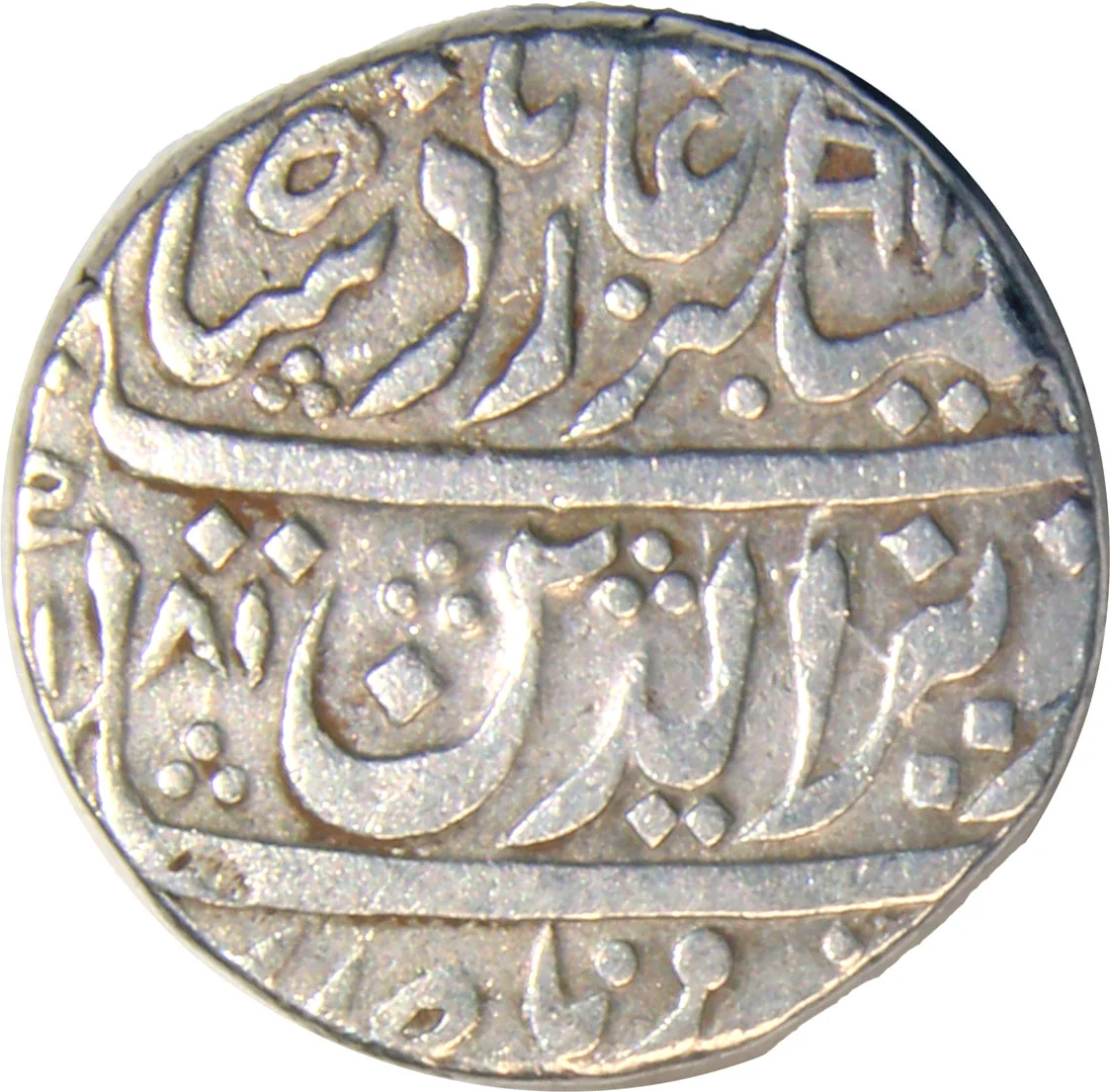
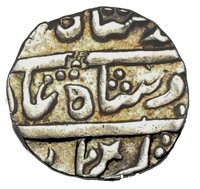
Obverse
Description:
Nagari "Ra" with Persian inscriptions and AH date.
Inscription:
र
۱۱۸۱
Alamgir II
۱۱۸۱
Alamgir II
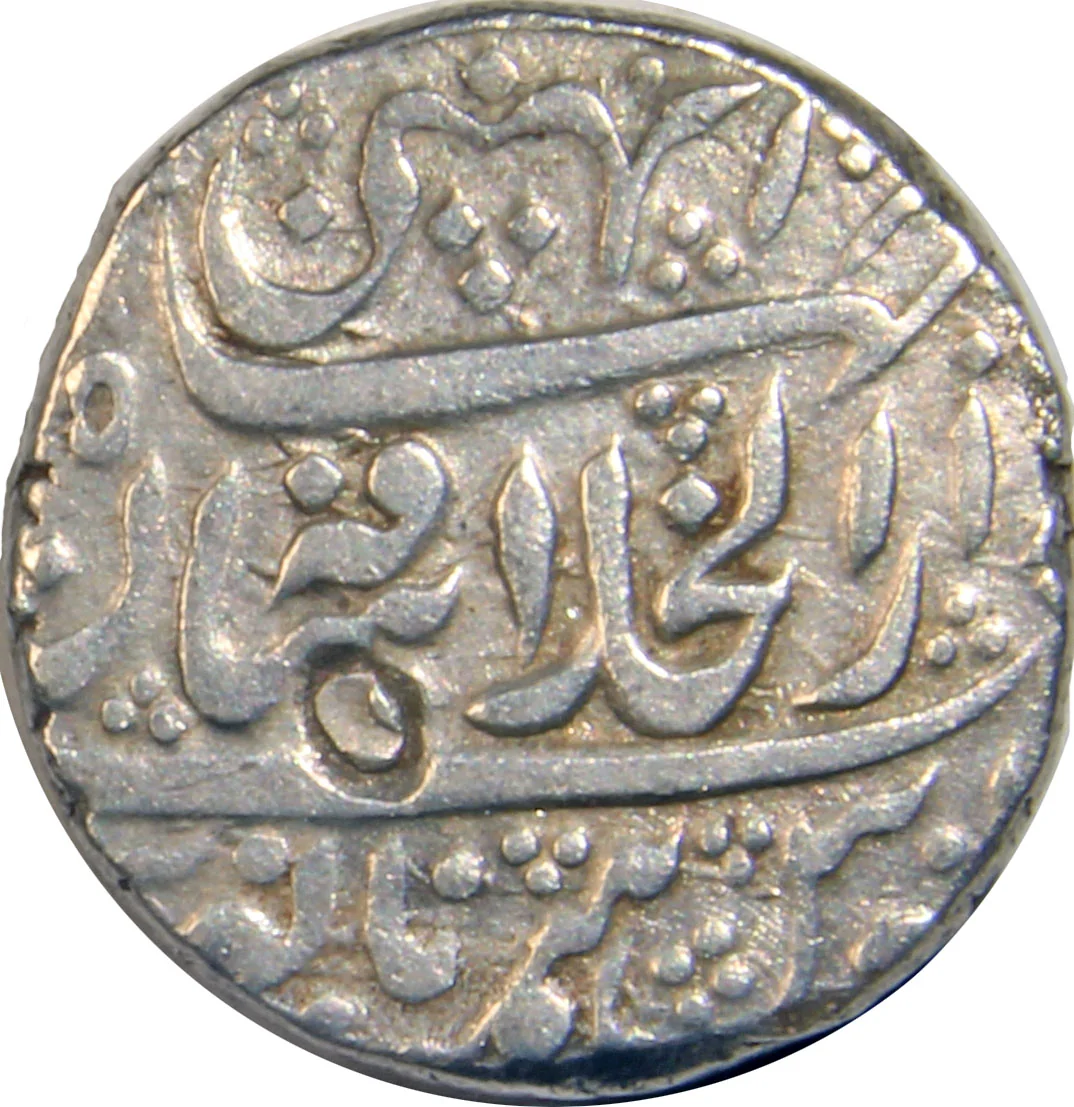
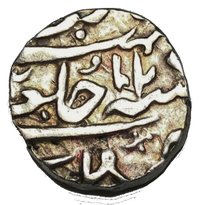
Reverse
Description:
Persian inscriptions
Edge
Plain
Mintings
| Year | Mint Mark | Mintage | Quality | Collection |
|---|---|---|---|---|
| 1768 | — | — |
Historical background
By 1768, the currency situation within the Maratha Empire was a complex tapestry reflecting its political decentralization and economic pressures. The empire, under the nominal leadership of the young Peshwa Madhavrao I, was a confederacy where powerful chiefs like the Gaekwads, Holkars, Scindias, and Bhonsles held considerable autonomy. This political structure was mirrored in the monetary system, where several major mints operated in cities like Pune, Satara, Nashik, and those controlled by the various sardars. While the Peshwa's mint in Pune held the highest prestige, issuing the silver rupee (often called the Hun or Shivrai), the other chiefs issued their own coins, leading to a variety of circulating currencies with differing weights and purities.
The primary challenge was a severe shortage of silver, the backbone of the high-value currency. This was caused by prolonged military campaigns, the heavy tribute (chauth) extracted from regions like Bengal being diverted, and a broader bullion famine affecting India. Consequently, the purity of silver rupees often declined as mints debased coins with copper to stretch supplies. This debasement eroded public trust and complicated trade. Lower-value transactions relied heavily on copper paisa and dam, but their production was irregular, leading to regional scarcities and hampering daily commerce for the common people.
Furthermore, the empire's economy had to contend with a multitude of older and foreign coins still in circulation, including Mughal rupees, Portuguese xeraphims from Goa, and coins from other Indian states. This monetary fragmentation required complex conversion rates and hindered seamless trade across the confederacy's territories. Thus, in 1768, the Maratha currency system was less a unified imperial standard and more a negotiated, often unstable, ecosystem of metal, authority, and trust, revealing the tensions between central ambition and regional power.
The primary challenge was a severe shortage of silver, the backbone of the high-value currency. This was caused by prolonged military campaigns, the heavy tribute (chauth) extracted from regions like Bengal being diverted, and a broader bullion famine affecting India. Consequently, the purity of silver rupees often declined as mints debased coins with copper to stretch supplies. This debasement eroded public trust and complicated trade. Lower-value transactions relied heavily on copper paisa and dam, but their production was irregular, leading to regional scarcities and hampering daily commerce for the common people.
Furthermore, the empire's economy had to contend with a multitude of older and foreign coins still in circulation, including Mughal rupees, Portuguese xeraphims from Goa, and coins from other Indian states. This monetary fragmentation required complex conversion rates and hindered seamless trade across the confederacy's territories. Thus, in 1768, the Maratha currency system was less a unified imperial standard and more a negotiated, often unstable, ecosystem of metal, authority, and trust, revealing the tensions between central ambition and regional power.
✨ Legendary