

Iran
Context
Material
Weight: 8.64 g
Silver weight: 8.64 g
Shape: Irregular rectangular
Composition: Silver
Magnetic: No
Technique: Hammered
Alignment: Coin alignment
flip
References
KM: #Click to copy to clipboard276.4
Numista: #61042
Value
Bullion value: $25.06
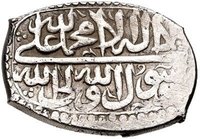
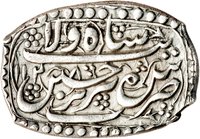
Obverse
Description:
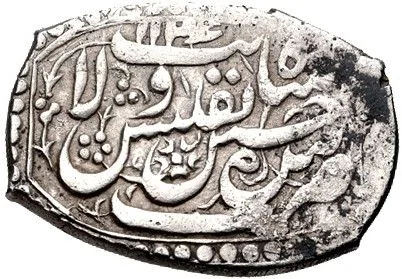
Royal inscription, mint, and date within beaded oval border.
Inscription:
بنده شاه ولایت حسین
ضرب تفلیس
۱۱۲۷
ضرب تفلیس
۱۱۲۷
Script: Persian
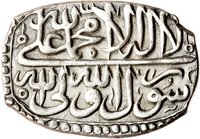
Reverse
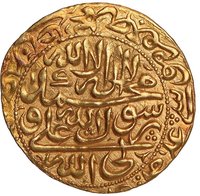
Description:
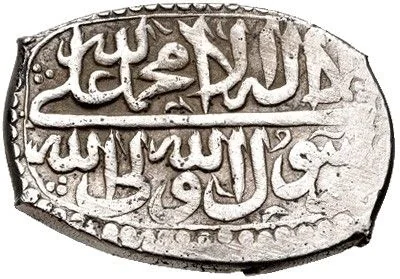
Shiite Kalima in a beaded oval frame.
Inscription:
لا اله الا الله/محمد رسول الله/علی ولی الله
Script: Persian
Edge
Plain
Mints
| Name | Mark |
|---|---|
| Tiflis | — |
Mintings
| Year | Mint Mark | Mintage | Quality | Collection |
|---|---|---|---|---|
| 1714 | — | — | ||
| 1715 | — | — |
Historical background
In 1714, the Safavid Empire under Sultan Husayn (r. 1694–1722) was in a state of pronounced economic and monetary decline, a prelude to the dynasty's collapse in 1722. The currency system, based on the silver abbasi and the copper pul, was in severe disarray due to decades of fiscal mismanagement, rampant corruption at the royal mint, and the steady depletion of the imperial treasury. This was exacerbated by the costly maintenance of a lavish court and the empire's failure to control its borders, which disrupted trade and the inflow of precious metals.
The primary issue was a severe shortage of silver, leading to widespread debasement of the coinage. Provincial governors and mint masters, often operating with little central oversight, frequently issued coins with reduced silver content to fund local expenditures or personal gain. This resulted in a loss of public confidence in the currency, causing inflation and a disconnect between the official and market value of coins. The situation created a complex and unstable multi-currency environment where older, purer coins were hoarded (following Gresham's Law), while the new, debased coins circulated at a discounted rate, harming merchants and the broader economy.
Furthermore, the empire's strategic and economic weakness was becoming apparent. European trading companies, like the English and Dutch East India Companies, were increasingly influential, and their trade practices often drained silver from Iran. Combined with raids from nomadic tribes and the growing threat from the Afghan tribes on the eastern frontier, the state's ability to reform its currency or stabilize its finances was critically limited. Thus, the monetary chaos of 1714 was both a symptom and a cause of the Safavid Empire's deepening political crisis, which would culminate in the Afghan invasion and the siege of Isfahan just eight years later.
The primary issue was a severe shortage of silver, leading to widespread debasement of the coinage. Provincial governors and mint masters, often operating with little central oversight, frequently issued coins with reduced silver content to fund local expenditures or personal gain. This resulted in a loss of public confidence in the currency, causing inflation and a disconnect between the official and market value of coins. The situation created a complex and unstable multi-currency environment where older, purer coins were hoarded (following Gresham's Law), while the new, debased coins circulated at a discounted rate, harming merchants and the broader economy.
Furthermore, the empire's strategic and economic weakness was becoming apparent. European trading companies, like the English and Dutch East India Companies, were increasingly influential, and their trade practices often drained silver from Iran. Combined with raids from nomadic tribes and the growing threat from the Afghan tribes on the eastern frontier, the state's ability to reform its currency or stabilize its finances was critically limited. Thus, the monetary chaos of 1714 was both a symptom and a cause of the Safavid Empire's deepening political crisis, which would culminate in the Afghan invasion and the siege of Isfahan just eight years later.
✨ Legendary