

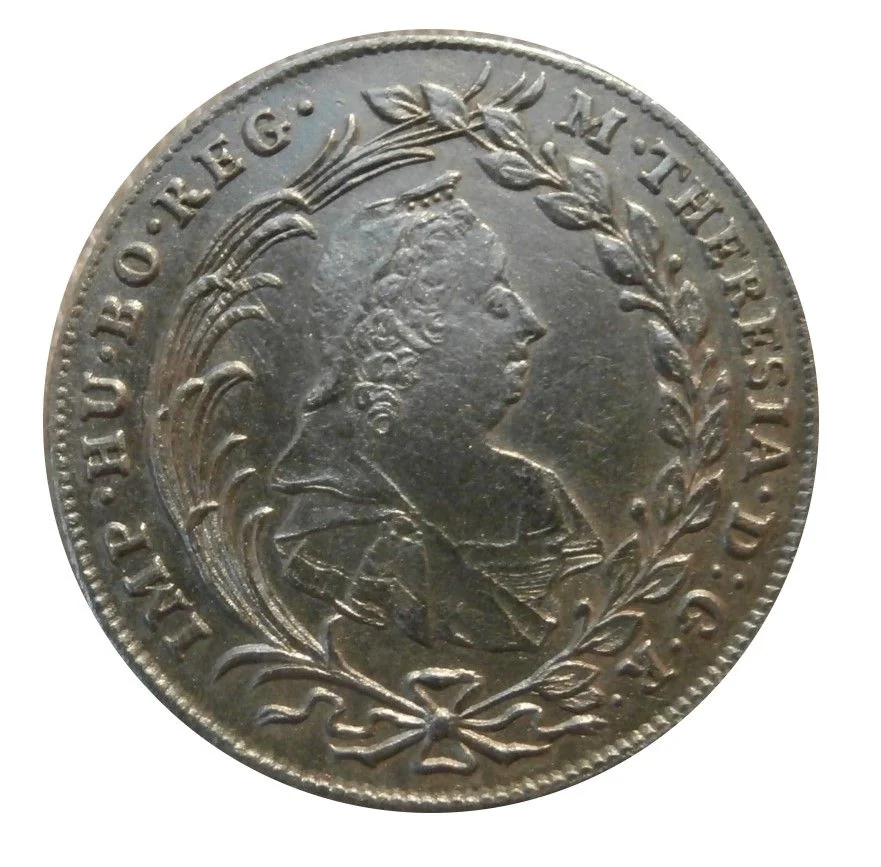
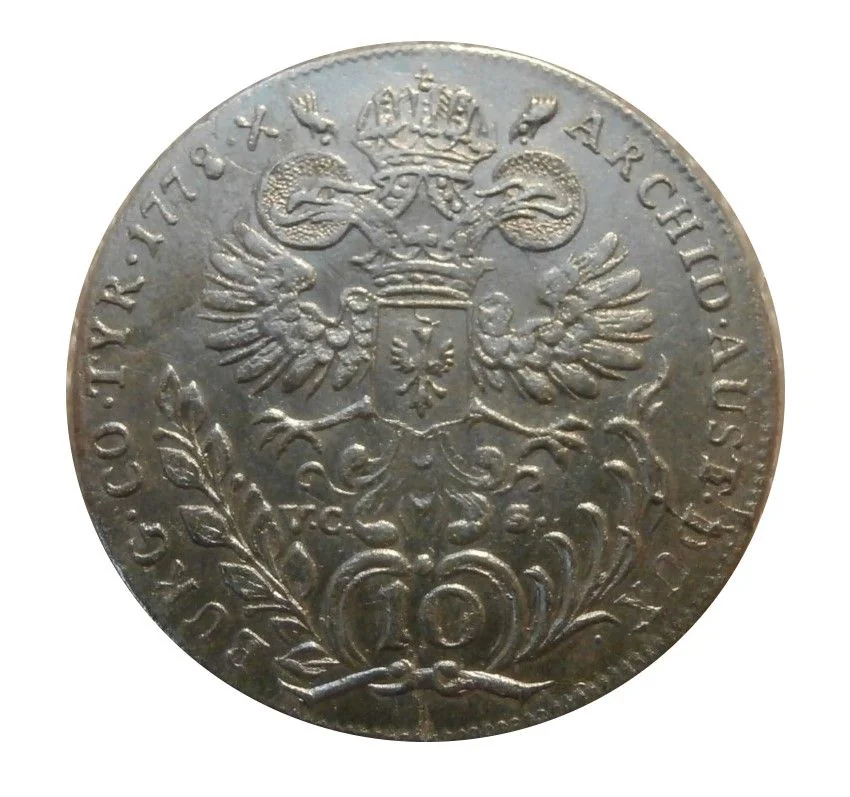
10 Kreuzers – County of Tyrol
Austria
Context
Years: 1770–1780
Country: Austria 
Issuer: County of Tyrol
Currency:
Demonetized: Yes
Total mintage: 1,324,000
Material
References
KM: #Click to copy to clipboard1862
Numista: #60430
Value
Bullion value: $4.77
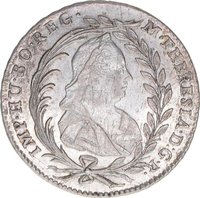
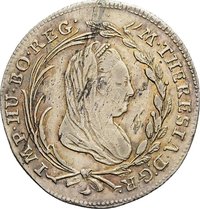
Obverse
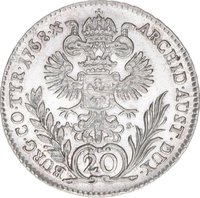
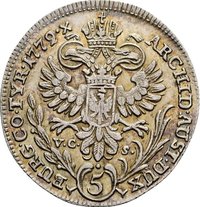
Reverse
Description:
Imperial double-headed eagle with Tyrol shield, value below in frame, date in legend.
Inscription:
ARCHID.AUST.DUX BURG.CO.TYR.1778.X
VC.S
VC.S
Script: Latin
Edge
Plain
Mintings
| Year | Mint Mark | Mintage | Quality | Collection |
|---|---|---|---|---|
| 1770 | AS | 31,000 | ||
| 1771 | AS | 156,000 | ||
| 1772 | AS | 115,000 | ||
| 1773 | AS | 113,000 | ||
| 1774 | AS | 79,000 | ||
| 1774 | VCS | — | ||
| 1775 | VCS | — | ||
| 1776 | VCS | 30,000 | ||
| 1777 | VCS | 23,000 | ||
| 1778 | VCS | 777,000 | ||
| 1779 | VCS | — | ||
| 1780 | VCS | — |
Historical background
In 1770, the County of Tyrol, a crown land of the Habsburg Monarchy, operated within a complex and often chaotic monetary landscape. The region did not have a uniform, exclusive currency but was part of the broader Austrian monetary system, which was characterized by a proliferation of different coins circulating simultaneously. Alongside the official Habsburg coinage—such as the Conventionsthaler and Kreuzer—numerous foreign coins, particularly from the numerous German states and Italian territories, circulated freely due to Tyrol's strategic position as a major Alpine trade crossroads. This led to constant difficulties in exchange rates, valuation, and commercial transactions.
The underlying framework was the Conventionsmünzfuß (Convention Coin Standard), established in 1753, which set the silver content for the standard Conventionsthaler. However, the system was strained by the chronic practice of debasement, where the government issued coins with the same face value but reduced precious metal content to finance state expenditures, particularly the costs of the recent Seven Years' War. This resulted in a disconnect between the official "bank money" used for accounting and the actual, less valuable "current money" used in daily commerce, causing inflation and public distrust.
For the Tyrolean population, especially merchants and farmers, this situation created significant economic uncertainty and friction. Everyday trade required careful assessment of each coin's origin, wear, and actual metallic worth, making transactions slow and prone to dispute. The Habsburg state, under Empress Maria Theresa, recognized these problems and was engaged in ongoing, but only partially successful, administrative efforts to standardize and control the currency across all her realms, a process that would continue under her successor, Joseph II. Thus, in 1770, Tyrol's currency situation was one of transition, caught between medieval monetary diversity and the modernizing push for a unified, state-controlled monetary system.
The underlying framework was the Conventionsmünzfuß (Convention Coin Standard), established in 1753, which set the silver content for the standard Conventionsthaler. However, the system was strained by the chronic practice of debasement, where the government issued coins with the same face value but reduced precious metal content to finance state expenditures, particularly the costs of the recent Seven Years' War. This resulted in a disconnect between the official "bank money" used for accounting and the actual, less valuable "current money" used in daily commerce, causing inflation and public distrust.
For the Tyrolean population, especially merchants and farmers, this situation created significant economic uncertainty and friction. Everyday trade required careful assessment of each coin's origin, wear, and actual metallic worth, making transactions slow and prone to dispute. The Habsburg state, under Empress Maria Theresa, recognized these problems and was engaged in ongoing, but only partially successful, administrative efforts to standardize and control the currency across all her realms, a process that would continue under her successor, Joseph II. Thus, in 1770, Tyrol's currency situation was one of transition, caught between medieval monetary diversity and the modernizing push for a unified, state-controlled monetary system.
💎 Extremely Rare