Logo Title
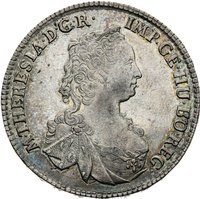
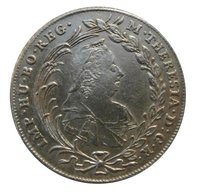
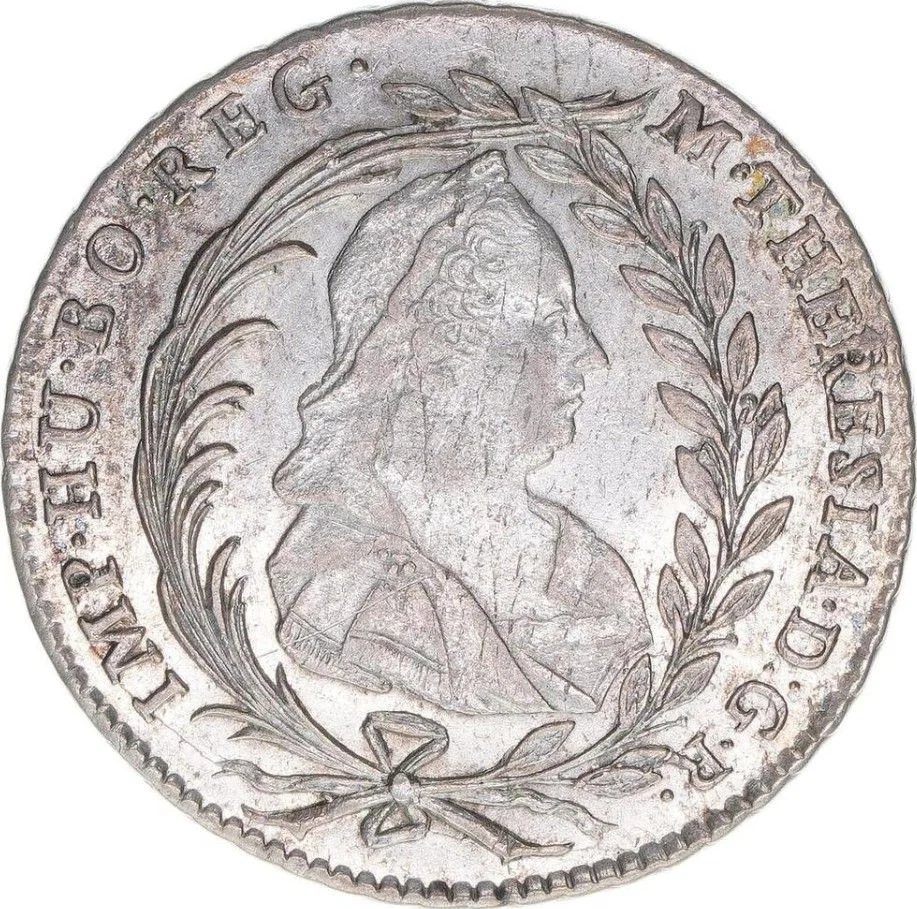
obverse
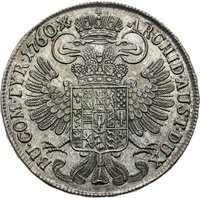
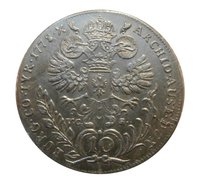
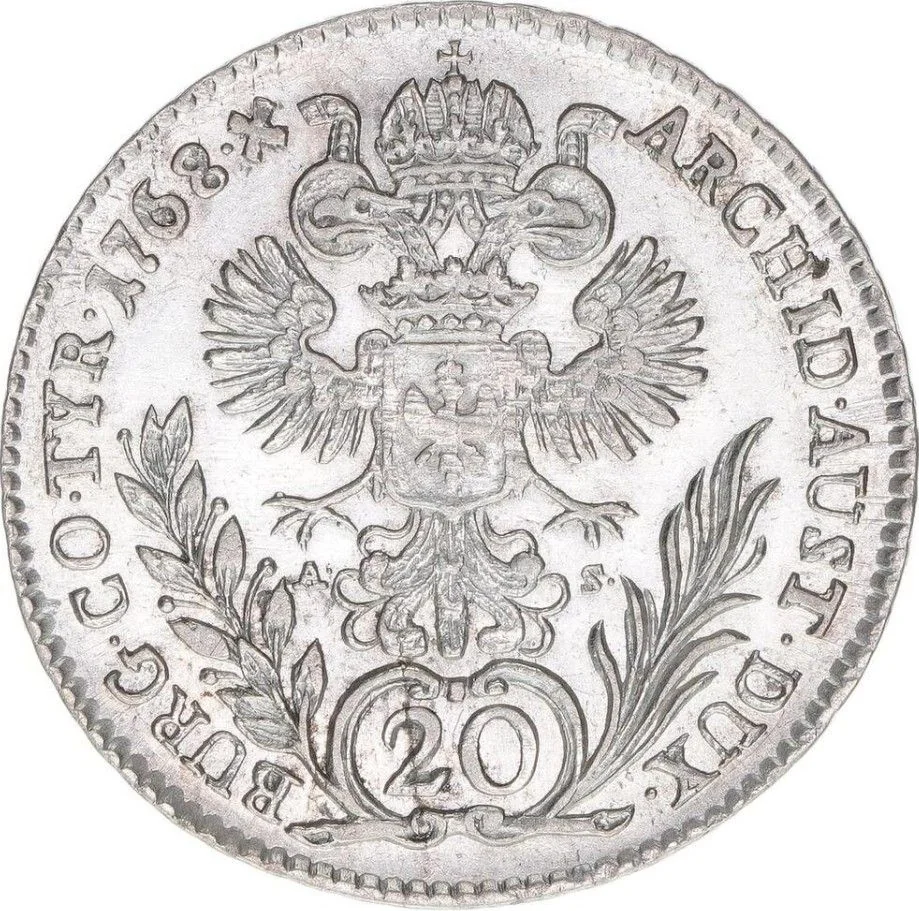
reverse
Numismatik Zöttl
Austria
Context
Years: 1768–1780
Country: Austria Country flag
Currency:
Demonetized: Yes
Total mintage: 246,000
Material
Weight: 6.61 g
Silver weight: 3.85 g
Shape: Round
Composition: 58.3% Silver
Magnetic: No
References
KM: #Click to copy to clipboard1856
Numista: #491916
Value
Bullion value: $10.81

Obverse

Description:
Bust within a laurel and palm wreath, surrounded by legend.
Inscription:
M • THERESIA • D • G • R • IMP • HU • BO • REG •
Script: Latin

Reverse

Description:
Crowned double-headed eagle with Tyrolean shield, flanked by wreaths. Value in frame below.
Inscription:
ARCHID • AUST • DUX BURG • CO • TYR • 1768 X
Script: Latin

Edge

Plain

Mints

NameMark
Hall

Mintings

YearMint MarkMintageQualityCollection
1768AS246,000
1769AS
1770AS
1771AS
1772AS
1773AS
1774AS
1774VCS
1775VCS
1776VCS
1777VCS
1778VCS
1779VCS
1780VCS

Historical background

In 1768, the County of Tyrol, a crown land of the Habsburg Monarchy, operated within a complex and fragmented monetary system. The official currency was based on the Conventionsthaler, a large silver coin standardized across the Habsburg realms by the 1753 Convention, which valued 1 Conventionsthaler at 2 Gulden or 120 Kreuzer. However, Tyrol's unique economic position, heavily reliant on transalpine trade and mining, meant that a multitude of foreign coins, particularly from the numerous German states and Italy, circulated freely alongside domestic issues. This created chronic confusion in everyday commerce, as merchants and the public constantly had to assess the weight, fineness, and exchange rates of a bewildering variety of physical coins.

The local authorities, notably the Tyrolean Landschaft (diet), faced persistent difficulties. While the central Vienna court sought monetary uniformity, Tyrol's practical need was for sufficient small-denomination coinage to facilitate local trade and pay soldiers. The result was a constant struggle against the outflow of full-weight silver coin and the inflow of inferior foreign small change, which drove good money out of circulation (Gresham's Law). Periodic attempts to regulate exchange rates and ban certain foreign coins were largely ineffective, leading to price instability and popular discontent, especially among peasants and laborers paid in debased coin.

Therefore, the currency situation in 1768 was one of managed disorder. The theoretical framework of the Convention standard provided a benchmark, but the reality was a messy, multi-currency environment. This placed a significant transactional burden on the population and posed an ongoing administrative challenge for Innsbruck and Vienna, highlighting the tension between Tyrol's integrated regional economy and the Habsburg state's push for centralized financial control. The system functioned, but with friction and inefficiency that reflected the broader complexities of pre-modern European coinage.
Legendary