Logo Title
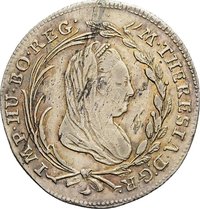
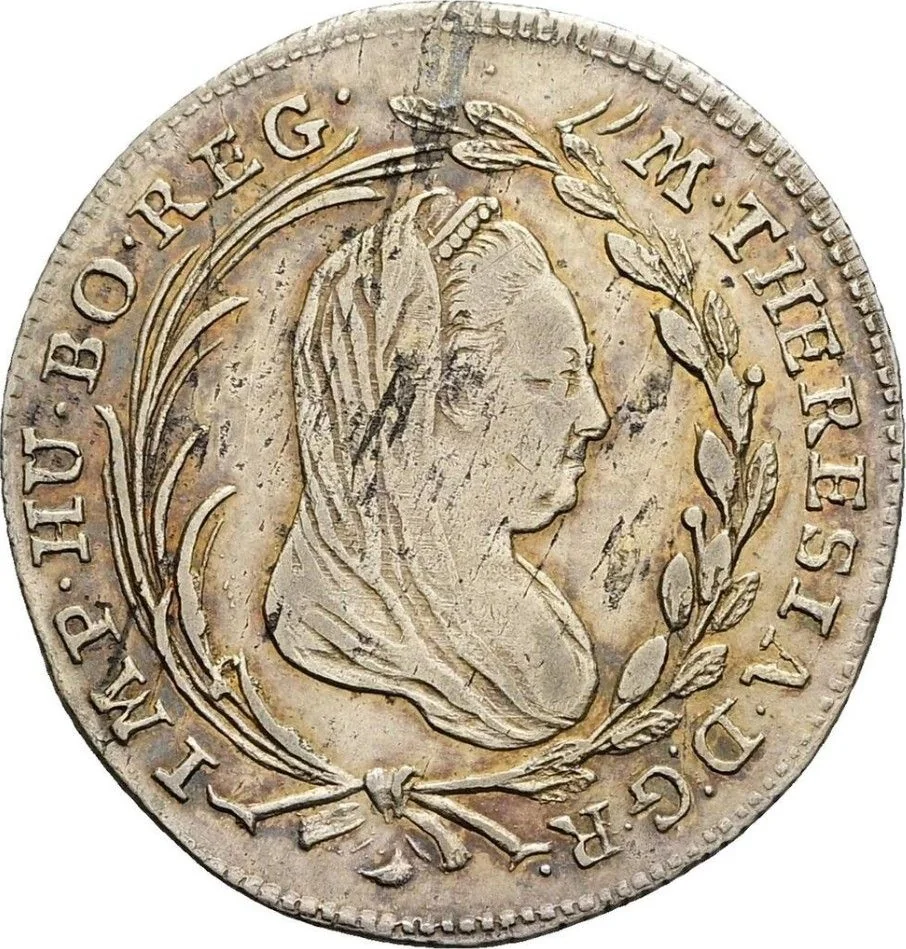
obverse
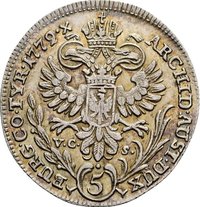
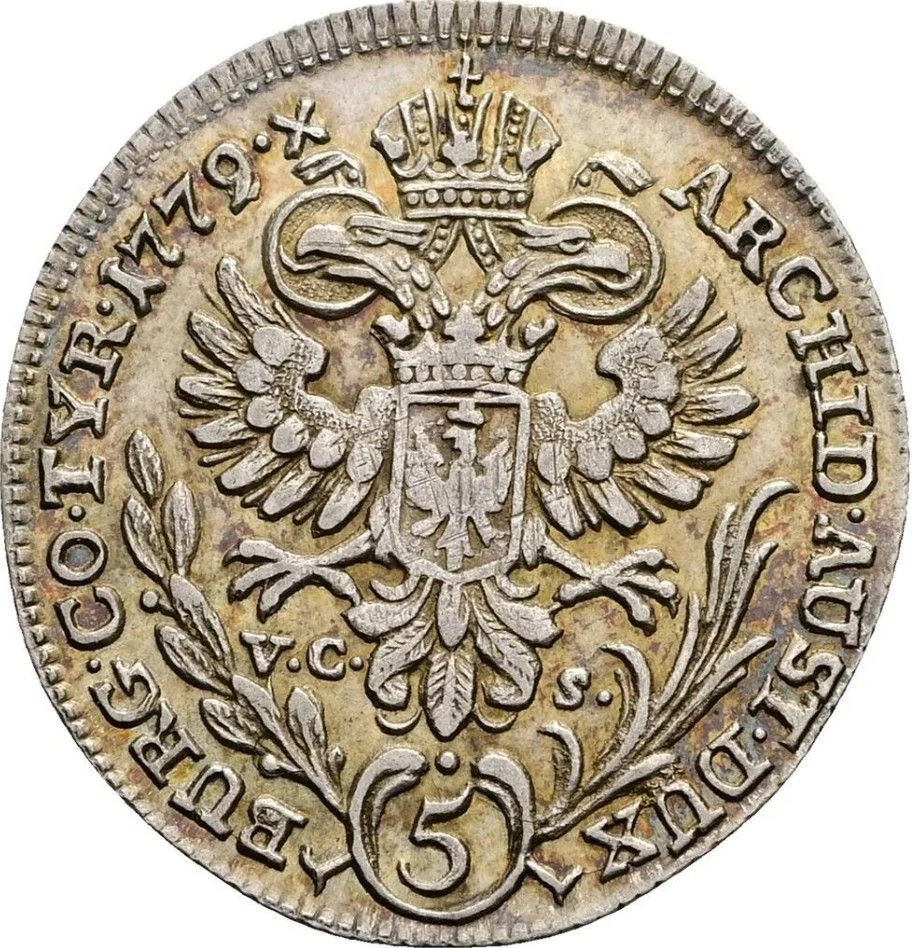
reverse
Numismatik Zöttl
Austria
Context
Years: 1778–1779
Country: Austria Country flag
Currency:
Demonetized: Yes
Total mintage: 187,000
Material
Weight: 2.24 g
Shape: Round
Composition: Billon (42% Silver)
Alignment: Medal alignment
Obverse
OBVERSE ↑
flip
Reverse
REVERSE ↑
References
KM: #Click to copy to clipboard1870
Numista: #403454

Obverse

Description:
Veiled bust in wreath.
Inscription:
M • THERESIA • D • G • R • IMP • HU • BO • REG •
Script: Latin

Reverse

Description:
Imperial double eagle with Tyrolean arms, value in wreath-framed cartouche below.
Inscription:
ARCHID • AUST • DUX • BURG • CO • TYR • 1779

V.C S.
Script: Latin

Edge

Plain

Mints

NameMark
Hall

Mintings

YearMint MarkMintageQualityCollection
1778VCS
1779VCS187,000

Historical background

In 1778, the County of Tyrol, a crown land of the Habsburg Monarchy, operated within a complex and challenging monetary environment. The region was not immune to the wider financial strains plaguing the Austrian state under Empress Maria Theresa, primarily due to the enormous costs of the War of the Austrian Succession and the ongoing Seven Years' War. To meet these expenses, the state had repeatedly debased its coinage, reducing the precious metal content in coins like the convention thaler and kreuzer. This led to a chronic disparity between the official face value of coins and their intrinsic silver value, causing widespread economic distortion.

Locally, Tyrol faced a specific crisis of small change. The essential low-denomination kreuzer coins, necessary for daily market transactions, had become so debased that they were increasingly rejected by the populace. This created a severe shortage of acceptable circulating currency for ordinary people, hampering commerce and causing significant public discontent. Furthermore, Tyrol's important trade links with the German states and Italy meant it was exposed to a flood of foreign and often inferior coinage, complicating transactions and undermining trust in the monetary system.

The Habsburg response was the major currency reform of 1762/1771, which established the new Conventionsthaler standard, but its full implementation was still ongoing in 1778. In Tyrol, authorities were grappling with the practical task of recalling old, debased coins and introducing the new, more stable convention currency. Thus, the situation in 1778 was one of transition and lingering instability, caught between the legacy of wartime inflation and the slow, difficult process of monetary standardization, all while the local economy suffered from a crippling lack of trustworthy small coinage.
Legendary