

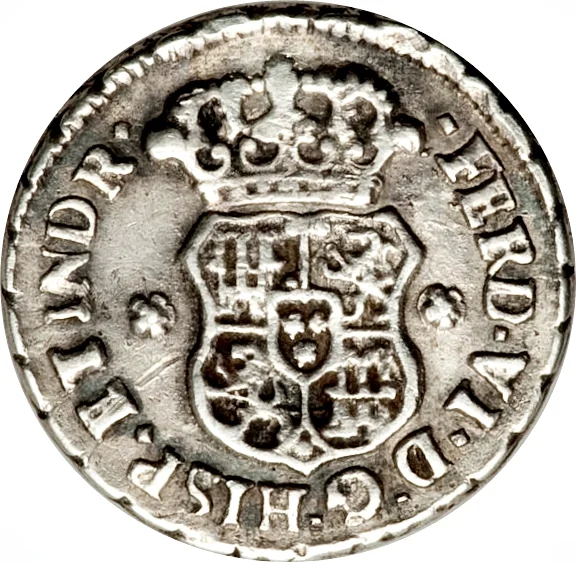
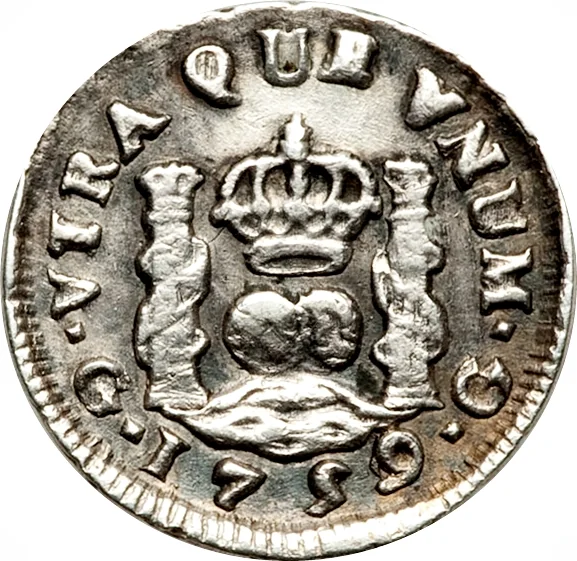
½ real – Guatemala
Add to wishlist
Guatemala
Context
Years: 1754–1760
Issuer: Guatemala
Ruler: Ferdinand VI
Currency:
(1733—1859)
Demonetization: 23 August 1873
Material
References
KM: #
Numista: #59949
Value
Bullion value: $3.88
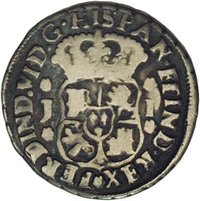
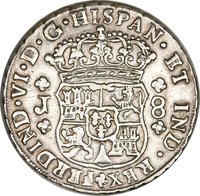
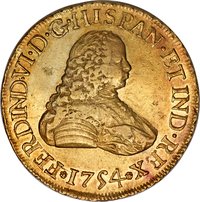
Obverse
Description:
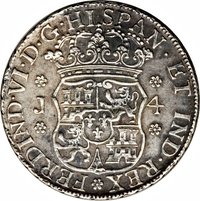
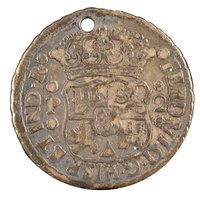
Shield with crowned arms encircled by text.
Inscription:
- FERD • VI • D • G • HISP • ETIND • R
Script: Latin
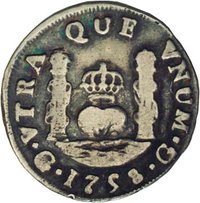
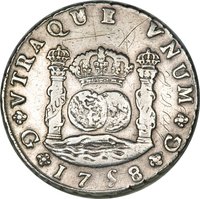
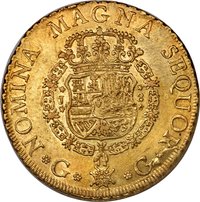
Reverse
Description:
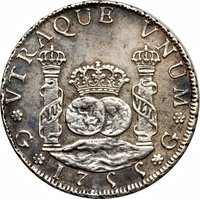
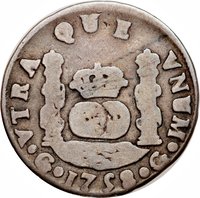
Crowned hemispheres and pillars, encircled by legend, dated below.
Inscription:
VTRA QUE VNUM
• G • 1759 • G •
• G • 1759 • G •
Script: Latin
Edge
Categories
| Symbols> Coat of Arms |
Mints
| Name | Mark |
|---|---|
| Casa de Moneda de Guatemala | G |
Historical background
In 1754, Guatemala, as the Captaincy General of Guatemala within the Spanish Empire, operated under a complex and strained monetary system. The official currency was Spanish colonial reales, with the silver peso (or piece of eight) being the dominant unit for larger transactions. However, the economy suffered from a severe and chronic shortage of minted coinage. The region produced significant wealth in indigo and cochineal for export, but the silver and gold from which coins were struck came primarily from mines in Mexico and Peru, leading to a constant drain of specie back to Spain or to other colonial territories to pay for imports, leaving local trade starved for physical money.
This scarcity led to the widespread use of substitute currencies and credit instruments. Cacao beans, used as money in the pre-Columbian era, still circulated for small, local transactions, especially among Indigenous populations. More significantly, tlacos (token coins made of base metals or even leather) and vales (promissory notes or IOUs) were commonly issued by merchants, hacienda owners, and even municipal councils to facilitate daily commerce. This created a fragmented and often unreliable monetary environment where the value and acceptance of these substitutes were highly localized and trust-dependent.
The Spanish Crown was aware of these issues but was largely ineffective in resolving them. Attempts to establish a local mint (Casa de Moneda) had failed in the past, and the primary mint servicing the region remained in Mexico City. The monetary policy was dictated by Madrid, focusing on extracting wealth for the metropolis rather than fostering a stable local economy. Consequently, in 1754, Guatemala’s currency situation was characterized by a duality: an official, scarce, and coveted silver currency for external trade and elite transactions, and an informal, heterogeneous system of substitutes that fueled the internal market, reflecting the broader tensions within the colonial economic structure.
This scarcity led to the widespread use of substitute currencies and credit instruments. Cacao beans, used as money in the pre-Columbian era, still circulated for small, local transactions, especially among Indigenous populations. More significantly, tlacos (token coins made of base metals or even leather) and vales (promissory notes or IOUs) were commonly issued by merchants, hacienda owners, and even municipal councils to facilitate daily commerce. This created a fragmented and often unreliable monetary environment where the value and acceptance of these substitutes were highly localized and trust-dependent.
The Spanish Crown was aware of these issues but was largely ineffective in resolving them. Attempts to establish a local mint (Casa de Moneda) had failed in the past, and the primary mint servicing the region remained in Mexico City. The monetary policy was dictated by Madrid, focusing on extracting wealth for the metropolis rather than fostering a stable local economy. Consequently, in 1754, Guatemala’s currency situation was characterized by a duality: an official, scarce, and coveted silver currency for external trade and elite transactions, and an informal, heterogeneous system of substitutes that fueled the internal market, reflecting the broader tensions within the colonial economic structure.
Series: 1754 Guatemala circulation coins
✨ Legendary