

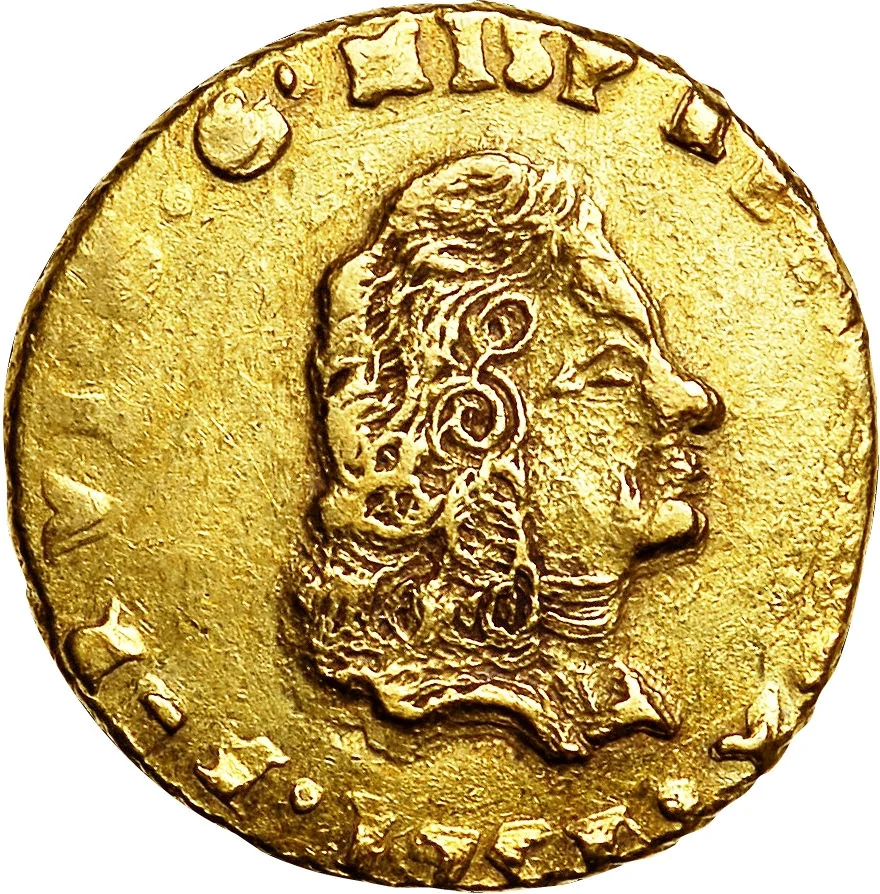
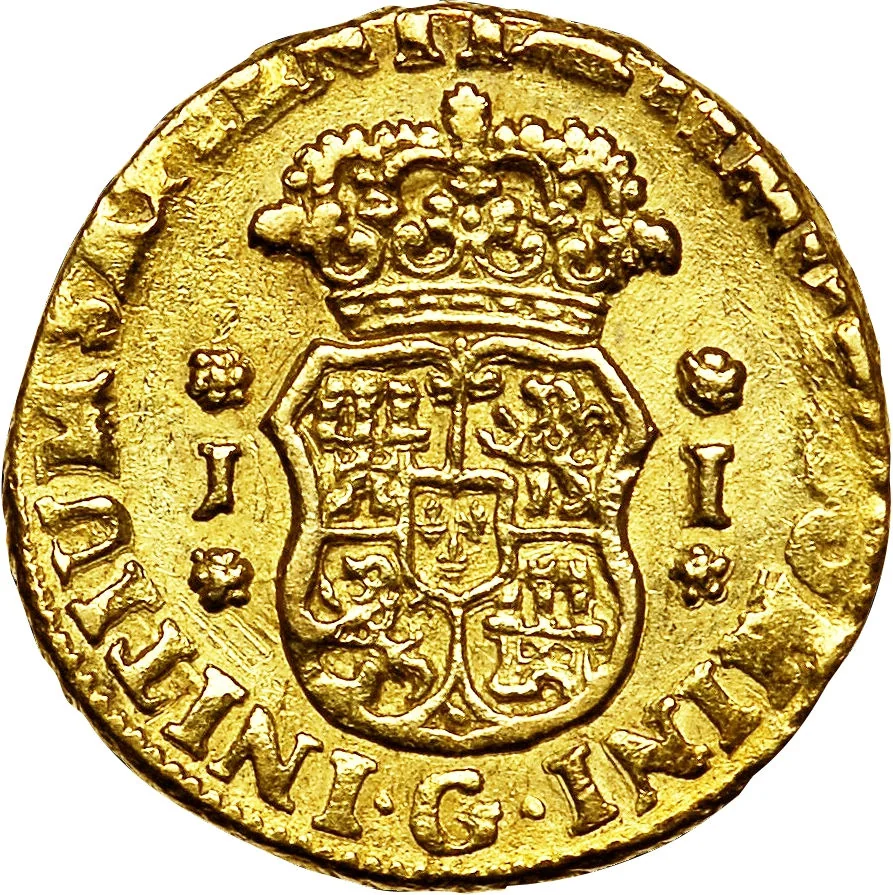
1 escudo – Guatemala
Add to wishlist
Guatemala
Context
Year: 1751
Issuer: Guatemala
Ruler: Ferdinand VI
Currency:
(1733—1859)
Demonetization: 23 August 1873
Material
Weight: 3.38 g
Gold Weight:: 3.10 g
Shape: Irregular round
Composition: 91.7% Gold
Magnetic: No
Technique: Hammered
Alignment: Medal alignment
flip
References
KM: #
Numista: #59896
Value
Bullion value: $482.54
Obverse
Description:
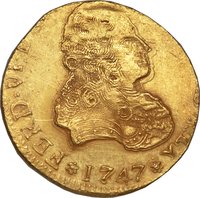
Small right-facing bust, encircled by legend.
Inscription:
FER • VI • D • G • HISP ETIND • REX
•1751•
•1751•
Script: Latin
Engraver: Jose de Leon y Losa
Reverse
Description:
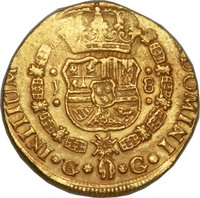
Shield with crowned arms between initials and value, encircled by legend.
Inscription:
INITIUM SPAIENTIÆ TIMOR DOMINI
*J * * I *
• G •
*J * * I *
• G •
Script: Latin
Engraver: Jose de Leon y Losa
Edge
Mints
| Name | Mark |
|---|---|
| Casa de Moneda de Guatemala | G |
Mintings
| Year | Mint Mark | Mintage | Quality | Collection |
|---|---|---|---|---|
| 1751 | G | — |
Historical background
In 1751, Guatemala, as the Captaincy General of Guatemala within the Spanish Empire, operated under a complex and strained monetary system. The official currency was the Spanish colonial real, with eight reales equaling one peso or "piece of eight." However, the economy suffered from a severe and chronic shortage of official coinage. The vast Audiencia of Guatemala, stretching from Chiapas to Costa Rica, relied heavily on trade with other Spanish colonies, but its own mint (established in 1733 in Guatemala City) struggled to produce sufficient coinage to meet local demand, leading to widespread reliance on cacao beans as a supplementary, informal currency, especially in rural and indigenous markets.
This scarcity was exacerbated by Spain's mercantilist policies, which drained precious metals to the metropolis. Much of the silver mined in regions like Honduras was exported directly to Spain or to the mint in Mexico City, bypassing the local economy. Furthermore, the circulation was flooded with a confusing array of foreign coins—primarily Peruvian and Mexican pesos, but also Dutch, French, and Portuguese coins from illicit trade—which circulated at varying and fluctuating values. This made commerce cumbersome and fostered a climate of financial instability.
Consequently, the colonial government in 1751 was grappling with the persistent challenges of enforcing monetary standards and facilitating trade. The coexistence of an inadequate supply of official coinage, a legacy indigenous barter currency, and a jumble of foreign specie created a fragmented and inefficient economy. This situation hindered tax collection, complicated large-scale commerce, and reflected the broader administrative and economic difficulties of managing a distant colony within the restrictive framework of the Spanish imperial system.
This scarcity was exacerbated by Spain's mercantilist policies, which drained precious metals to the metropolis. Much of the silver mined in regions like Honduras was exported directly to Spain or to the mint in Mexico City, bypassing the local economy. Furthermore, the circulation was flooded with a confusing array of foreign coins—primarily Peruvian and Mexican pesos, but also Dutch, French, and Portuguese coins from illicit trade—which circulated at varying and fluctuating values. This made commerce cumbersome and fostered a climate of financial instability.
Consequently, the colonial government in 1751 was grappling with the persistent challenges of enforcing monetary standards and facilitating trade. The coexistence of an inadequate supply of official coinage, a legacy indigenous barter currency, and a jumble of foreign specie created a fragmented and inefficient economy. This situation hindered tax collection, complicated large-scale commerce, and reflected the broader administrative and economic difficulties of managing a distant colony within the restrictive framework of the Spanish imperial system.
✨ Legendary