

1 Rupee – Madras Presidency
India
Context

Material
References
KM: #Click to copy to clipboard376
Numista: #58340
Value
Bullion value: $32.46
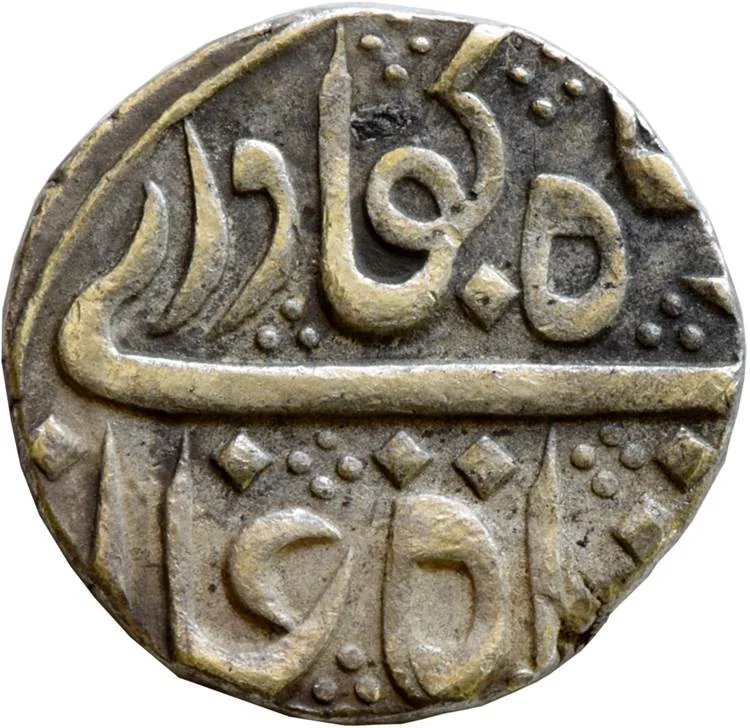
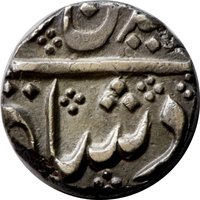
Obverse
Description:
Coins of Emperor Ahmad Shah Bahadur.
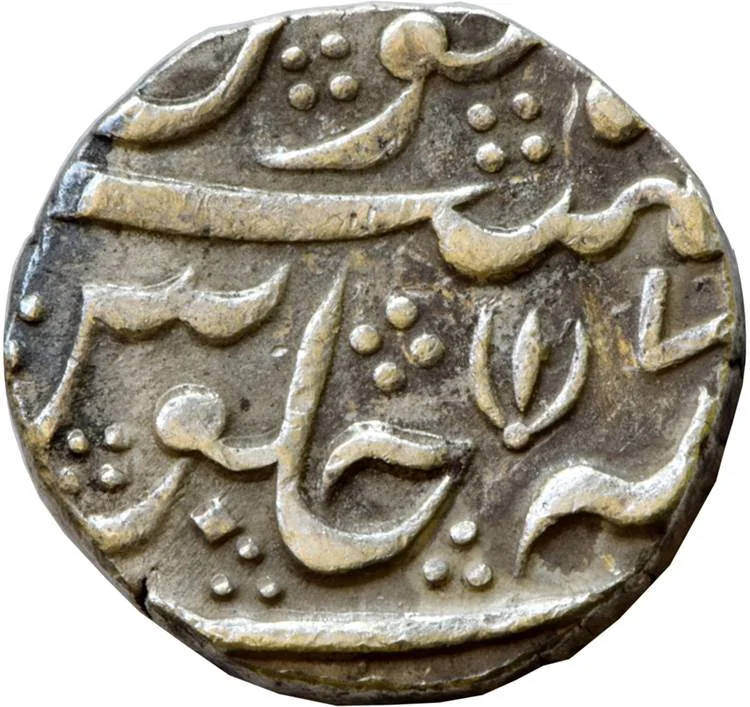
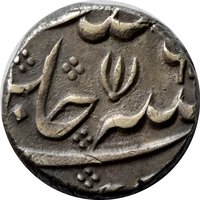
Reverse
Description:
Persian: Zarb Arkat sanat (RY) julus maimanat manus
Inscription:
٧
Edge
Plain
Mintings
| Year | Mint Mark | Mintage | Quality | Collection |
|---|---|---|---|---|
| 1748 | — | — | ||
| 1749 | — | — | ||
| 1750 | — | — | ||
| 1751 | — | — | ||
| 1752 | — | — | ||
| 1753 | — | — | ||
| 1754 | — | — |
Historical background
In 1748, the currency situation within the Madras Presidency was complex and fragmented, reflecting the broader political and economic turbulence of the Carnatic region. The presidency operated under the nominal sovereignty of the Mughal Emperor, whose silver rupee was the principal standard, but actual power was contested between the Nizam of Hyderabad, the rising Maratha Confederacy, and European trading companies. This political instability directly impacted the monetary system, leading to a circulation of a bewildering variety of coins. Alongside Mughal rupees, one found Arcot rupees (minted by the Nawabs of Arcot), pagodas (a gold coin of Hindu origin), and a host of European currencies like Portuguese xerafins and French fanams, all with fluctuating values and metallic purity.
The English East India Company, based at Fort St. George, was deeply enmesined in this chaotic system. Its primary challenge was financing its expanding military ambitions, particularly against the French East India Company, in the ongoing War of the Austrian Succession (known locally as the First Carnatic War, which had just concluded in 1748). Revenue collection and trade were hampered by the need to constantly assess and exchange this heterogeneous coinage. Furthermore, the Company itself contributed to the complexity by issuing "gold mohurs" and "silver rupees" from its own Madras mint, but these often competed with, rather than replaced, the plethora of existing currencies, leading to frequent arbitrage and loss.
Consequently, the year 1748 represents a point of monetary disorder on the cusp of change. The temporary peace with France provided a brief respite, but the underlying fiscal pressures remained. The chaotic currency system was a significant impediment to stable administration and predictable revenue, a problem the Company would increasingly seek to solve. The subsequent decades would see the East India Company, particularly after its military victories, move decisively to standardize and control the currency as an essential tool for consolidating its territorial power and economic dominance in the region.
The English East India Company, based at Fort St. George, was deeply enmesined in this chaotic system. Its primary challenge was financing its expanding military ambitions, particularly against the French East India Company, in the ongoing War of the Austrian Succession (known locally as the First Carnatic War, which had just concluded in 1748). Revenue collection and trade were hampered by the need to constantly assess and exchange this heterogeneous coinage. Furthermore, the Company itself contributed to the complexity by issuing "gold mohurs" and "silver rupees" from its own Madras mint, but these often competed with, rather than replaced, the plethora of existing currencies, leading to frequent arbitrage and loss.
Consequently, the year 1748 represents a point of monetary disorder on the cusp of change. The temporary peace with France provided a brief respite, but the underlying fiscal pressures remained. The chaotic currency system was a significant impediment to stable administration and predictable revenue, a problem the Company would increasingly seek to solve. The subsequent decades would see the East India Company, particularly after its military victories, move decisively to standardize and control the currency as an essential tool for consolidating its territorial power and economic dominance in the region.
✨ Legendary