

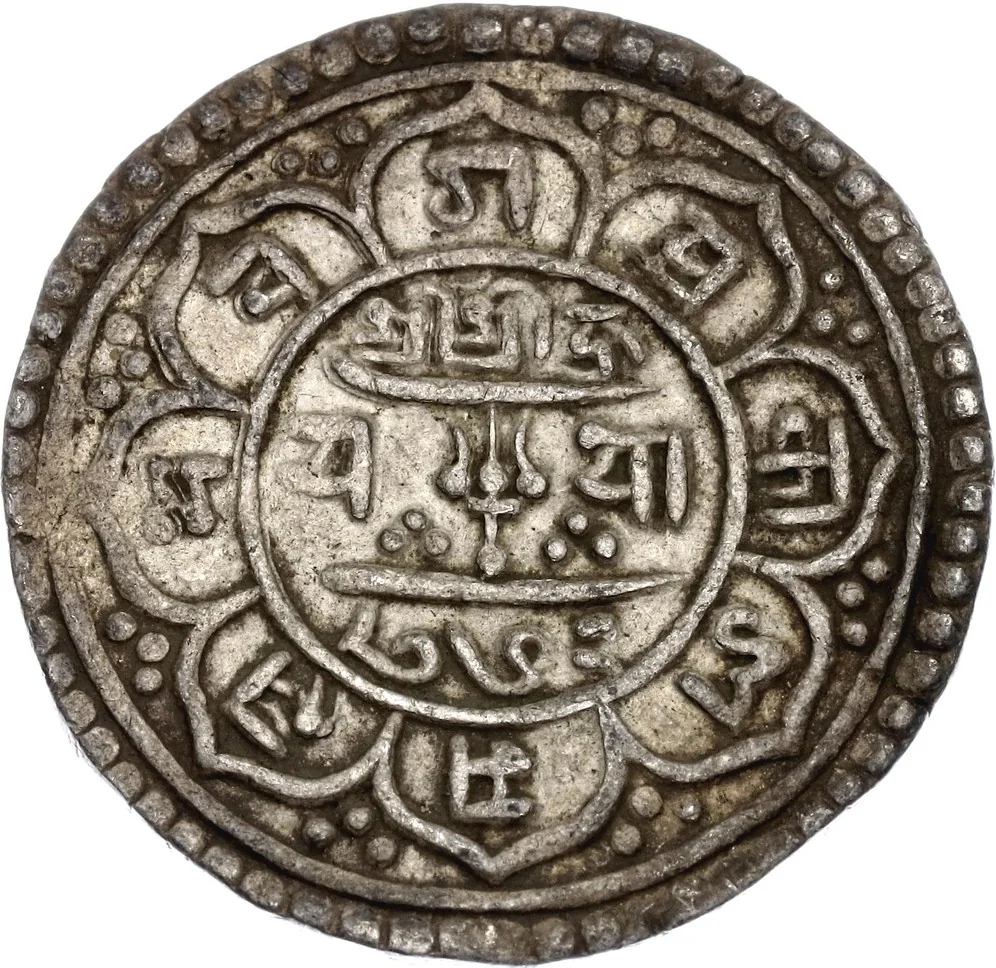
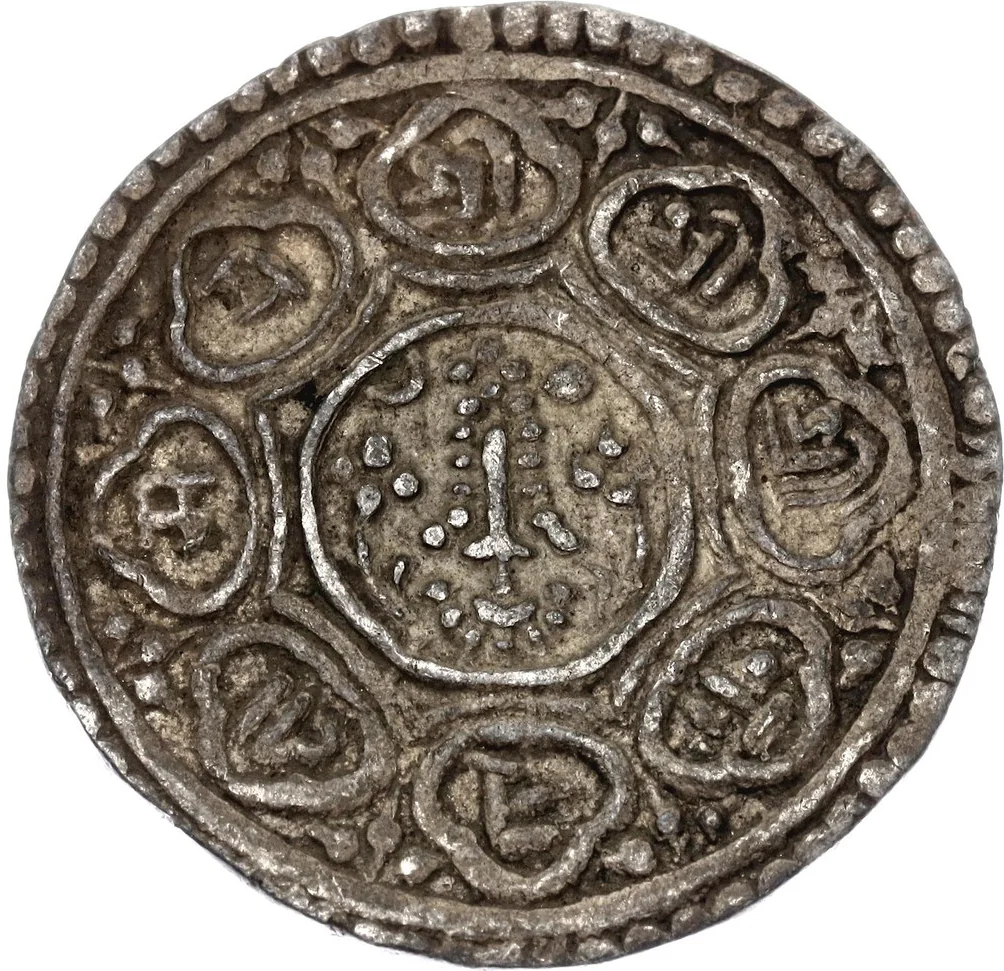
1 Mohar – Patan Kingdom
Nepal
Context
Years: 1722–1729
Country: Nepal 
Issuer: Patan Kingdom
Ruler: Jaya Yoga Prakash Malla
Currency:
(1546—1932)
Demonetized: Yes
Material
References
KM: #Click to copy to clipboard386
Numista: #57965
Value
Bullion value: $15.84
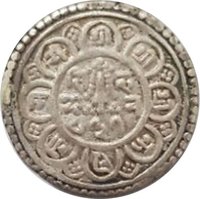
Obverse
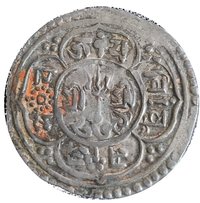
Reverse
Edge
Plain
Mintings
| Year | Mint Mark | Mintage | Quality | Collection |
|---|---|---|---|---|
| 1722 | — | — | ||
| 1723 | — | — | ||
| 1724 | — | — | ||
| 1725 | — | — | ||
| 1726 | — | — | ||
| 1727 | — | — | ||
| 1728 | — | — | ||
| 1729 | — | — |
Historical background
In 1722, the Patan Kingdom (one of the three core city-states of the Kathmandu Valley, now part of modern Nepal) operated within a complex and fragmented monetary system. The kingdom did not mint its own sovereign coinage but was a key participant in the vibrant trans-Himalayan trade network. Consequently, its economy was dominated by a multitude of foreign silver coins, primarily the Mohar of the neighbouring Kingdom of Gorkha and the Mahendra-malli of the Kantipur (Kathmandu) Kingdom. These coins circulated alongside older issues, Tibetan silver tangkas, and even Mughal Indian rupees, creating a marketplace where merchants and officials had to be adept at assessing the weight, purity, and exchange rates of various coins.
This reliance on external currency was a sign of both Patan's economic integration and its political subordination. The early 18th century was a period of intense rivalry and shifting power among the valley kingdoms (Patan, Kathmandu, and Bhaktapur), as well as rising pressure from the expanding Gorkha Kingdom to the west. The circulation of Gorkha's mohars in Patan's markets was not merely a commercial convenience but a subtle indicator of Gorkha's growing economic and political influence, foreshadowing the military conquests that would unite Nepal under King Prithvi Narayan Shah a few decades later.
The currency situation thus reflected a kingdom in a precarious position. While Patan was renowned for its exquisite metalwork and artisanal wealth, its lack of a distinct, authoritative coinage symbolized a weakening of autonomous royal prestige and fiscal control. Transactions relied on a bimetallic system (gold for large ceremonial or trade purposes, silver for everyday use) and often required the use of touchstones and scales. This monetary heterogeneity, while facilitating trade, ultimately underscored Patan's vulnerability within the volatile political landscape of 1722, on the eve of dramatic regional transformation.
This reliance on external currency was a sign of both Patan's economic integration and its political subordination. The early 18th century was a period of intense rivalry and shifting power among the valley kingdoms (Patan, Kathmandu, and Bhaktapur), as well as rising pressure from the expanding Gorkha Kingdom to the west. The circulation of Gorkha's mohars in Patan's markets was not merely a commercial convenience but a subtle indicator of Gorkha's growing economic and political influence, foreshadowing the military conquests that would unite Nepal under King Prithvi Narayan Shah a few decades later.
The currency situation thus reflected a kingdom in a precarious position. While Patan was renowned for its exquisite metalwork and artisanal wealth, its lack of a distinct, authoritative coinage symbolized a weakening of autonomous royal prestige and fiscal control. Transactions relied on a bimetallic system (gold for large ceremonial or trade purposes, silver for everyday use) and often required the use of touchstones and scales. This monetary heterogeneity, while facilitating trade, ultimately underscored Patan's vulnerability within the volatile political landscape of 1722, on the eve of dramatic regional transformation.
💎 Extremely Rare