

1 Mohar – Patan Kingdom
Nepal
Context
Year: 1717
Nepal Sambat Year: 837
Country: Nepal 
Issuer: Patan Kingdom
Currency:
(1546—1932)
Demonetized: Yes
Material
References
KM: #Click to copy to clipboard377
Numista: #366444
Value
Bullion value: $15.28
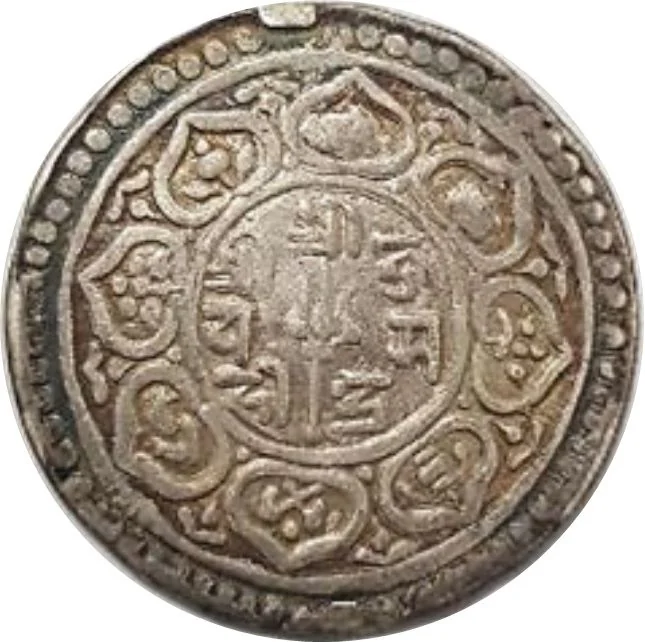
Obverse
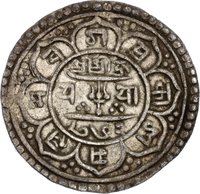
Description:
Trident-centered floral design.
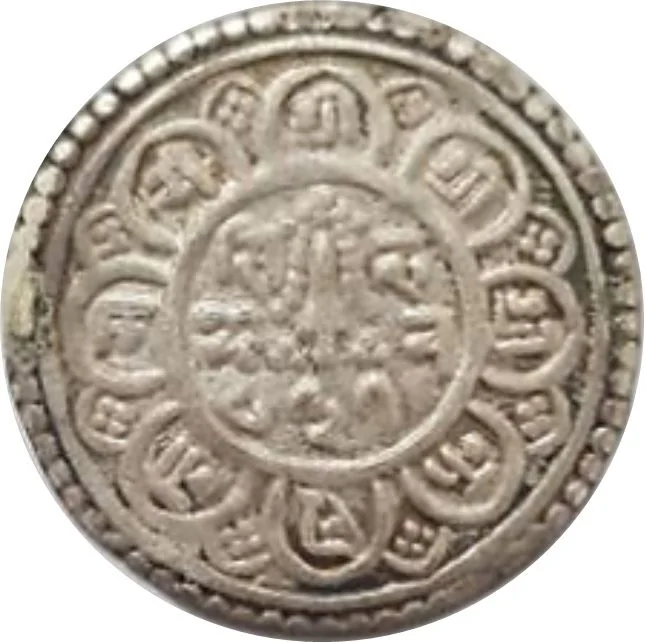
Reverse
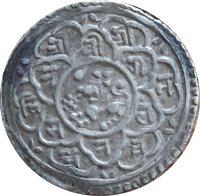
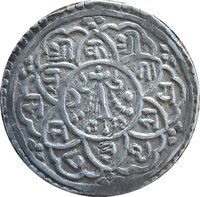
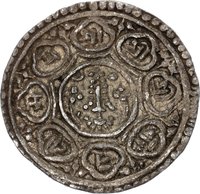
Description:
Sword motif and date within a floral design.
Script: Ranjana
Edge
Mintings
| Year | Mint Mark | Mintage | Quality | Collection |
|---|---|---|---|---|
| 1717 | — | — |
Historical background
In 1717, the Patan Kingdom (one of the three medieval city-states in the Kathmandu Valley, now part of Nepal) operated within a complex and fragmented monetary system. The kingdom did not issue its own sovereign coinage but relied heavily on the circulation of Malla-period coins minted by its own and neighbouring rulers, particularly from Kathmandu and Bhaktapur. These silver mohars and copper dams were the primary mediums of exchange, their value intrinsically tied to their weight and silver content. However, the system was not closed; a significant volume of foreign silver, especially Mughal Indian rupees, flowed into the valley via trade, further complicating the currency landscape.
The economic backdrop was one of strain and transition. The early 18th century saw the Malla kingdoms in a state of political decline and incessant rivalry, which disrupted trade routes and economic stability. This instability likely led to occasional debasement of coinage (reducing silver content) and fluctuations in the exchange rates between different coin types, causing uncertainty for merchants and the populace. Revenue collection for the state and temple donations, both critical to the economy, were conducted through a mix of specie, agricultural produce, and labour, with coins facilitating but not dominating all transactions.
Ultimately, this fragmented monetary environment reflected the kingdom's political vulnerability. Within four decades of 1717, the Gorkhali conquest under Prithvi Narayan Shah would unify the valley, sweeping away the Patan Kingdom and its monetary system. The Gorkha rulers would subsequently impose a standardized, centralized coinage, ending the era of competing Malla currencies and integrating the region into a new monetary order. Thus, in 1717, Patan's currency situation was a microcosm of a weakening, inward-looking state on the brink of being absorbed by a rising power.
The economic backdrop was one of strain and transition. The early 18th century saw the Malla kingdoms in a state of political decline and incessant rivalry, which disrupted trade routes and economic stability. This instability likely led to occasional debasement of coinage (reducing silver content) and fluctuations in the exchange rates between different coin types, causing uncertainty for merchants and the populace. Revenue collection for the state and temple donations, both critical to the economy, were conducted through a mix of specie, agricultural produce, and labour, with coins facilitating but not dominating all transactions.
Ultimately, this fragmented monetary environment reflected the kingdom's political vulnerability. Within four decades of 1717, the Gorkhali conquest under Prithvi Narayan Shah would unify the valley, sweeping away the Patan Kingdom and its monetary system. The Gorkha rulers would subsequently impose a standardized, centralized coinage, ending the era of competing Malla currencies and integrating the region into a new monetary order. Thus, in 1717, Patan's currency situation was a microcosm of a weakening, inward-looking state on the brink of being absorbed by a rising power.
✨ Legendary