

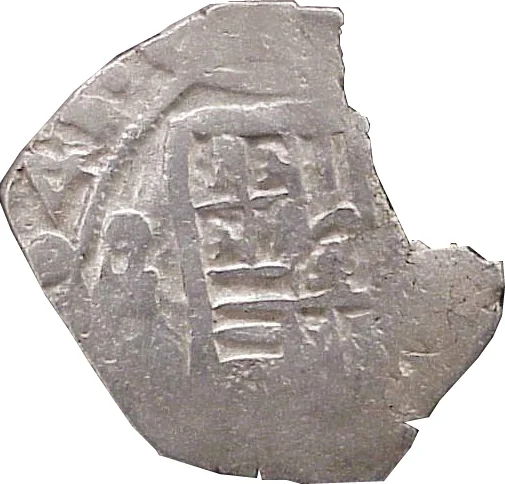
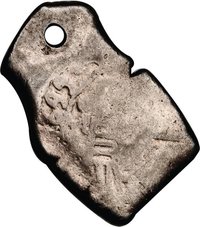
Obverse
Description:
Legend and date flank crowned arms.
Inscription:
PHILIPVS IIII DEI G
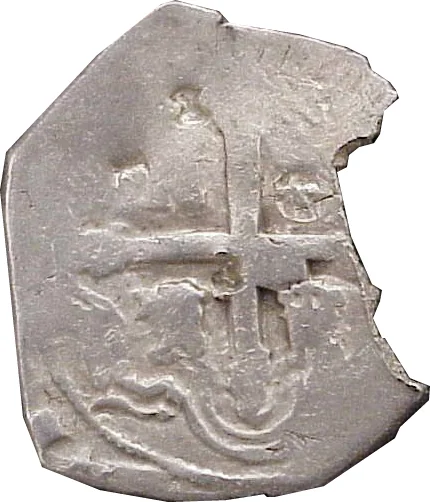
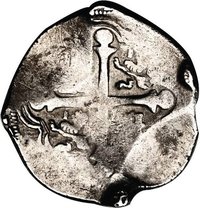
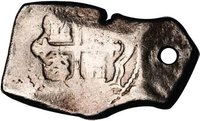
Reverse
Description:
Cross, lions, castles.
Inscription:
HISPANIARVM ET INDIARVM REX
Edge
Mintings
| Year | Mint Mark | Mintage | Quality | Collection |
|---|---|---|---|---|
| 1641 | P | — | ||
| 1653 | P | — | ||
| 1654 | P | — | ||
| 1655 | P | — | ||
| 1657 | P | — |
Historical background
In 1641, the currency system of New Spain, centered in Mexico City, was a complex and troubled apparatus reflecting the colony's deep integration into the global Spanish Empire. The primary circulating coin was the silver real, with eight reales making the famous "piece of eight" or peso. This silver, mined predominantly from the rich veins of Zacatecas and Potosí (in the Viceroyalty of Peru), was the economic lifeblood of the empire, financing Spain's European wars and fueling global trade to Asia via the Manila Galleon. However, the system was plagued by a severe and chronic shortage of small-denomination currency for everyday transactions. This scarcity was due to the Crown's policy of prioritizing the export of high-quality silver bars and coins to Spain, leaving the local economy starved for fractional coinage.
This small-change crisis led to widespread improvisation and fraud. To facilitate daily commerce, merchants and citizens often resorted to cutting silver coins into pieces (giving rise to terms like "bit" for one-eighth of a peso) or using unofficial tokens. More damagingly, the shortage invited rampant counterfeiting and the circulation of debased coins with lower silver content. The problem was exacerbated by the government's own periodic attempts to address the issue, such as authorizing the minting of low-denomination tlacos—lead or copper tokens issued by individual merchants or municipal authorities. These were not universally trusted and created a fragmented and unreliable monetary environment.
The Viceregal authorities viewed this situation with great concern, as it disrupted commerce, reduced royal seigniorage revenue, and symbolized a loss of control. The year 1641 falls within a period of ongoing but largely ineffective attempts at reform. A significant decree had been issued in 1639 prohibiting the use of unofficial tlacos, but it was largely unenforceable due to the persistent structural shortage. Thus, the currency situation remained a volatile mix of pristine silver pesos for international trade and a chaotic, unreliable local system of bits, tokens, and suspect coinage, highlighting the tension between the colony's role as a global silver pump and the needs of its own internal economy.
This small-change crisis led to widespread improvisation and fraud. To facilitate daily commerce, merchants and citizens often resorted to cutting silver coins into pieces (giving rise to terms like "bit" for one-eighth of a peso) or using unofficial tokens. More damagingly, the shortage invited rampant counterfeiting and the circulation of debased coins with lower silver content. The problem was exacerbated by the government's own periodic attempts to address the issue, such as authorizing the minting of low-denomination tlacos—lead or copper tokens issued by individual merchants or municipal authorities. These were not universally trusted and created a fragmented and unreliable monetary environment.
The Viceregal authorities viewed this situation with great concern, as it disrupted commerce, reduced royal seigniorage revenue, and symbolized a loss of control. The year 1641 falls within a period of ongoing but largely ineffective attempts at reform. A significant decree had been issued in 1639 prohibiting the use of unofficial tlacos, but it was largely unenforceable due to the persistent structural shortage. Thus, the currency situation remained a volatile mix of pristine silver pesos for international trade and a chaotic, unreliable local system of bits, tokens, and suspect coinage, highlighting the tension between the colony's role as a global silver pump and the needs of its own internal economy.
✨ Legendary