

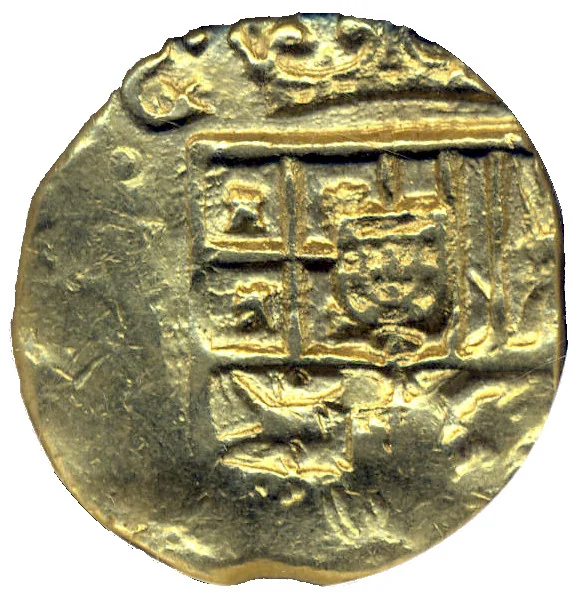
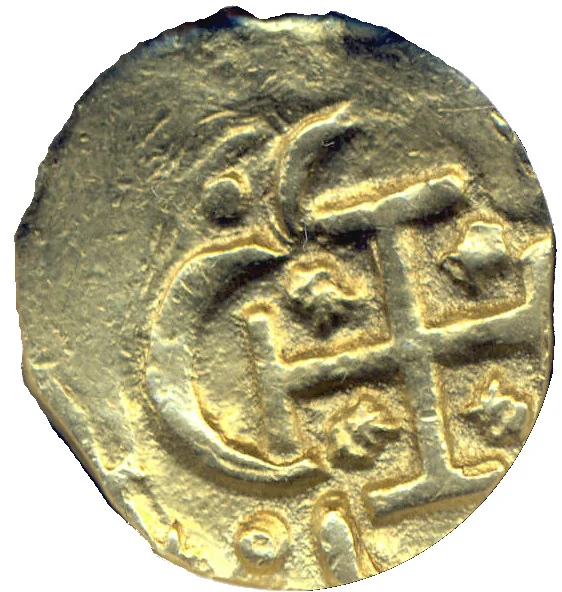
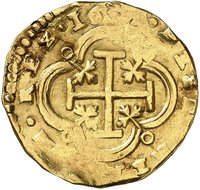
4 Escudos – Spain
Spain
Material
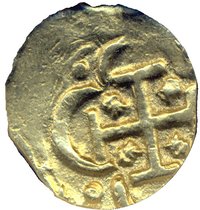
Diameter: 27 mm
Weight: 13 g
Gold weight: 11.92 g
Thickness: 1 mm
Shape: Round
Composition: 91.7% Gold
Magnetic: No
Technique: Roller milled
Alignment: Coin alignment
flip
References
KM: #Click to copy to clipboard56
Numista: #57122
Value
Bullion value: $1991.23
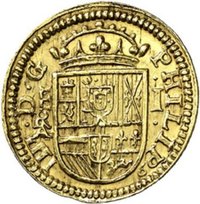
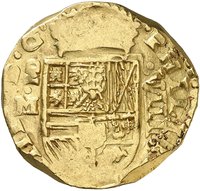
Obverse
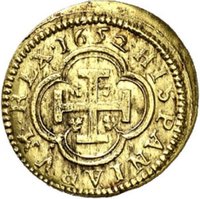
Reverse
Edge
Mints
| Name | Mark |
|---|---|
| Royal Mint of Madrid | (MD) |
| Royal Mint of Seville | S |
Mintings
| Year | Mint Mark | Mintage | Quality | Collection |
|---|---|---|---|---|
| 1629 | MDV | — | ||
| 1630 | MDR | — | ||
| 1630 | SR | — | ||
| 1631 | MDV | — | ||
| 1631 | SR | — | ||
| 1632 | MDV | — | ||
| 1632 | SR | — | ||
| 1633 | SR | — | ||
| 1636 | MDR | — | ||
| 1636 | SR | — | ||
| 1637 | SR | — | ||
| 1638 | MDA | — | ||
| 1639 | SR | — | ||
| 1641 | MDB | — | ||
| 1641 | SR | — | ||
| 1642 | MDV | — | ||
| 1644 | MDB | — | ||
| 1644 | SR | — | ||
| 1645 | SR | — | ||
| 1645 | MDA | — | ||
| 1645 | MDV | — | ||
| 1646 | MDA | — | ||
| 1647 | SR | — | ||
| 1651 | MDA | — | ||
| 1655 | MDA | — | ||
| 1655 | SR | — | ||
| 1660 | MDA | — | ||
| 1664 | MDA | — | ||
| 1664 | SA | — | ||
| 1665 | MDM | — | ||
| 1665 | MDA | — |
Historical background
In 1629, Spain was in the grip of a severe monetary crisis, a direct consequence of the Crown's relentless spending on its vast European and global commitments. The Thirty Years' War and the ongoing conflict with the Dutch Republic were draining the royal treasury at an alarming rate. To meet these obligations, the Habsburg monarchy, under Philip IV and his chief minister, the Count-Duke of Olivares, resorted to desperate financial measures, including the repeated debasement of the ubiquitous vellón coinage. This copper-based currency, intended for everyday transactions, was minted in ever-greater quantities with reduced silver content, leading to rampant inflation and a collapse in public confidence.
The situation created a chaotic "two-tier" monetary system. While prices and large-scale commerce were nominally calculated in silver reales, the physical medium of exchange for most Spaniards was the increasingly worthless vellón. As the government issued more copper coins to pay its debts, their value plummeted, causing prices for essential goods to soar. This effectively transferred wealth from the populace to the state in a form of stealth taxation, sparking social unrest and economic hardship. Attempts to stabilize the currency, such as the failed 1628 decree to fix vellón at a specific rate, only worsened the problem by driving scarce silver out of circulation entirely, in accordance with Gresham's Law ("bad money drives out good").
This monetary turmoil was symptomatic of Spain's deeper structural problems: a economy overly reliant on American silver shipments (which were declining), an inefficient tax system, and the immense burden of imperial hegemony. The crisis of 1629 was not an isolated event but a acute episode in a long decline, eroding domestic economic activity and undermining the financial foundation of the Spanish Empire. It highlighted the fundamental contradiction between Spain's global political ambitions and its weakening economic capacity to sustain them.
The situation created a chaotic "two-tier" monetary system. While prices and large-scale commerce were nominally calculated in silver reales, the physical medium of exchange for most Spaniards was the increasingly worthless vellón. As the government issued more copper coins to pay its debts, their value plummeted, causing prices for essential goods to soar. This effectively transferred wealth from the populace to the state in a form of stealth taxation, sparking social unrest and economic hardship. Attempts to stabilize the currency, such as the failed 1628 decree to fix vellón at a specific rate, only worsened the problem by driving scarce silver out of circulation entirely, in accordance with Gresham's Law ("bad money drives out good").
This monetary turmoil was symptomatic of Spain's deeper structural problems: a economy overly reliant on American silver shipments (which were declining), an inefficient tax system, and the immense burden of imperial hegemony. The crisis of 1629 was not an isolated event but a acute episode in a long decline, eroding domestic economic activity and undermining the financial foundation of the Spanish Empire. It highlighted the fundamental contradiction between Spain's global political ambitions and its weakening economic capacity to sustain them.
✨ Legendary