

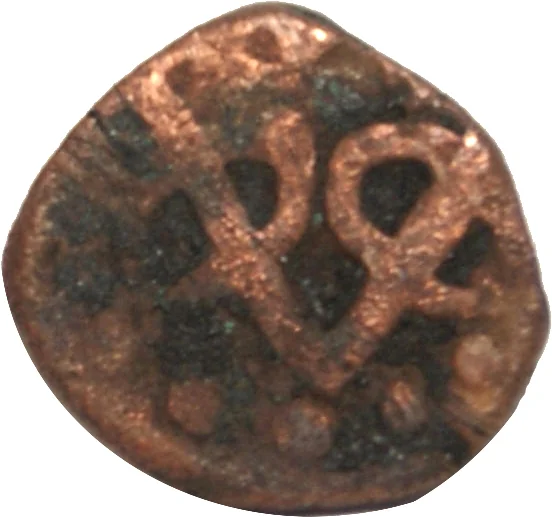
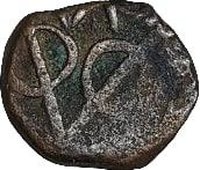
Obverse
Description:
VOC Emblem
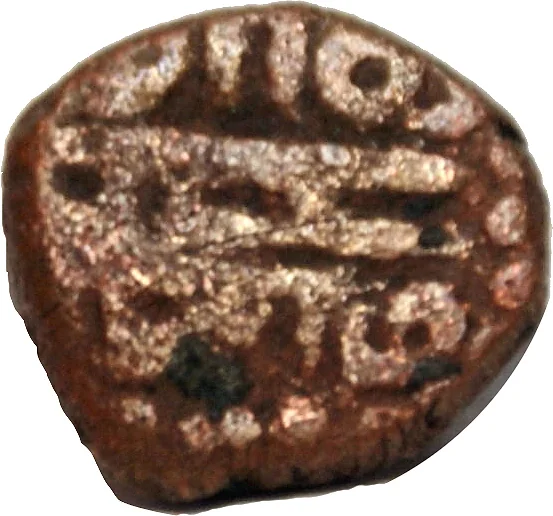
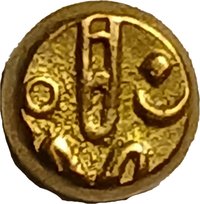
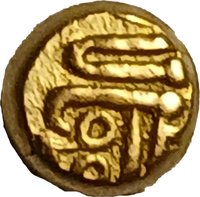
Reverse
Description:
Tamil Mint
Inscription:
Nagapattanam
Edge
Plain
Mintings
| Year | Mint Mark | Mintage | Quality | Collection |
|---|---|---|---|---|
| — | — | — |
Historical background
In 1662, the currency situation in Dutch India, centered on the Dutch East India Company (VOC) headquarters in Batavia (present-day Jakarta), was a complex and pragmatic system designed to facilitate regional trade and profit extraction. The VOC did not impose a single, unified currency across its territories. Instead, it operated within a multi-currency environment where various coins circulated based on their intrinsic metallic value and established trade reputations. The most important unit of account was the Dutch guilder, but the actual physical currency in heavy circulation included Spanish reales (pieces of eight), Japanese koban gold coins, and a multitude of local Asian currencies like Indian pagodas and rupees, as well as Chinese silver ingots and copper cash.
To bring order to this monetary chaos, the VOC authorities in Batavia regularly issued official valuation placards. These decrees fixed the exchange rates between all these circulating coins in terms of the Company's accounting guilder. This was crucial for bookkeeping, settling debts, and paying salaries. The system was inherently fluid, however, as rates were adjusted in response to the fluctuating silver content of coins arriving from Europe, the supply of precious metals from Japan, and market conditions across the Asian trade network. The Company itself also minted some coins, like copper doits for small local transactions, but its primary focus was on managing the flow of high-value silver and gold for its long-distance commerce.
The fundamental driver of this system was the VOC's role in the Asian "bullion for goods" trade. The Company imported vast quantities of silver from Europe and Japan to purchase coveted spices, textiles, and other commodities in the archipelago and India. This silver, in the form of recognizable coins like the real, became the lifeblood of intra-Asian trade. Therefore, the 1662 currency landscape was not one of colonial imposition but of Company adaptation—a calculated administrative framework layered atop pre-existing Asian monetary networks to efficiently channel precious metals toward the procurement of trade goods and the consolidation of VOC commercial power.
To bring order to this monetary chaos, the VOC authorities in Batavia regularly issued official valuation placards. These decrees fixed the exchange rates between all these circulating coins in terms of the Company's accounting guilder. This was crucial for bookkeeping, settling debts, and paying salaries. The system was inherently fluid, however, as rates were adjusted in response to the fluctuating silver content of coins arriving from Europe, the supply of precious metals from Japan, and market conditions across the Asian trade network. The Company itself also minted some coins, like copper doits for small local transactions, but its primary focus was on managing the flow of high-value silver and gold for its long-distance commerce.
The fundamental driver of this system was the VOC's role in the Asian "bullion for goods" trade. The Company imported vast quantities of silver from Europe and Japan to purchase coveted spices, textiles, and other commodities in the archipelago and India. This silver, in the form of recognizable coins like the real, became the lifeblood of intra-Asian trade. Therefore, the 1662 currency landscape was not one of colonial imposition but of Company adaptation—a calculated administrative framework layered atop pre-existing Asian monetary networks to efficiently channel precious metals toward the procurement of trade goods and the consolidation of VOC commercial power.


💎 Extremely Rare