

1 Cent – East Africa
Context
Years: 1949–1952
Issuer: East Africa
Ruler: George VI
Currency:
(1921—1967)
Demonetized: Yes
Total mintage: 65,370,000
Material
Diameter: 20.3 mm
Weight: 1.94 g
Thickness: 1.2 mm
Shape: Round with a round hole
Composition: Bronze
Magnetic: No
Technique: Milled
Alignment: Medal alignment
flip
References
KM: #Click to copy to clipboard32
Numista: #11907
Obverse
Description:
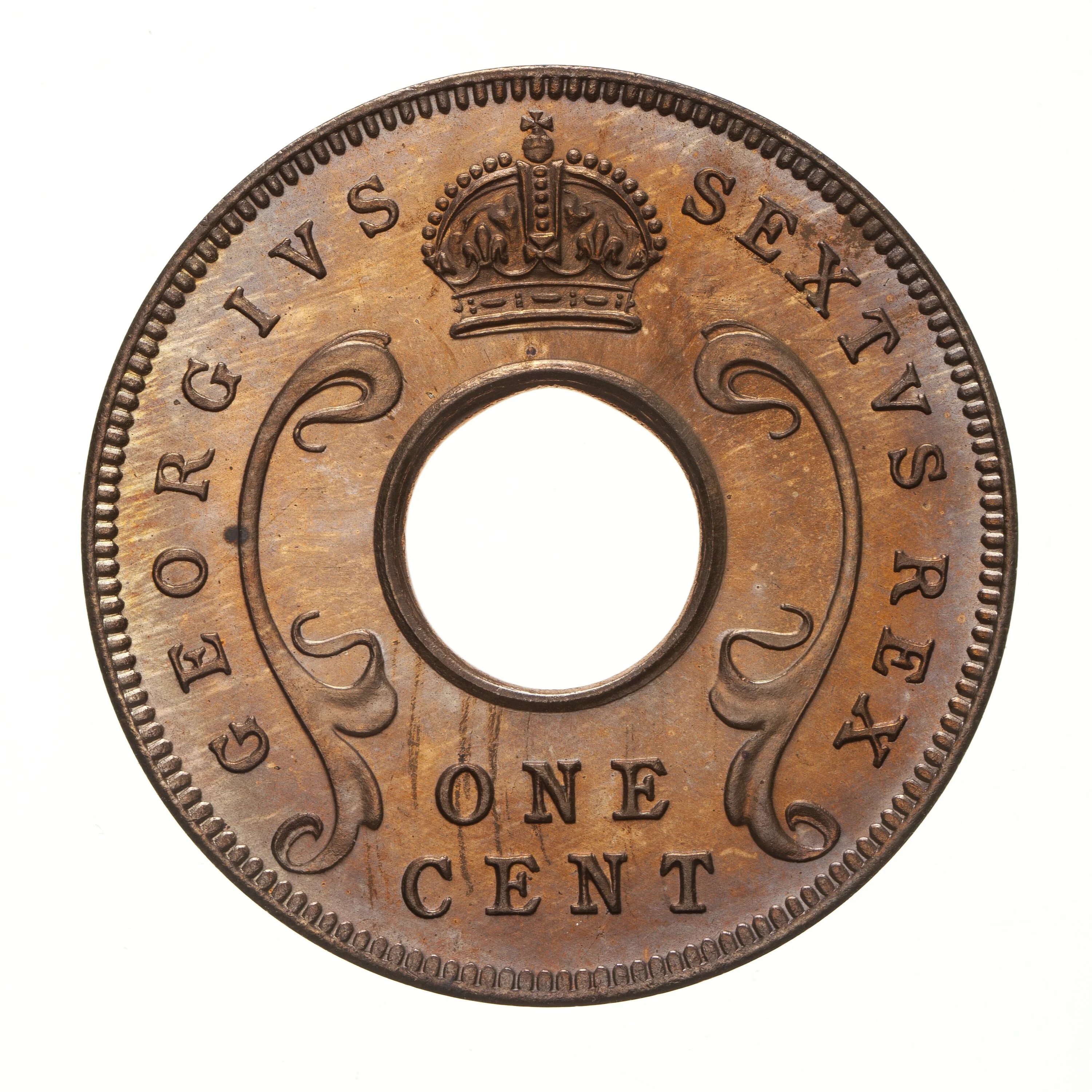
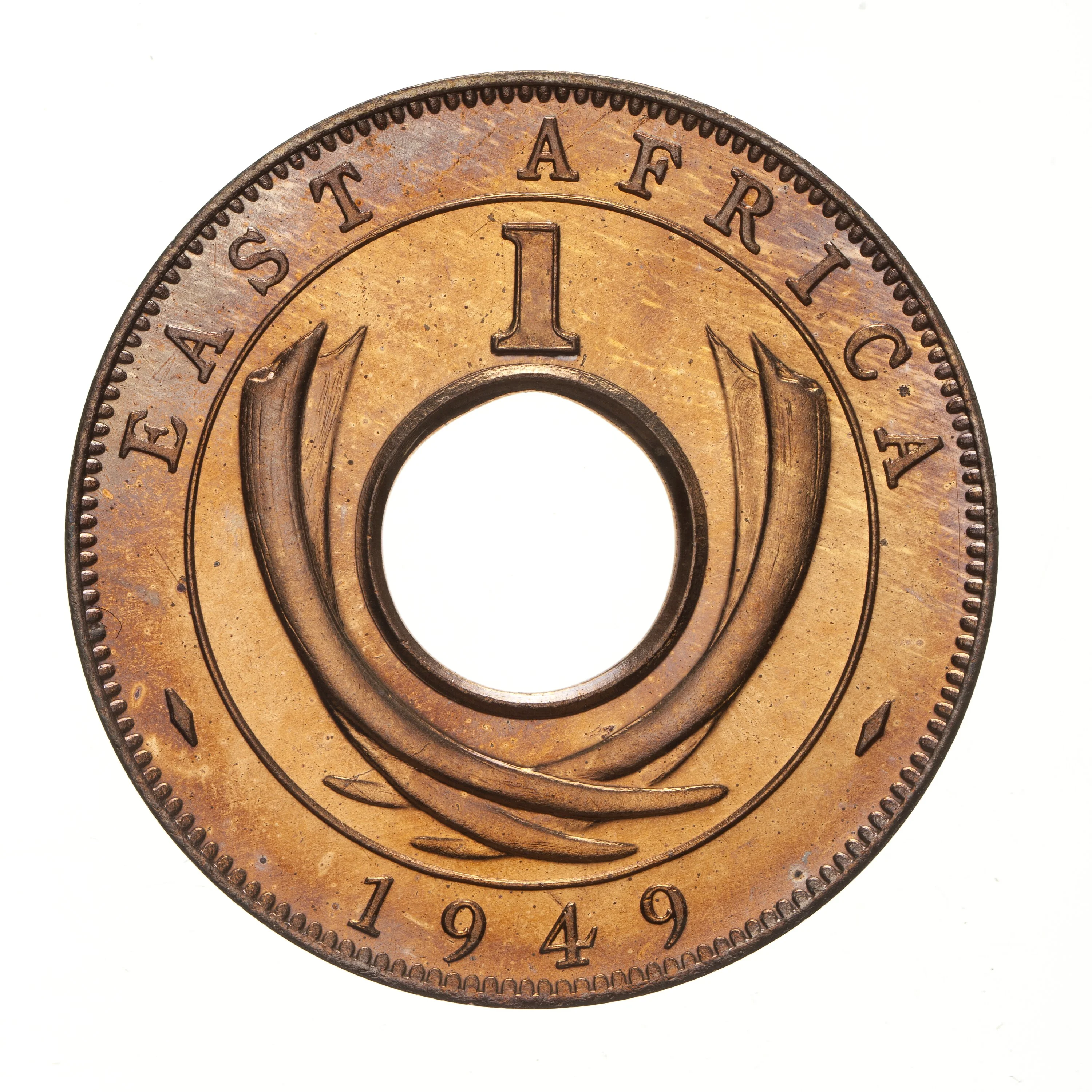
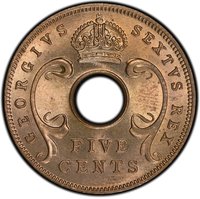
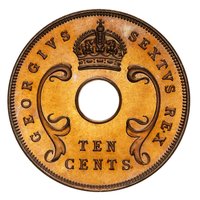
Central hole separates crown and value, encircled by legend.
Inscription:
GEORGIVS SEXTUS REX
ONE
CENT
K N
ONE
CENT
K N
Script: Latin
Reverse
Edge
Plain
Mints
| Name | Mark |
|---|---|
| Royal Mint (Tower Hill) | — |
| Heaton and Sons / The Mint Birmingham | H |
| Kings Norton Metal Company | KN |
Mintings
Historical background
In 1949, the currency situation in East Africa was defined by the dominance of the East African Shilling, managed by the East African Currency Board (EABC). Established in 1919 and headquartered in London, the EABC served British-controlled Kenya, Uganda, Tanganyika, Zanzibar, and later Aden. This system was a classic colonial currency board, operating on a strict sterling-exchange standard. For every East African Shilling in circulation, the Board held sterling reserves in London, guaranteeing full convertibility at a fixed rate of 20 shillings to 1 British pound sterling. This provided monetary stability and facilitated trade within the region and with the British Empire, but it also meant that East Africa had no independent monetary policy; its money supply was entirely determined by its balance of payments with Britain.
The region’s economy was therefore tightly yoked to the sterling area, especially important in the immediate post-World War II context. The year 1949 was pivotal for sterling globally, as the UK government announced a severe devaluation of the pound from $4.03 to $2.80 in September. This decision, driven by a UK dollar crisis and pressure from the US, automatically devalued the East African Shilling against the US dollar by the same 30.5%. While this boosted the competitiveness of East Africa's primary exports (like coffee, cotton, and sisal) on world markets, it also increased the cost of vital dollar-denominated imports, including machinery and manufactured goods, contributing to inflationary pressures.
This externally imposed change highlighted the inherent limitations of the colonial currency system. While administratively efficient and stable, it was designed for the benefit of imperial trade and fiscal management, not for the autonomous economic development of East African territories. By 1949, political movements towards independence were gaining momentum, and the debate about post-colonial monetary sovereignty was beginning to emerge. The fixed link to a devaluing sterling underscored the need for a monetary authority responsive to local conditions, a demand that would lead to the dissolution of the EABC and the creation of separate central banks and national currencies in the years following independence.
The region’s economy was therefore tightly yoked to the sterling area, especially important in the immediate post-World War II context. The year 1949 was pivotal for sterling globally, as the UK government announced a severe devaluation of the pound from $4.03 to $2.80 in September. This decision, driven by a UK dollar crisis and pressure from the US, automatically devalued the East African Shilling against the US dollar by the same 30.5%. While this boosted the competitiveness of East Africa's primary exports (like coffee, cotton, and sisal) on world markets, it also increased the cost of vital dollar-denominated imports, including machinery and manufactured goods, contributing to inflationary pressures.
This externally imposed change highlighted the inherent limitations of the colonial currency system. While administratively efficient and stable, it was designed for the benefit of imperial trade and fiscal management, not for the autonomous economic development of East African territories. By 1949, political movements towards independence were gaining momentum, and the debate about post-colonial monetary sovereignty was beginning to emerge. The fixed link to a devaluing sterling underscored the need for a monetary authority responsive to local conditions, a demand that would lead to the dissolution of the EABC and the creation of separate central banks and national currencies in the years following independence.
🌱 Common