

1 Ducat – Sweden
Sweden
Context
Years: 1728–1729
Issuer: Sweden 
Ruler: Frederick I
Currency:
(1719—1798)
Demonetized: Yes
Total mintage: 3,881
Material
References
KM: #Click to copy to clipboardA401
Numista: #107336
Value
Bullion value: $568.89
Obverse
Description:
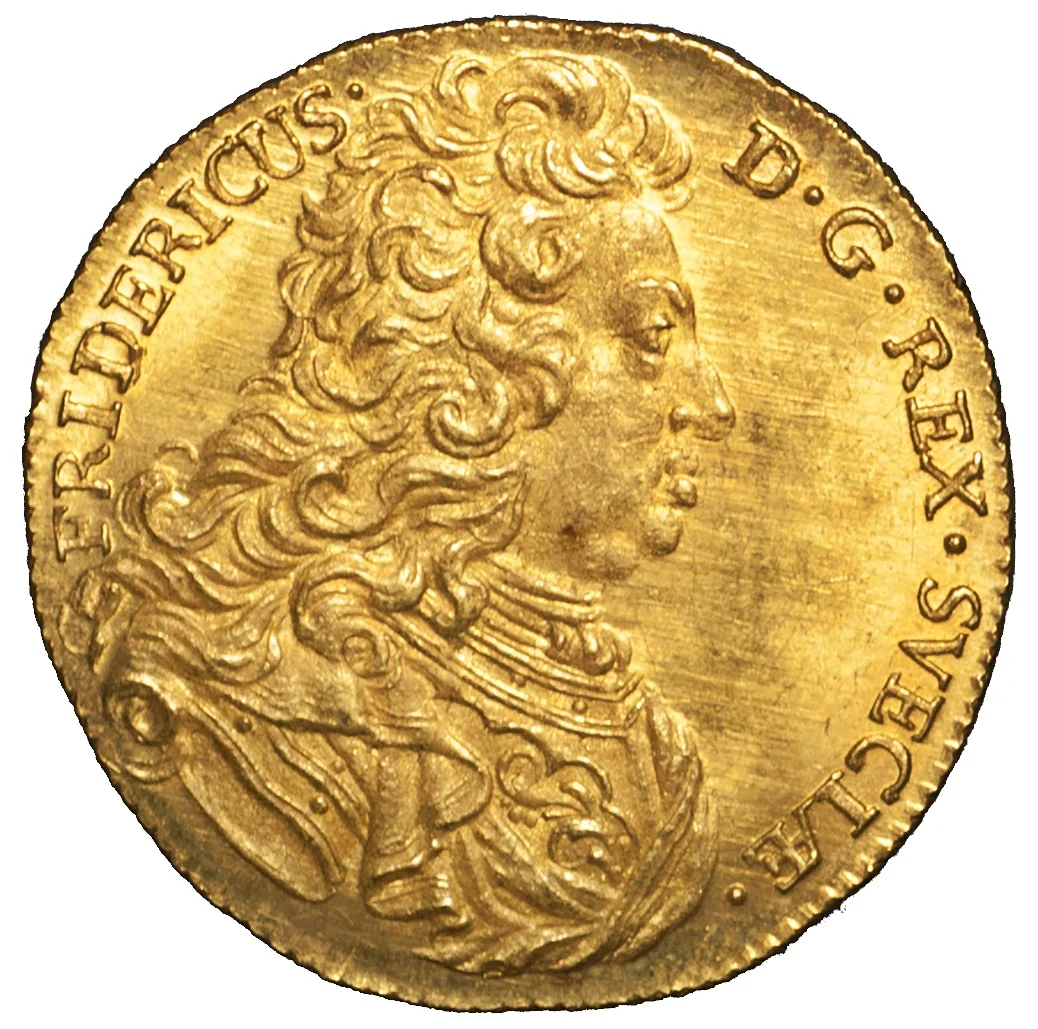
Bust of Frederick I in ornate armor, a draped cloak above, his curly hair dividing the legend.
Inscription:
FRIDERICUS • D•G • REX • SVECIÆ •
Script: Latin
Reverse
Description:
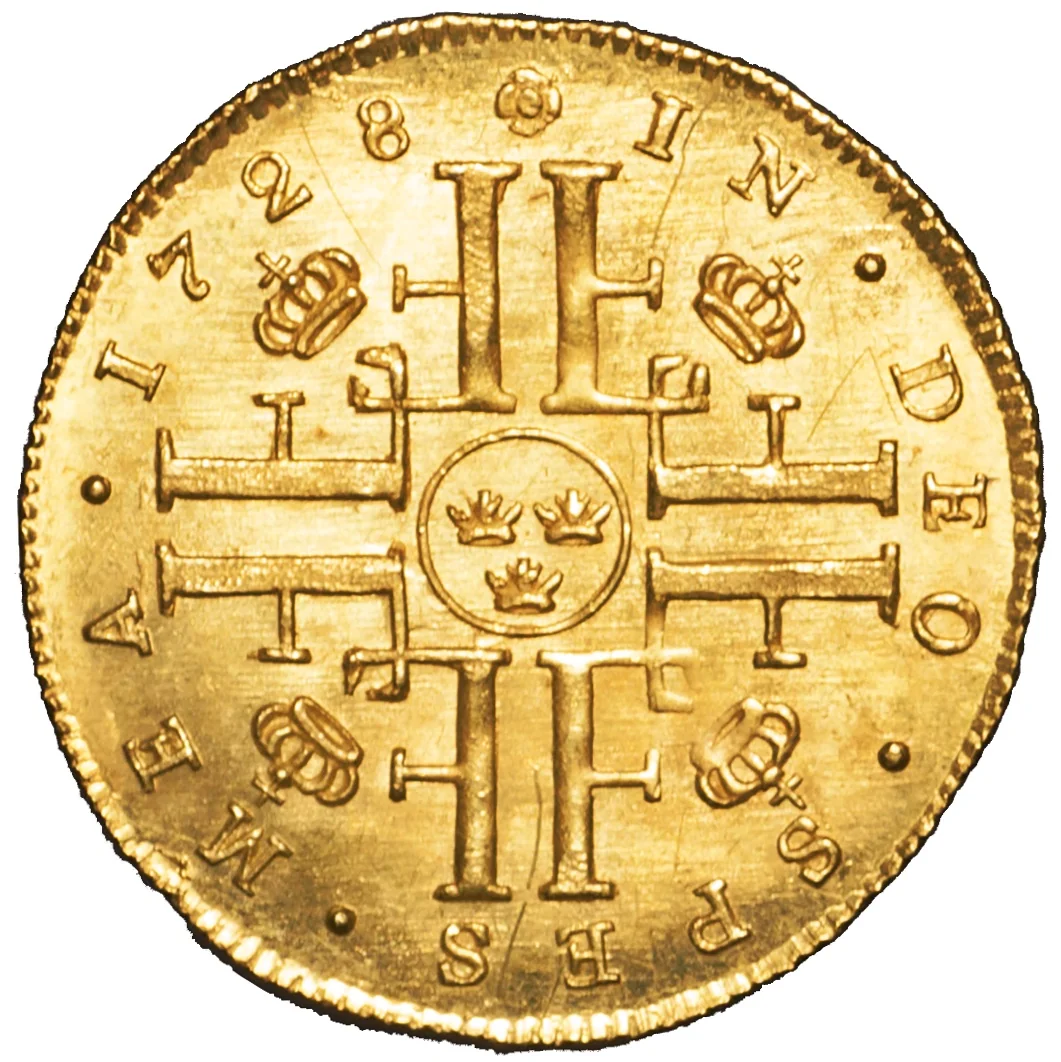
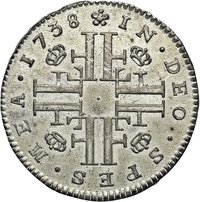
Fredrik I cruciform monogram of mirrored Fs. Central Three Crowns in circle, four more crowns diagonally between arms. Motto and date around rim.
Inscription:
IN • DEO • SPES • MEA • 1728 *
Script: Latin
Edge
Diagonal reeding
Mintings
| Year | Mint Mark | Mintage | Quality | Collection |
|---|---|---|---|---|
| 1728 | — | 2,874 | ||
| 1729 | — | 1,007 |
Historical background
In 1728, Sweden operated under a strained and complex monetary system, a direct legacy of King Charles XII's expensive Great Northern War (1700–1721). To finance the prolonged conflict, the state had resorted to massive coinage debasement and the issuance of low-quality copper plate money (plåtmynt), leading to severe inflation and a loss of confidence. The war's end did not bring immediate relief; instead, the economy was left with a chaotic mix of overvalued and undervalued coins circulating alongside nearly worthless paper credit notes issued by the state.
The central challenge was the "twin currency" system of silver and copper. Officially, a silver daler was equal to a copper daler, but in practice, silver coins were scarce and held higher intrinsic value, creating a disruptive gap between face value and market value. This led to Gresham's Law in action, where "bad money drives out good"—people hoarded silver and traded with the inferior copper, further destabilizing everyday commerce. The Riksens Ständers Bank (precursor to the Riksbank), established in 1668, struggled to manage the situation, as its note issuance was not fully backed by specie.
Consequently, 1728 fell within a period of difficult post-war stabilization under the Age of Liberty parliamentary government. While no single reform was enacted that year, it was a time of ongoing debate and gradual adjustment, laying the groundwork for future monetary ordinances. The economy was slowly transitioning, but the public still contended with the practical burdens of a depreciated currency, uncertain exchange rates, and the heavy physical burden of conducting large transactions with cumbersome copper plates, a system increasingly out of step with European financial developments.
The central challenge was the "twin currency" system of silver and copper. Officially, a silver daler was equal to a copper daler, but in practice, silver coins were scarce and held higher intrinsic value, creating a disruptive gap between face value and market value. This led to Gresham's Law in action, where "bad money drives out good"—people hoarded silver and traded with the inferior copper, further destabilizing everyday commerce. The Riksens Ständers Bank (precursor to the Riksbank), established in 1668, struggled to manage the situation, as its note issuance was not fully backed by specie.
Consequently, 1728 fell within a period of difficult post-war stabilization under the Age of Liberty parliamentary government. While no single reform was enacted that year, it was a time of ongoing debate and gradual adjustment, laying the groundwork for future monetary ordinances. The economy was slowly transitioning, but the public still contended with the practical burdens of a depreciated currency, uncertain exchange rates, and the heavy physical burden of conducting large transactions with cumbersome copper plates, a system increasingly out of step with European financial developments.
✨ Legendary