

2 shillings – British West Africa
Add to wishlist
Context
Years: 1949–1952
Country: Western African States
Issuer: British West Africa
Ruler: George VI
Currency:
(1907—1968)
Demonetized: Yes
Total mintage: 27,288,000
Material
References
KM: #
Numista: #11906
Obverse
Description:
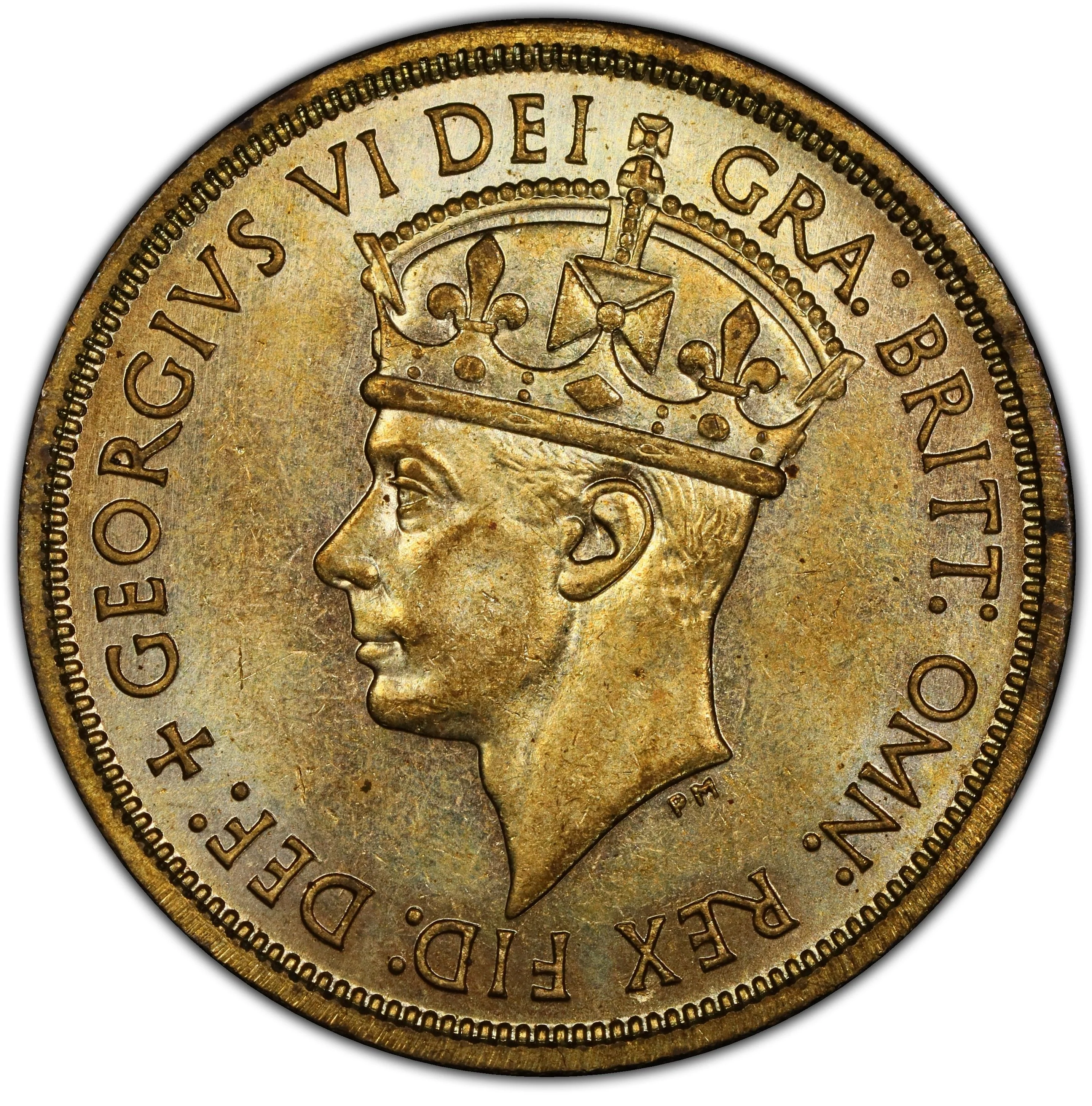
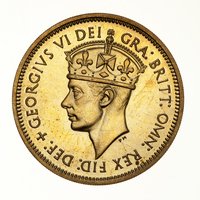
King George VI left-facing bust.
Inscription:
+ GEORGIVS VI DEI GRA: BRITT: OMN: REX FID: DEF:
Translation:
GEORGE VI BY THE GRACE OF GOD OF ALL THE BRITONS KING DEFENDER OF THE FAITH
Script: Latin
Language: Latin
Engraver: Percy Metcalfe
Reverse
Description:
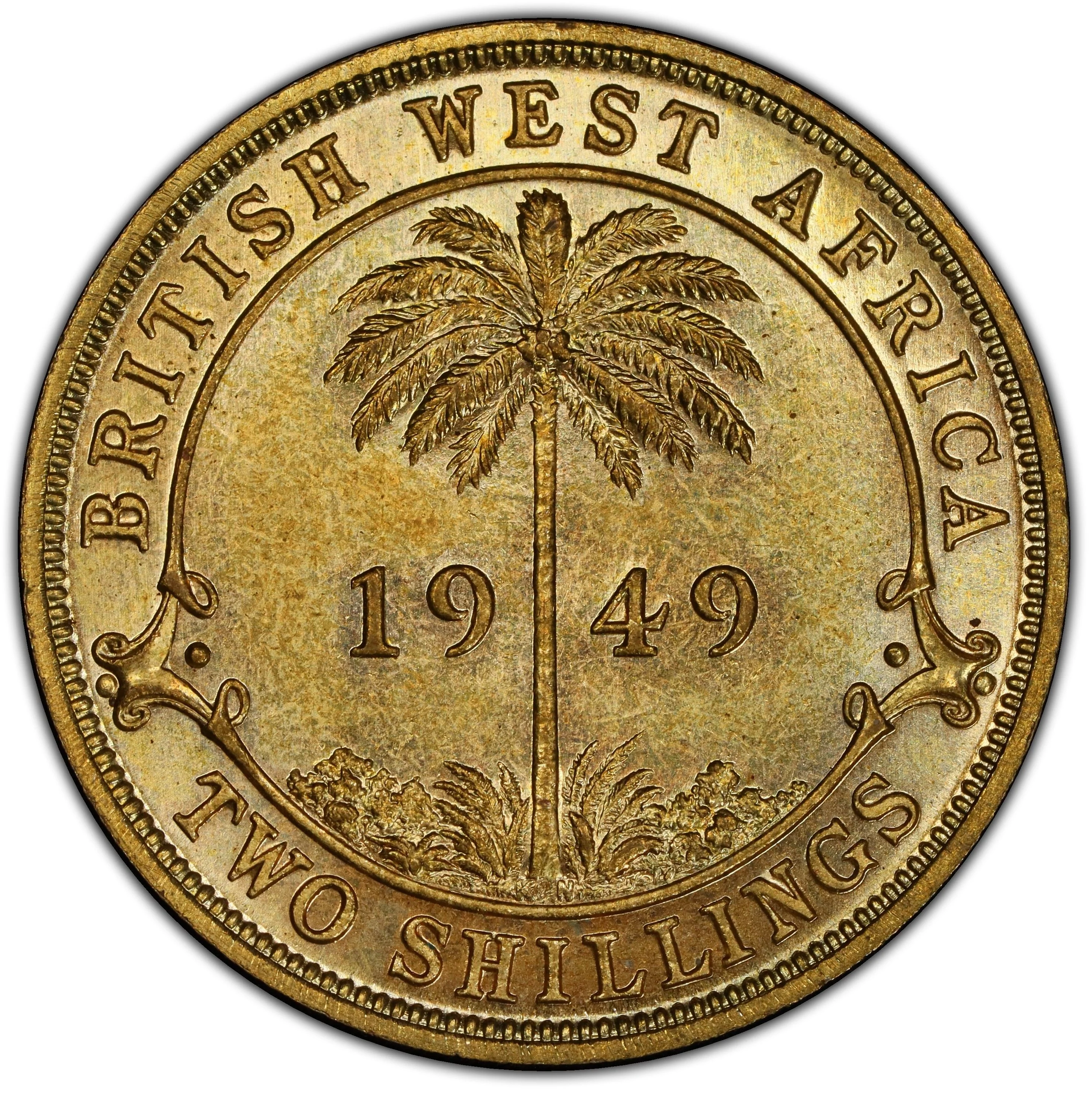
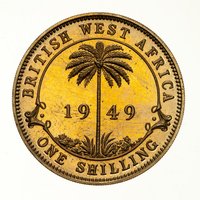
Date palm in a circle.
Inscription:
BRITISH WEST AFRICA
. 19 49 .
KN
TWO SHILLINGS
. 19 49 .
KN
TWO SHILLINGS
Script: Latin
Edge
Security
Mints
| Name | Mark |
|---|---|
| Heaton and Sons / The Mint Birmingham | H |
| Kings Norton Metal Company | KN |
Mintings
Historical background
In 1949, the currency situation in British West Africa was defined by the operations of the West African Currency Board (WACC), established in 1912. This system was a classic colonial "currency board," designed to ensure strict sterling convertibility and monetary stability. The British pound sterling was the anchor, with the West African pound (WA£) issued by the Board being fully backed by sterling reserves held in London. For every WA£ in circulation in colonies like Nigeria, the Gold Coast (Ghana), Sierra Leone, and The Gambia, an equivalent sum was held in Britain, guaranteeing a fixed one-to-one parity with sterling. This arrangement facilitated colonial trade and financial extraction, ensuring that local surpluses were seamlessly transferred to the metropolitan centre.
However, this system was increasingly criticized for its inherent limitations and colonial logic. It offered no monetary policy autonomy to the West African territories, preventing any deliberate management of money supply or credit for local development. The reserves backing the currency were invested in British government securities, effectively financing the UK's own post-war reconstruction and debt rather than regional economic growth. Furthermore, the fixed parity and strict backing principle were seen as restrictive, potentially exacerbating trade-induced liquidity shortages in West Africa and stifling the potential for responsive banking.
The year 1949 was particularly significant due to the British government's devaluation of sterling by 30.5% against the US dollar in September. As a currency board territory, British West Africa had no choice but to follow suit, automatically devaluing the West African pound by the same margin. This event starkly highlighted the colonies' lack of financial sovereignty, as a major economic decision affecting their purchasing power and international trade was made in London without consultation. This devaluation, amid growing nationalist movements, intensified local demands for central banking institutions that could pursue independent policies geared toward domestic industrialization and economic diversification, setting the stage for the dissolution of the WACC in the 1950s.
However, this system was increasingly criticized for its inherent limitations and colonial logic. It offered no monetary policy autonomy to the West African territories, preventing any deliberate management of money supply or credit for local development. The reserves backing the currency were invested in British government securities, effectively financing the UK's own post-war reconstruction and debt rather than regional economic growth. Furthermore, the fixed parity and strict backing principle were seen as restrictive, potentially exacerbating trade-induced liquidity shortages in West Africa and stifling the potential for responsive banking.
The year 1949 was particularly significant due to the British government's devaluation of sterling by 30.5% against the US dollar in September. As a currency board territory, British West Africa had no choice but to follow suit, automatically devaluing the West African pound by the same margin. This event starkly highlighted the colonies' lack of financial sovereignty, as a major economic decision affecting their purchasing power and international trade was made in London without consultation. This devaluation, amid growing nationalist movements, intensified local demands for central banking institutions that could pursue independent policies geared toward domestic industrialization and economic diversification, setting the stage for the dissolution of the WACC in the 1950s.
🌟 Uncommon