

Obverse
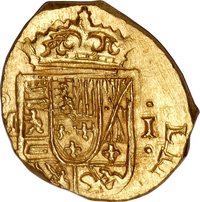
Description:
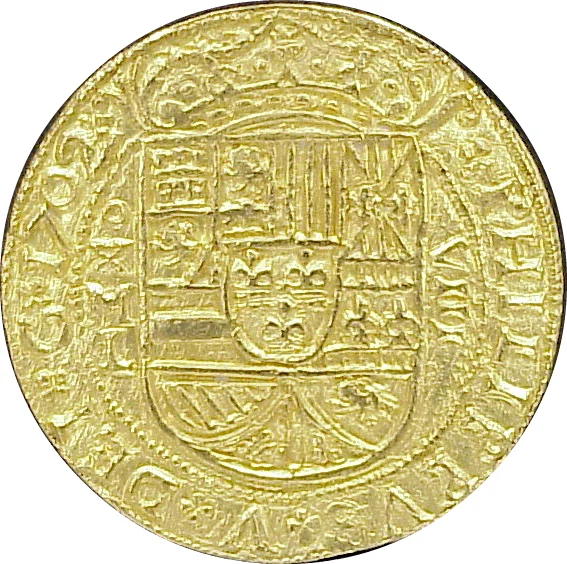
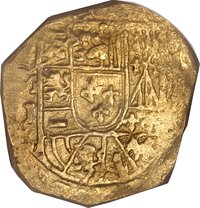
Felipe V's coat of arms encircled by legend and date.
Inscription:
PHILIPPVS+V+DEI+G+1702+
MXo JVIII
MXo JVIII
Script: Latin
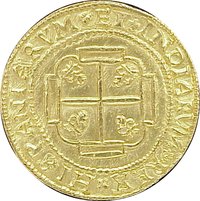
Reverse
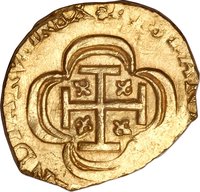
Description:
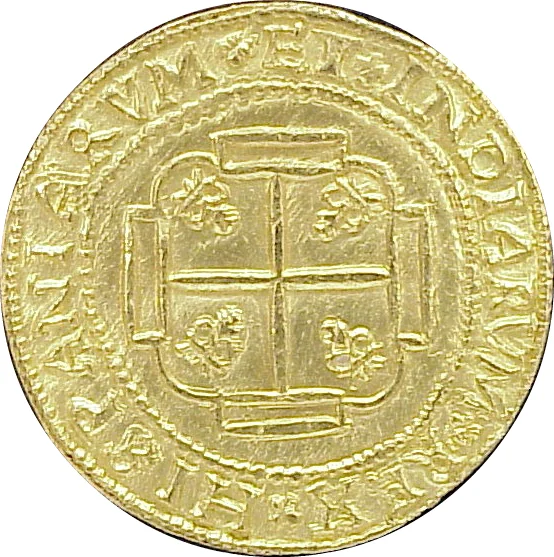
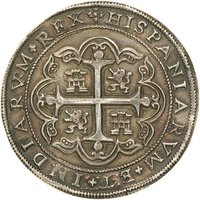
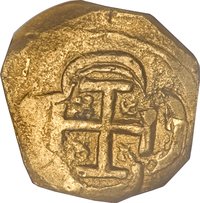
Spanish coat of arms with colonial motto.
Inscription:
HISPANIARVM+ET+INDIARVM+REX+
Script: Latin
Edge
Mintings
| Year | Mint Mark | Mintage | Quality | Collection |
|---|---|---|---|---|
| 1702 | MXo | — | ||
| 1711 | MXo | — | ||
| 1712 | MXo | — | ||
| 1713 | MXo | — | ||
| 1714 | Mo | — | ||
| 1715 | Mo | — | ||
| 1717 | Mo | — | ||
| 1718 | Mo | — | ||
| 1723 | Mo | — |
Historical background
In 1702, the currency system of New Spain, the wealthiest viceroyalty of the Spanish Empire, was a complex and often problematic fusion of official minting and widespread adulteration. The primary unit was the silver real, with eight reales comprising the famous "piece of eight" or peso. The Crown's mint in Mexico City produced vast quantities of these high-quality silver coins, which served as the backbone of not only the colonial economy but also global trade, flowing into Europe and Asia. However, alongside this official currency circulated a debased and chaotic variety of low-denomination coins, primarily tlacos (token currency made from copper or clipped silver) and pilóns (credit tokens issued by merchants). This fractional currency was essential for daily market transactions but was notoriously unreliable, easily counterfeited, and a constant source of confusion and fraud.
The monetary situation was further strained by the demands of the War of the Spanish Succession (1701-1714), which had erupted in Europe. King Philip V, fighting to secure his throne, urgently needed to finance his military campaigns. This led to increased fiscal pressure on New Spain, including the manipulation of currency. While a major debasement of the silver coinage was still a few years away, the Crown began exploring measures to extract more wealth from its colonies, such as demanding larger remissions of silver and considering the introduction of more copper coinage—a move historically unpopular as it risked inflation and public distrust. The colonial economy was thus caught between its role as the empire's financial engine and the destabilizing pressures of war.
Consequently, the currency landscape in 1702 was one of underlying tension. A robust and trusted high-value silver system coexisted with an inefficient and corrupt small-change system, creating a dual economy that hindered local commerce. With the distant war escalating, authorities in Mexico City were acutely aware that the stability of their currency was under threat, foreshadowing the more severe crises of debasement and monetary reform that would mark the coming decades of Bourbon rule.
The monetary situation was further strained by the demands of the War of the Spanish Succession (1701-1714), which had erupted in Europe. King Philip V, fighting to secure his throne, urgently needed to finance his military campaigns. This led to increased fiscal pressure on New Spain, including the manipulation of currency. While a major debasement of the silver coinage was still a few years away, the Crown began exploring measures to extract more wealth from its colonies, such as demanding larger remissions of silver and considering the introduction of more copper coinage—a move historically unpopular as it risked inflation and public distrust. The colonial economy was thus caught between its role as the empire's financial engine and the destabilizing pressures of war.
Consequently, the currency landscape in 1702 was one of underlying tension. A robust and trusted high-value silver system coexisted with an inefficient and corrupt small-change system, creating a dual economy that hindered local commerce. With the distant war escalating, authorities in Mexico City were acutely aware that the stability of their currency was under threat, foreshadowing the more severe crises of debasement and monetary reform that would mark the coming decades of Bourbon rule.
✨ Legendary