

1 Escudo – New Spain
Mexico
Context
Material
Diameter: 18.47 mm
Weight: 3.38 g
Gold weight: 3.10 g
Shape: Irregular round
Composition: 91.7% Gold
Magnetic: No
References
KM: #Click to copy to clipboardR51
Numista: #53671
Value
Bullion value: $520.95
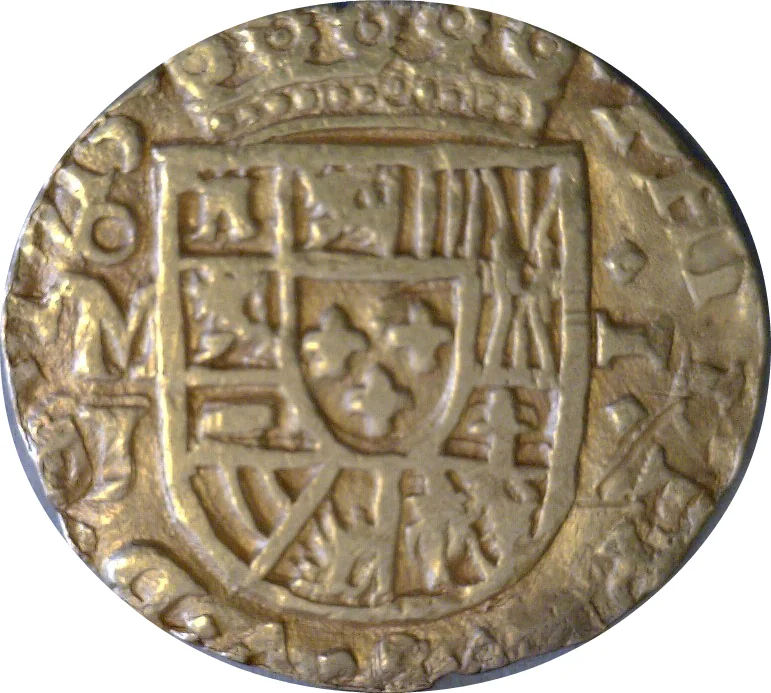
Obverse
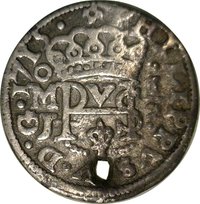
Description:
Felipe V's royal coat of arms, encircled by legend and date.
Inscription:
PHILIPVS V DEI G
Script: Latin
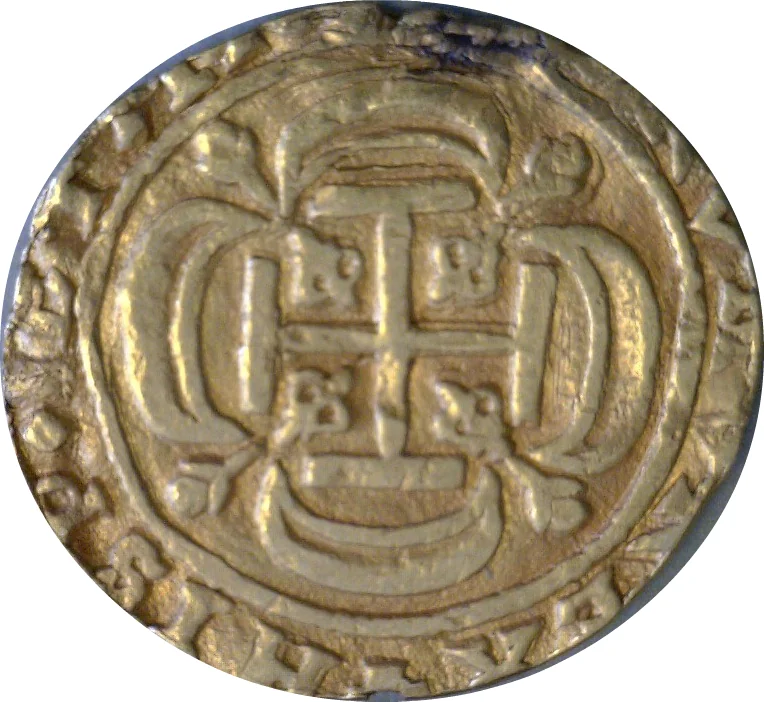
Reverse
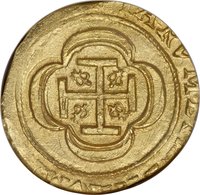
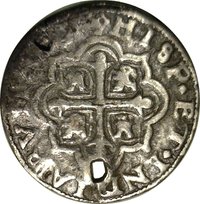
Description:
Spain's coat of arms.
Script: Latin
Edge
Mintings
| Year | Mint Mark | Mintage | Quality | Collection |
|---|---|---|---|---|
| 1714 | Mo | — | ||
| 1715 | Mo | — |
Historical background
In 1714, the currency system of New Spain was a complex and often unstable amalgamation of official royal coinage, foreign coins, and a chronic shortage of small-denomination currency. The backbone of the economy was the silver peso, minted at the famed Casa de Moneda in Mexico City, which produced the pillar dollar (or "piece of eight") recognized globally for its high silver content. However, the supply of officially minted coinage struggled to keep pace with the booming colonial economy, driven by prolific silver mines like those in Zacatecas and Guanajuato. This scarcity was exacerbated by the crown's policy of remitting vast quantities of silver to Spain, draining liquidity from the local economy.
To facilitate everyday transactions, the colony relied heavily on a cumbersome system of tlacos and pilones—token currencies issued by merchants, municipalities, and even churches. These tokens, often made of copper or base metals, were only redeemable at the establishment that issued them, creating a fragmented and unreliable medium of exchange. Furthermore, a wide variety of foreign coins, particularly from Peru (often of lower silver purity) and Spanish colonial mints elsewhere, circulated freely, leading to confusion over valuation and frequent fraud. The royal government viewed this proliferation of unofficial currency with suspicion, as it undermined royal authority and facilitated tax evasion.
The year 1714 fell within a period of ongoing but sluggish reform. The Spanish Crown was aware of the problems, but effective solutions were slow to implement. Attempts to introduce official copper coinage to alleviate the small-change shortage had historically sparked violent riots, as the public distrusted base metal currency. Therefore, while the silver peso anchored large-scale and international trade, the daily monetary experience for most residents of New Spain was one of improvisation and localized trust, a situation that would persist for much of the 18th century until the Bourbon reforms introduced more centralized control.
To facilitate everyday transactions, the colony relied heavily on a cumbersome system of tlacos and pilones—token currencies issued by merchants, municipalities, and even churches. These tokens, often made of copper or base metals, were only redeemable at the establishment that issued them, creating a fragmented and unreliable medium of exchange. Furthermore, a wide variety of foreign coins, particularly from Peru (often of lower silver purity) and Spanish colonial mints elsewhere, circulated freely, leading to confusion over valuation and frequent fraud. The royal government viewed this proliferation of unofficial currency with suspicion, as it undermined royal authority and facilitated tax evasion.
The year 1714 fell within a period of ongoing but sluggish reform. The Spanish Crown was aware of the problems, but effective solutions were slow to implement. Attempts to introduce official copper coinage to alleviate the small-change shortage had historically sparked violent riots, as the public distrusted base metal currency. Therefore, while the silver peso anchored large-scale and international trade, the daily monetary experience for most residents of New Spain was one of improvisation and localized trust, a situation that would persist for much of the 18th century until the Bourbon reforms introduced more centralized control.
✨ Legendary