

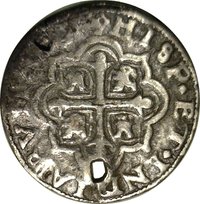
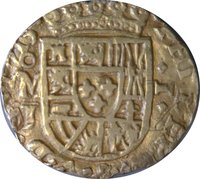
Obverse
Description:
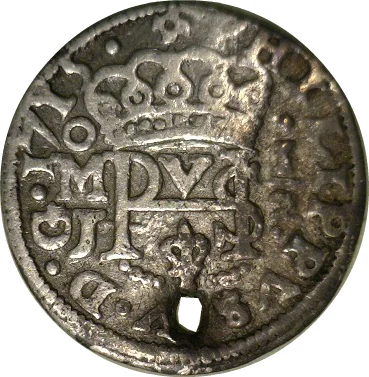
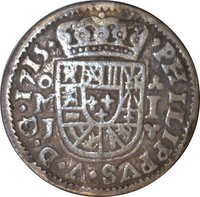
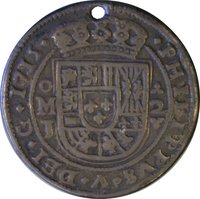
Felipe V's royal coat of arms, encircled by legend and date.
Inscription:
PHILIPVS V D G 1715
Script: Latin
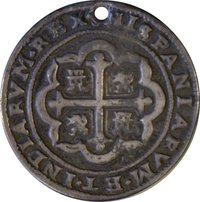
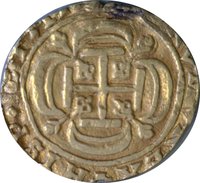
Reverse
Edge
Mintings
| Year | Mint Mark | Mintage | Quality | Collection |
|---|---|---|---|---|
| 1715 | Mo | — | ||
| 1719 | Mo | — | ||
| 1721 | Mo | — | ||
| 1722 | Mo | — | ||
| 1726 | Mo | — | ||
| 1727 | Mo | — |
Historical background
In 1715, the currency system of New Spain, the wealthiest viceroyalty of the Spanish Empire, was a complex and often chaotic blend of official minted coinage and a vast array of unofficial, circulating media. The backbone of the economy was the silver peso, minted at the famed Casa de Moneda in Mexico City, which produced the famous "pieces of eight." These coins, valued for their consistent silver content, were not only the primary medium for large transactions and international trade but also the lifeblood of the Spanish Empire, shipped annually to Spain in the treasure fleets. Alongside these, lower-value copper tlacos and pilones served as small change for the populace, though their value was highly localized and unstable.
However, the system was plagued by chronic shortages of small-denomination coinage for everyday commerce. This vacuum was filled by a bewildering array of substitutes: tokens issued by merchants and haciendas, cacao beans (a holdover from the pre-Hispanic economy), and even clipped or cut sections of silver coins. This proliferation of unofficial currency led to widespread confusion, fraud, and frequent disputes. Furthermore, the monetary supply was vulnerable to the irregular arrival of the Spanish treasure fleets, which could cause sharp fluctuations in economic activity, and to the persistent problem of currency leaving the colony for trade in Asia via the Manila Galleon.
The Spanish Crown, recognizing the disorder as a threat to royal authority and tax collection, had attempted reforms. The most significant recent effort was the 1712 decree authorizing the minting of new copper coins (moneda de molde) to standardize small change. By 1715, these coins were beginning to circulate, but they faced immediate public distrust and inflation, as people feared the government was substituting less valuable copper for silver. Thus, the currency situation in 1715 was one of transition and tension, caught between a global silver standard and a local, fractured system of daily exchange, with royal authority struggling to impose order on a deeply entrenched and informal economic reality.
However, the system was plagued by chronic shortages of small-denomination coinage for everyday commerce. This vacuum was filled by a bewildering array of substitutes: tokens issued by merchants and haciendas, cacao beans (a holdover from the pre-Hispanic economy), and even clipped or cut sections of silver coins. This proliferation of unofficial currency led to widespread confusion, fraud, and frequent disputes. Furthermore, the monetary supply was vulnerable to the irregular arrival of the Spanish treasure fleets, which could cause sharp fluctuations in economic activity, and to the persistent problem of currency leaving the colony for trade in Asia via the Manila Galleon.
The Spanish Crown, recognizing the disorder as a threat to royal authority and tax collection, had attempted reforms. The most significant recent effort was the 1712 decree authorizing the minting of new copper coins (moneda de molde) to standardize small change. By 1715, these coins were beginning to circulate, but they faced immediate public distrust and inflation, as people feared the government was substituting less valuable copper for silver. Thus, the currency situation in 1715 was one of transition and tension, caught between a global silver standard and a local, fractured system of daily exchange, with royal authority struggling to impose order on a deeply entrenched and informal economic reality.
✨ Legendary