

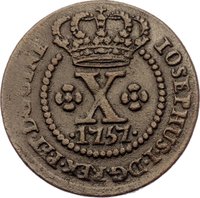
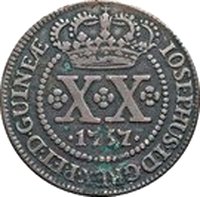
Obverse
Description:
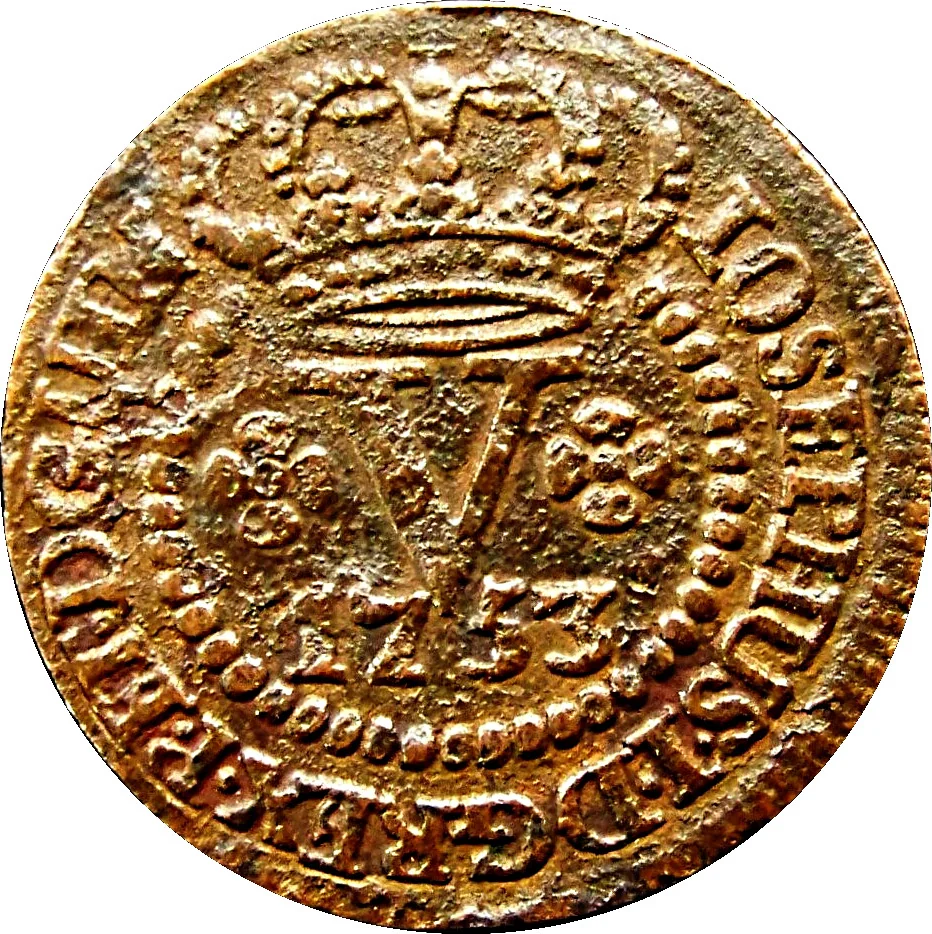
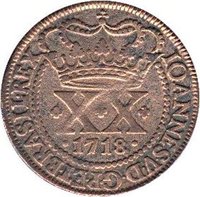
Crowned pearl circle with flowers, date, and value "V."
Inscription:
IOSEPHUS·I·D·G·REX·P·ET·D·GUIN·
V
1753
V
1753
Script: Latin
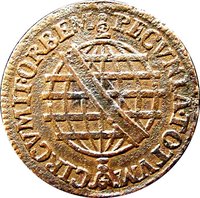
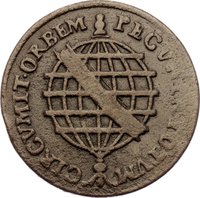
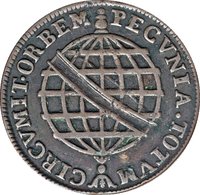
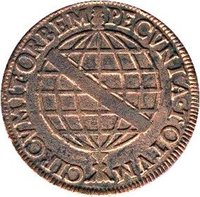
Reverse
Edge
Plain
Mints
| Name | Mark |
|---|---|
| Imprensa Nacional - Casa da Moeda | — |
Mintings
| Year | Mint Mark | Mintage | Quality | Collection |
|---|---|---|---|---|
| 1752 | — | — | ||
| 1753 | — | 232,308 | ||
| 1757 | — | — |
Historical background
In 1752, the currency situation in the Kingdom of Angola (a Portuguese colony) was characterized by a severe shortage of official coinage and a heavy reliance on commodity money. The Portuguese real was the official unit of account, but actual coins, especially high-value gold and silver, were scarce in the local economy. This scarcity stemmed from Portugal's mercantilist policies, which drained precious metals back to the metropole, and the colony's primary economic focus being the transatlantic slave trade, where currency was often secondary to the exchange of human captives for manufactured goods.
The most common and practical medium of exchange was a standardized commodity: bundles of libongos, or zimbos—small seashells, specifically cowries, imported from the Maldives. This shell currency was deeply entrenched in local and regional trade networks that predated Portuguese arrival and remained vital for everyday transactions, including paying wages and purchasing foodstuffs in local markets. Its value was officially pegged by the colonial administration, with regulations attempting to fix exchange rates between bundles of shells and Portuguese réis, though these rates were subject to fluctuation and manipulation.
Furthermore, a system of trade credits and barter dominated larger-scale commerce, particularly the slave trade. Portuguese lançados (traders) and pombeiros (African agents) would advance goods like textiles, firearms, rum, and beads to local Imbangala and Mbundu rulers. These goods, acting as a de facto currency, were then used to acquire enslaved people, who themselves became the ultimate "currency" for export. Thus, Angola in 1752 operated with a complex, layered monetary system where imported shells, traded goods, and human beings all served the functions of money, underscoring the colony's extractive and tragic role within the Atlantic world.
The most common and practical medium of exchange was a standardized commodity: bundles of libongos, or zimbos—small seashells, specifically cowries, imported from the Maldives. This shell currency was deeply entrenched in local and regional trade networks that predated Portuguese arrival and remained vital for everyday transactions, including paying wages and purchasing foodstuffs in local markets. Its value was officially pegged by the colonial administration, with regulations attempting to fix exchange rates between bundles of shells and Portuguese réis, though these rates were subject to fluctuation and manipulation.
Furthermore, a system of trade credits and barter dominated larger-scale commerce, particularly the slave trade. Portuguese lançados (traders) and pombeiros (African agents) would advance goods like textiles, firearms, rum, and beads to local Imbangala and Mbundu rulers. These goods, acting as a de facto currency, were then used to acquire enslaved people, who themselves became the ultimate "currency" for export. Thus, Angola in 1752 operated with a complex, layered monetary system where imported shells, traded goods, and human beings all served the functions of money, underscoring the colony's extractive and tragic role within the Atlantic world.
💎 Extremely Rare