

2 escudos – Colombia
Add to wishlist
Colombia
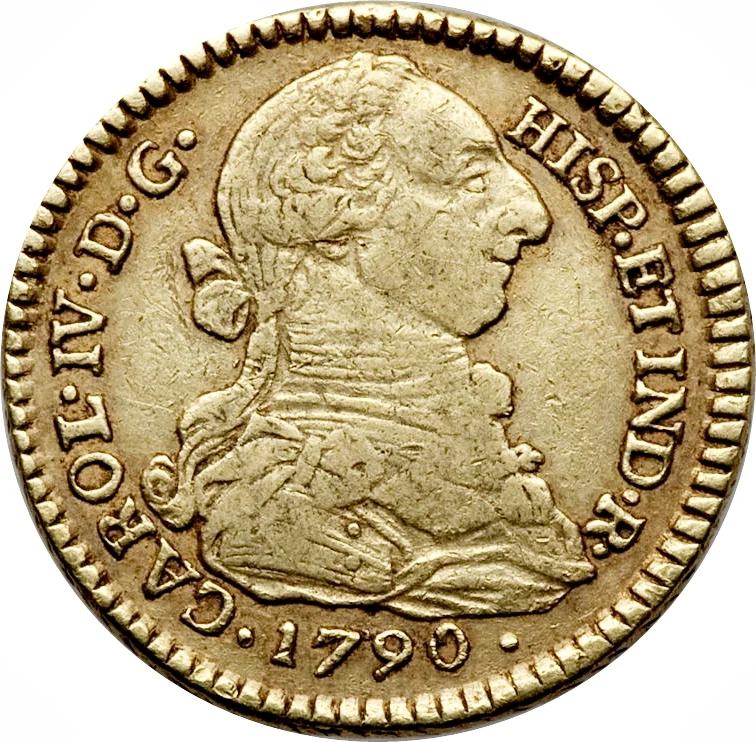
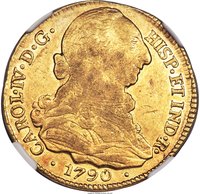
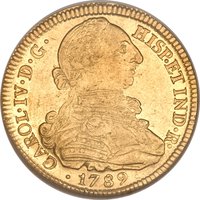
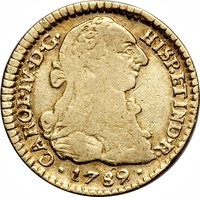
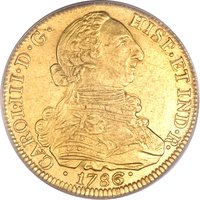
Obverse
Description:
Carlos III bust with legend. Date beneath.
Inscription:
CAROL·IV· D·G·
HISP· ET IND·R·
·1791·
HISP· ET IND·R·
·1791·
Script: Latin
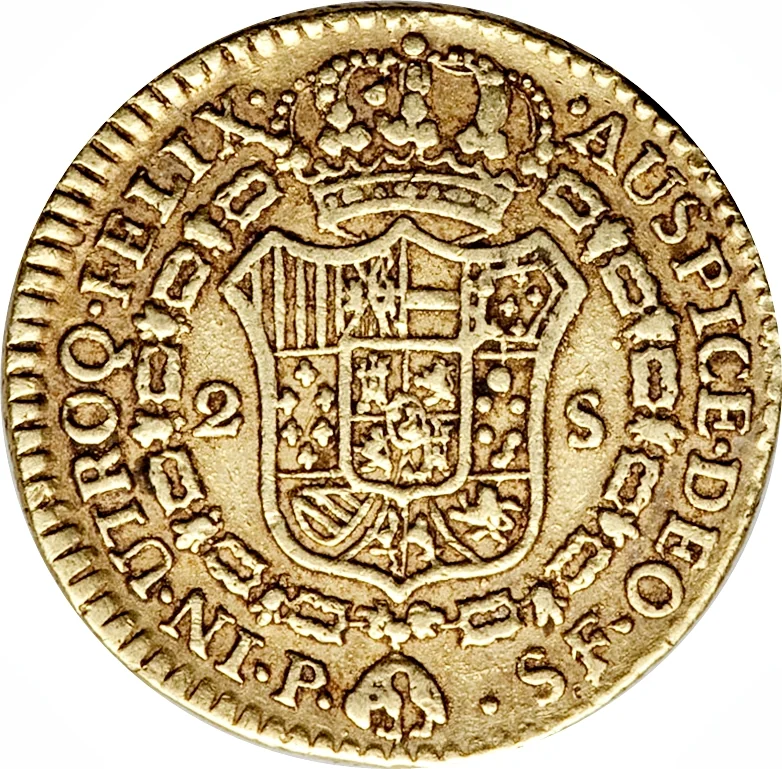
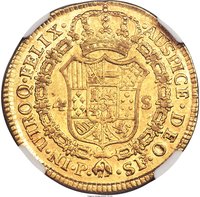
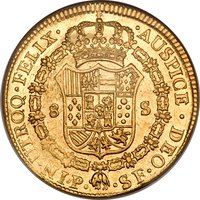
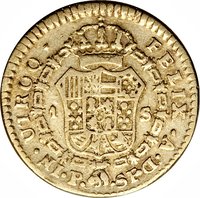
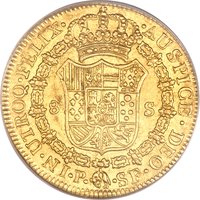
Reverse
Description:
Coat of arms encircled by chain and inscription.
Inscription:
IN.UTROQ.FELIX. AUSPICE.DEO.
P.SF
2 S
P.SF
2 S
Script: Latin
Edge
Categories
| Symbols> Coat of Arms |
| Person> Monarch |
Mints
| Name | Mark |
|---|---|
| Bogota Mint | NR |
| Casa de Moneda de Colombia | P |
Historical background
In 1789, the currency situation in the Kingdom of New Granada (modern-day Colombia) was characterized by severe scarcity and administrative confusion, a legacy of Spain's restrictive colonial economic policies. The Spanish Crown maintained a mercantilist system where precious metals, primarily gold and silver mined in the Americas, were funneled to Spain, leaving the colony chronically short of official coinage. While the Bogotá mint produced some gold escudos and silver reales, the supply was insufficient for local commerce. This scarcity was exacerbated by the Crown's prohibition on the circulation of foreign coins and its insistence that taxes be paid in specific, often unavailable, currency.
To facilitate everyday transactions, colonists relied heavily on a chaotic system of moneda macuquina—crudely cut and hammered pieces of gold and silver that were irregular in shape and weight, leading to constant disputes and fraud. Furthermore, due to the lack of small change, various substitute currencies circulated, including templos (copper tokens issued by churches) and even cacao beans in some regional markets. This monetary fragmentation hindered economic growth and trade, creating a complex and inefficient marketplace where the intrinsic value and trust in the physical medium were constantly in question.
The year 1789 itself fell within the period of the Bourbon Reforms, under King Charles III, which aimed to increase colonial revenue and centralize control. While these reforms included some monetary adjustments, they did not resolve the fundamental shortage. The situation would persist until the early 19th century, contributing to the economic grievances that fueled the independence movement. Thus, the currency landscape of 1789 was one of scarcity, improvisation, and frustration, reflecting the broader tensions within the Spanish colonial empire.
To facilitate everyday transactions, colonists relied heavily on a chaotic system of moneda macuquina—crudely cut and hammered pieces of gold and silver that were irregular in shape and weight, leading to constant disputes and fraud. Furthermore, due to the lack of small change, various substitute currencies circulated, including templos (copper tokens issued by churches) and even cacao beans in some regional markets. This monetary fragmentation hindered economic growth and trade, creating a complex and inefficient marketplace where the intrinsic value and trust in the physical medium were constantly in question.
The year 1789 itself fell within the period of the Bourbon Reforms, under King Charles III, which aimed to increase colonial revenue and centralize control. While these reforms included some monetary adjustments, they did not resolve the fundamental shortage. The situation would persist until the early 19th century, contributing to the economic grievances that fueled the independence movement. Thus, the currency landscape of 1789 was one of scarcity, improvisation, and frustration, reflecting the broader tensions within the Spanish colonial empire.
Series: 1789 Colombia circulation coins
✨ Legendary