

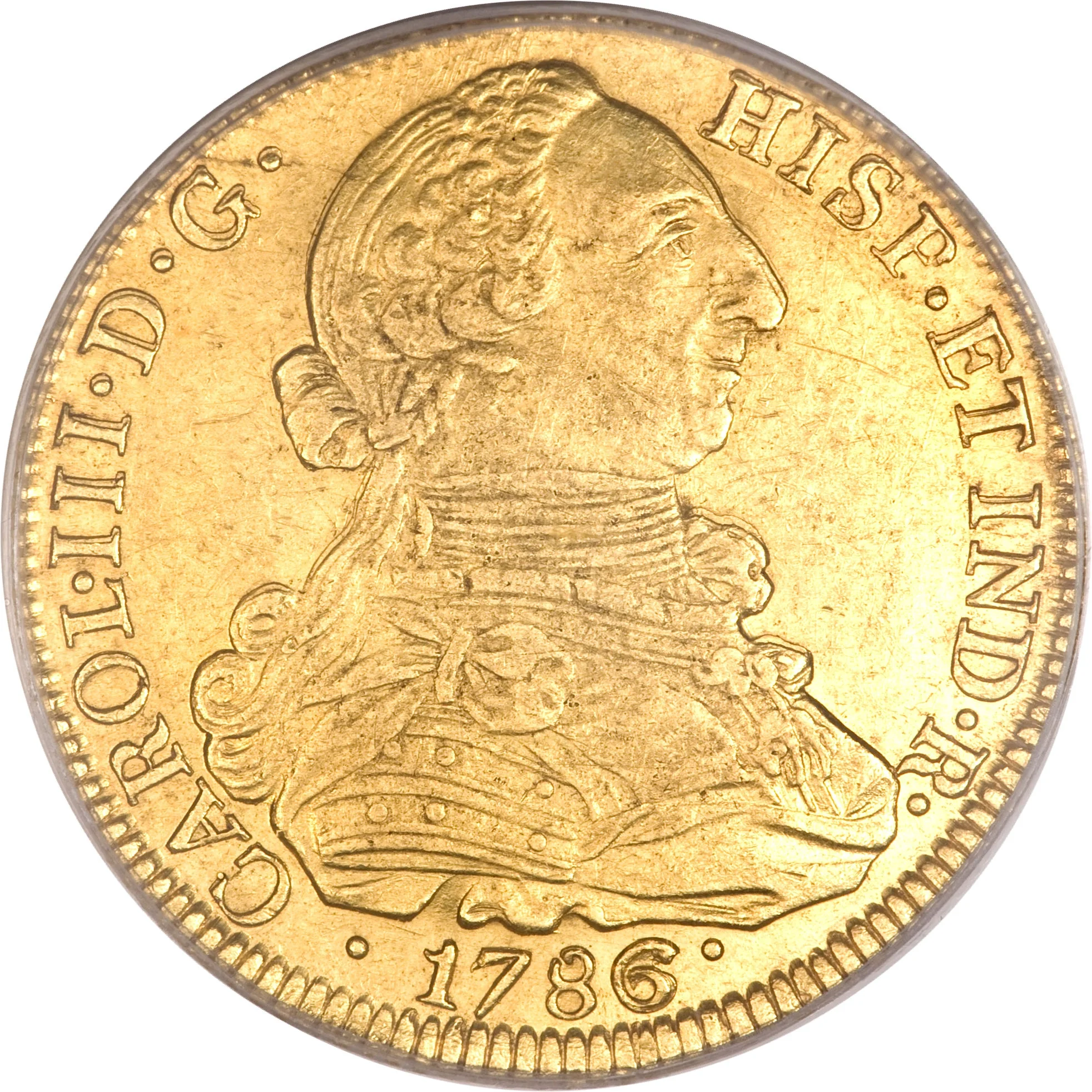
Obverse
Description:
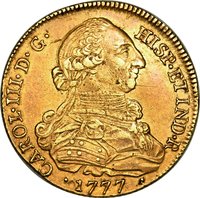
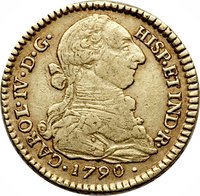
Carlos III bust with legend. Date beneath.
Inscription:
CAROL·III· D·G·
HISP· ET IND·R·
·1786·
HISP· ET IND·R·
·1786·
Script: Latin
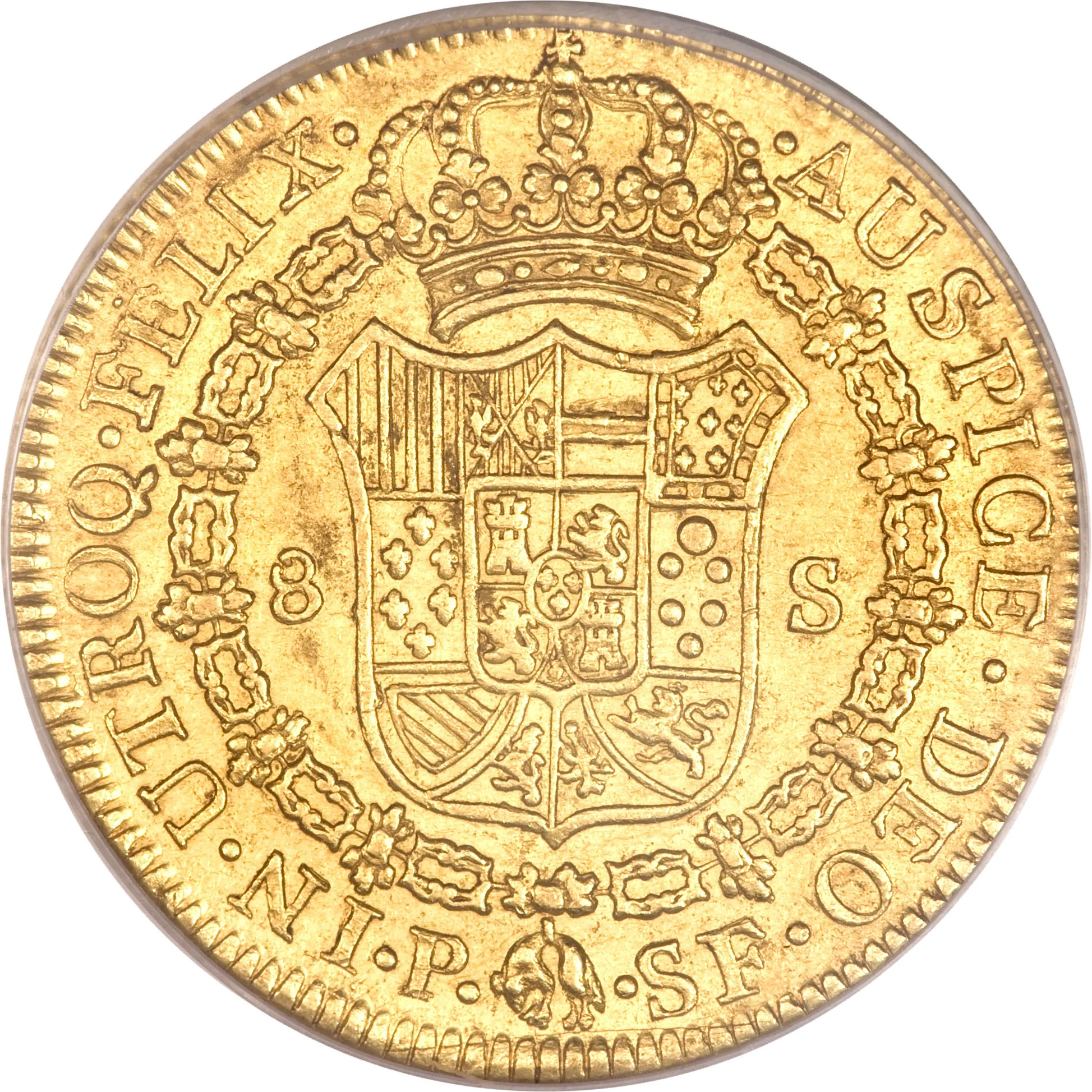
Reverse
Description:
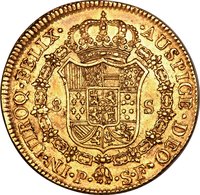
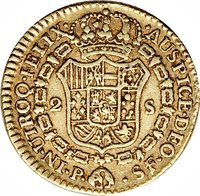
Coat of arms encircled by chain and inscription.
Inscription:
·IN·UTROQ·FELIX· ·AUSPICE·DEO·
8 S
P· ·SF
8 S
P· ·SF
Script: Latin
Edge
Mints
| Name | Mark |
|---|---|
| Bogota Mint | NR |
| Casa de Moneda de Colombia | P |
Mintings
Historical background
In 1785, the Viceroyalty of New Granada, encompassing modern-day Colombia, operated within the complex monetary system of the Spanish Empire. The official currency was based on the silver real and the gold escudo, with 16 silver reales equaling 1 gold escudo. However, the colony suffered from a chronic shortage of official minted coinage. This scarcity was due to mercantilist policies that drained precious metals to Spain, limited local minting capacity, and the vast distances and poor infrastructure that hindered circulation within the colony itself. As a result, economic activity often relied on a cumbersome system of barter or the use of worn, clipped, and foreign coins (like Peruvian or Mexican pieces of eight), leading to frequent disputes over values and authenticity.
To alleviate this persistent shortage, the Spanish Crown had authorized the establishment of a mint in Bogotá as early as 1620, but its output was inconsistent. By 1785, the Casa de la Moneda de Bogotá was operational, producing primarily silver coins. Yet, its production could not meet the demands of a growing and geographically fragmented economy. The situation was further complicated by the use of tlacos in some regions—token-like credit notes issued by local merchants—which, while facilitating local trade, underscored the absence of sufficient royal currency and created informal, unstable monetary circuits.
This monetary scarcity and confusion occurred under the administration of Viceroy Antonio Caballero y Góngora (1782–1789), a period marked by enlightened reform efforts following the Comunero Revolt of 1781. While the Bourbon Reforms aimed to increase efficiency and revenue for the Crown, they did not immediately solve the fundamental currency problem. The inadequate and chaotic monetary environment of 1785 thus acted as a significant brake on commerce and administration, fostering regional economic fragmentation and contributing to the grievances that would later fuel movements for independence.
To alleviate this persistent shortage, the Spanish Crown had authorized the establishment of a mint in Bogotá as early as 1620, but its output was inconsistent. By 1785, the Casa de la Moneda de Bogotá was operational, producing primarily silver coins. Yet, its production could not meet the demands of a growing and geographically fragmented economy. The situation was further complicated by the use of tlacos in some regions—token-like credit notes issued by local merchants—which, while facilitating local trade, underscored the absence of sufficient royal currency and created informal, unstable monetary circuits.
This monetary scarcity and confusion occurred under the administration of Viceroy Antonio Caballero y Góngora (1782–1789), a period marked by enlightened reform efforts following the Comunero Revolt of 1781. While the Bourbon Reforms aimed to increase efficiency and revenue for the Crown, they did not immediately solve the fundamental currency problem. The inadequate and chaotic monetary environment of 1785 thus acted as a significant brake on commerce and administration, fostering regional economic fragmentation and contributing to the grievances that would later fuel movements for independence.
✨ Legendary