

1 Quattrino – Bologna
Italy

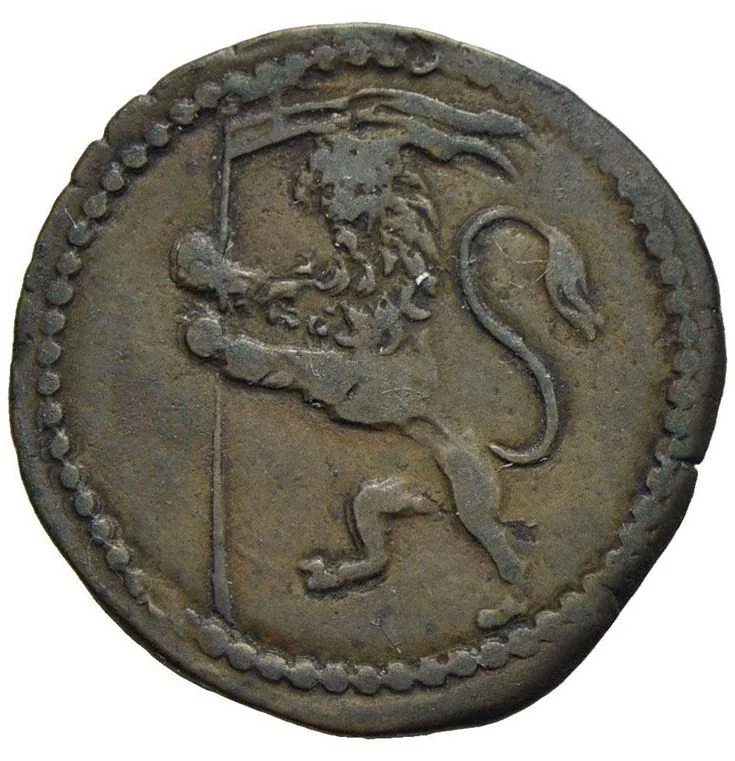
Obverse
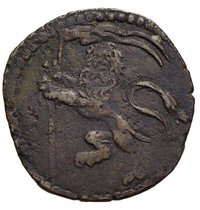
Description:
Rampant lion holding a banner.
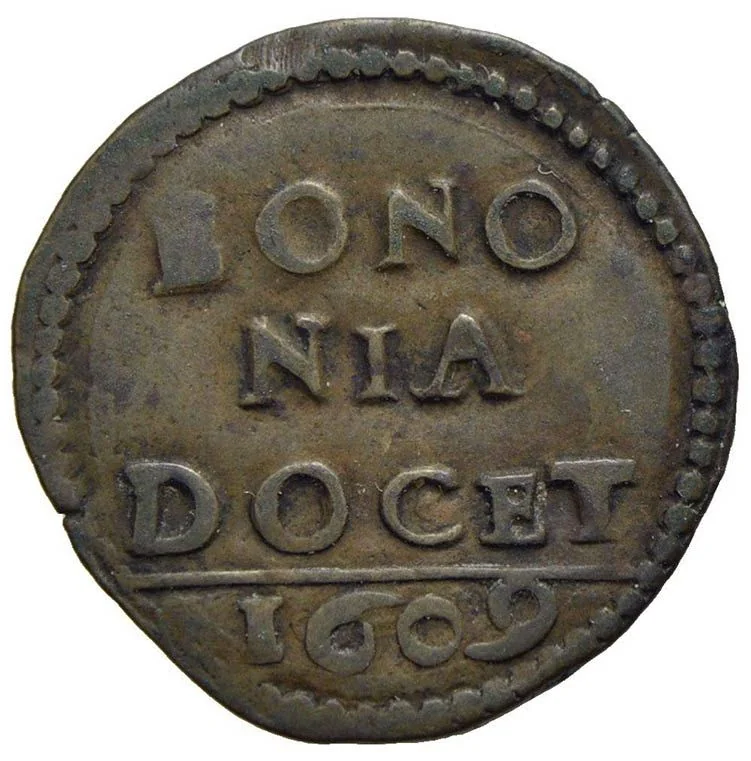
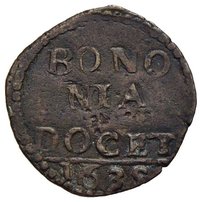
Reverse
Edge
Plain
Mints
| Name | Mark |
|---|---|
| Bologna | — |
Mintings
| Year | Mint Mark | Mintage | Quality | Collection |
|---|---|---|---|---|
| 1607 | — | — | ||
| 1608 | — | — | ||
| 1609 | — | — | ||
| 1610 | — | — | ||
| 1611 | — | — | ||
| 1612 | — | — | ||
| 1613 | — | — | ||
| 1614 | — | — | ||
| 1615 | — | — | ||
| 1616 | — | — | ||
| 1617 | — | — | ||
| 1618 | — | — | ||
| 1619 | — | — | ||
| 1620 | — | — |
Historical background
In 1607, Bologna operated within the complex monetary landscape of the Papal States, to which it belonged. The city’s commerce relied on a bimetallic system of gold and silver coins, but it was plagued by chronic instability. The primary unit of account was the lira bolognese, a theoretical value used for bookkeeping and contracts, but actual transactions were conducted using a confusing array of physical coins from various Italian and European states, including Papal scudi, Venetian ducats, and Spanish reales. This proliferation of currencies, each with fluctuating metallic content and exchange rates, created constant uncertainty for merchants and citizens alike.
The core problem was a severe shortage of high-quality, full-weight coinage, a phenomenon known as "bad money driving out good" (Gresham's Law). Due to the city's trade deficits and the practice of clipping or debasing coins, good silver and gold pieces were often hoarded or exported, leaving inferior and worn coins in daily circulation. This led to frequent disputes over real value versus face value, and the city's monetary officials (Massari della Zecca) struggled to enforce official tariffs. The situation was exacerbated by the autonomous Bologna mint, which occasionally issued local coins like the bolognino, but these often failed to solve the structural shortage.
This monetary confusion had direct social and economic consequences. Prices for essential goods like grain were volatile, as sellers adjusted for perceived coin quality. Debt contracts became risky, as repayment in debased coin could ruin creditors. The Papal government in Rome issued periodic decrees to stabilize the situation, but these edicts were difficult to enforce locally. Thus, in 1607, Bologna's currency situation was characterized by a fragile and frustrating duality: a stable lira for accounting purposes existing alongside a chaotic and unreliable physical coinage in the marketplace, hindering trade and sowing distrust in everyday economic life.
The core problem was a severe shortage of high-quality, full-weight coinage, a phenomenon known as "bad money driving out good" (Gresham's Law). Due to the city's trade deficits and the practice of clipping or debasing coins, good silver and gold pieces were often hoarded or exported, leaving inferior and worn coins in daily circulation. This led to frequent disputes over real value versus face value, and the city's monetary officials (Massari della Zecca) struggled to enforce official tariffs. The situation was exacerbated by the autonomous Bologna mint, which occasionally issued local coins like the bolognino, but these often failed to solve the structural shortage.
This monetary confusion had direct social and economic consequences. Prices for essential goods like grain were volatile, as sellers adjusted for perceived coin quality. Debt contracts became risky, as repayment in debased coin could ruin creditors. The Papal government in Rome issued periodic decrees to stabilize the situation, but these edicts were difficult to enforce locally. Thus, in 1607, Bologna's currency situation was characterized by a fragile and frustrating duality: a stable lira for accounting purposes existing alongside a chaotic and unreliable physical coinage in the marketplace, hindering trade and sowing distrust in everyday economic life.
⭐ Rare