

2 deniers – France
Add to wishlist
France
Context
Material
References
KM: #
Numista: #52643
Obverse
Description:
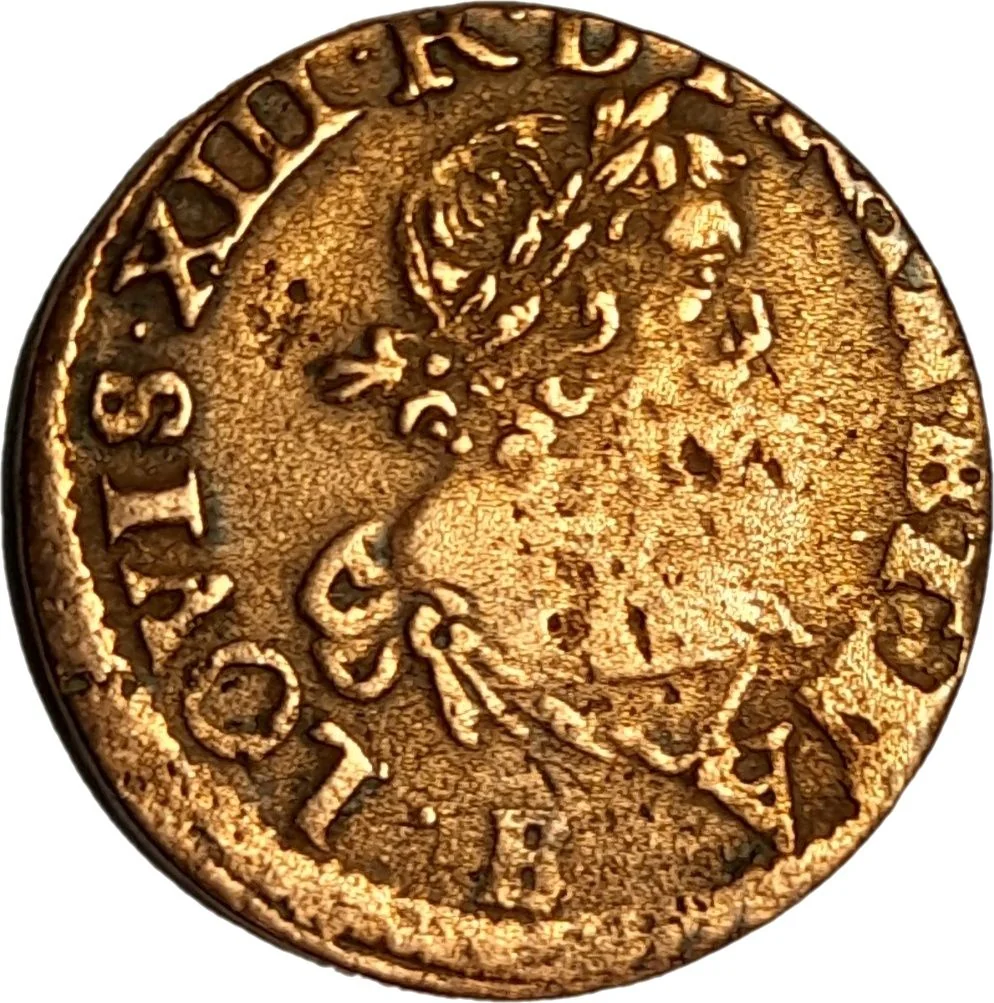
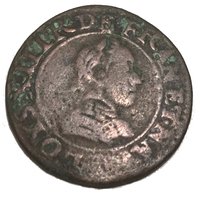
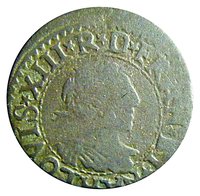
Louis XIII laureate bust right, flat collar. Legend begins at 4 o'clock.
Inscription:
LOYS.XIII.R.DE.FRAN.ET.NAV B (a)
LOYS.XIII.R.DE.FRAN.ET.NAV. B (b)
LOYS.XIII.R.DE.FRAN.ET.NAV .B. (c)
LOYS.XIII.R.DE.FRAN.ET NAV .B. (c bis)
LOYS.XIII.R.DE.FRAN.ET.NAV. .B. (d)
LOYS.XIII.R.DE.FRAN.ET.NA B (e)
LOYS.XIII.R.DE.FRAN.ET.NA. B (f)
LOYS.XIII.R.DE.FRAN.ET.NA. .B. (g)
LOYS.XIII.R.DE.FRAN.ET.NA ..B.. (h)
LOYS.XIII.R.DE.FRAN.ET.NAVA. (i)
LOYS.XIII.R.DE.FRAN.ET.NAV. (j)
LOYS.XIII.R.DE.FRAN.ET.NA. (k)
LOYS.XIII.R.DE.FRAN.ET.NA (l)
LOYS.XIII.R.DE.FRAN.ET.N (m)
LOYS.XIII.R.DE.FRAN.ET.NAV .(gros point). (n)
LOYS.XIII.R.DE.FRAN.ET.NAV (gros point) (o)
LOYS.XIII.R.DE.FRAN.ET.NAV. B (b)
LOYS.XIII.R.DE.FRAN.ET.NAV .B. (c)
LOYS.XIII.R.DE.FRAN.ET NAV .B. (c bis)
LOYS.XIII.R.DE.FRAN.ET.NAV. .B. (d)
LOYS.XIII.R.DE.FRAN.ET.NA B (e)
LOYS.XIII.R.DE.FRAN.ET.NA. B (f)
LOYS.XIII.R.DE.FRAN.ET.NA. .B. (g)
LOYS.XIII.R.DE.FRAN.ET.NA ..B.. (h)
LOYS.XIII.R.DE.FRAN.ET.NAVA. (i)
LOYS.XIII.R.DE.FRAN.ET.NAV. (j)
LOYS.XIII.R.DE.FRAN.ET.NA. (k)
LOYS.XIII.R.DE.FRAN.ET.NA (l)
LOYS.XIII.R.DE.FRAN.ET.N (m)
LOYS.XIII.R.DE.FRAN.ET.NAV .(gros point). (n)
LOYS.XIII.R.DE.FRAN.ET.NAV (gros point) (o)
Script: Latin
Reverse
Description:
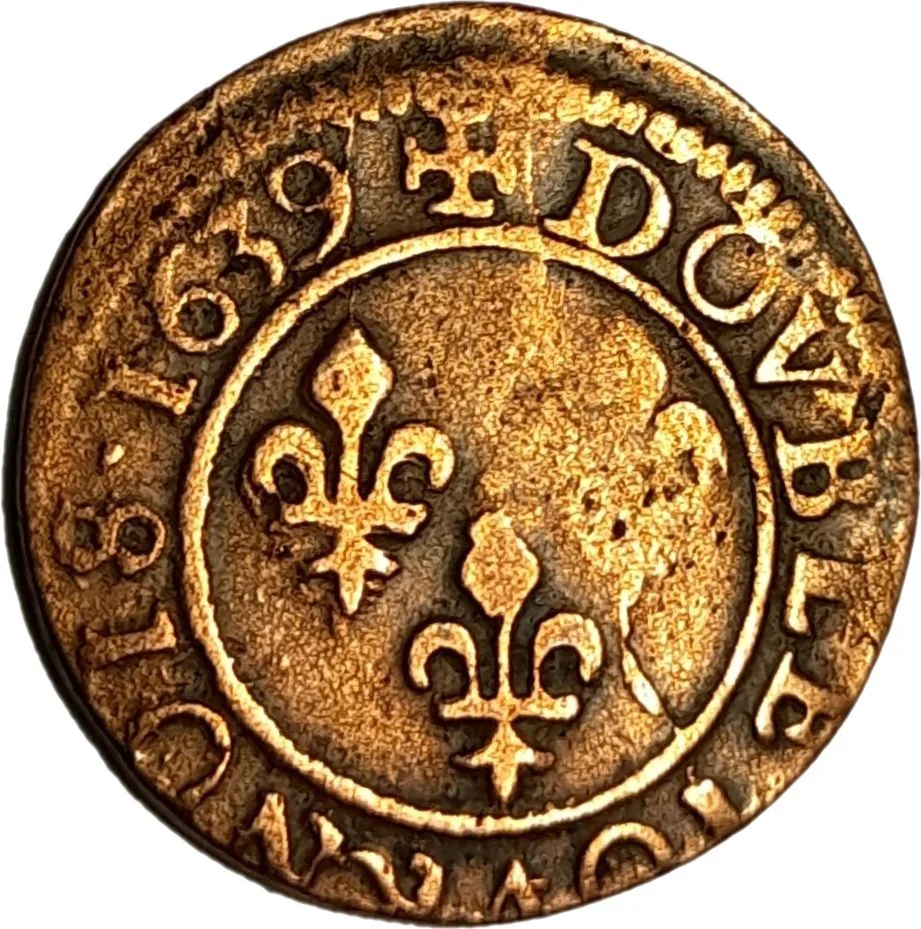
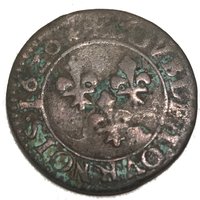
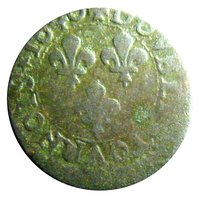
Three lilies, two and one. Legend begins at twelve, encircled smoothly.
Inscription:
+ DOVBLE.TOVRNOIS.(millésime) (1)
+ DOVBL.E TOVRNOIS (millésime) (2)
+ DOVBLE TOVRNOIS (millésime) (3)
+ DOBLE.TOVRNOIS.(millésime) (4)
+ DOVBL.E TOVRNOIS (millésime) (2)
+ DOVBLE TOVRNOIS (millésime) (3)
+ DOBLE.TOVRNOIS.(millésime) (4)
Script: Latin
Edge
Plain
Mints
| Name | Mark |
|---|---|
| Rouen | — |
Mintings
| Year | Mint Mark | Mintage | Quality | Collection |
|---|---|---|---|---|
| 1637 | B | — | ||
| 1638 | B | — | ||
| 1639 | B | — | ||
| 1640 | B | — |
Historical background
In 1637, France operated under a complex and strained monetary system typical of the early modern period. The official currency was the livre tournois (divided into sous and deniers), a unit of account used for bookkeeping and contracts, but the physical money in circulation was a chaotic mix of actual coins. These included gold écus and louis d’or, silver francs and testoons, and vast quantities of copper billon. Critically, the face value of these coins was often decreed by royal authority rather than being tied strictly to their metallic content, a policy that led to persistent instability.
This instability was acutely felt because France, under the guidance of Cardinal Richelieu, was deeply engaged in the Thirty Years' War (1618-1648). The enormous cost of financing armies and subsidies to allies created a chronic fiscal crisis. To raise funds, the crown repeatedly resorted to debasement—reducing the precious metal content in coins while ordering them to circulate at the same face value. This practice, alongside the issuance of new coin types, created confusion, fueled inflation, and sparked a vicious cycle where good, full-weight coins were hoarded or exported (Gresham's Law), leaving poorer currency in circulation and further eroding public trust.
Consequently, the monetary situation was one of localized scarcity and widespread anxiety. Merchants and peasants struggled with fluctuating values, while currency speculators profited. The government's attempts to fix prices and mandate acceptance of debased coinage often failed, leading to market disruptions. Thus, in 1637, the French currency system was less a stable foundation for the economy and more a tool of state finance, manipulated to serve wartime exigencies at the expense of economic predictability for the population.
This instability was acutely felt because France, under the guidance of Cardinal Richelieu, was deeply engaged in the Thirty Years' War (1618-1648). The enormous cost of financing armies and subsidies to allies created a chronic fiscal crisis. To raise funds, the crown repeatedly resorted to debasement—reducing the precious metal content in coins while ordering them to circulate at the same face value. This practice, alongside the issuance of new coin types, created confusion, fueled inflation, and sparked a vicious cycle where good, full-weight coins were hoarded or exported (Gresham's Law), leaving poorer currency in circulation and further eroding public trust.
Consequently, the monetary situation was one of localized scarcity and widespread anxiety. Merchants and peasants struggled with fluctuating values, while currency speculators profited. The government's attempts to fix prices and mandate acceptance of debased coinage often failed, leading to market disruptions. Thus, in 1637, the French currency system was less a stable foundation for the economy and more a tool of state finance, manipulated to serve wartime exigencies at the expense of economic predictability for the population.
⭐ Somewhat Rare