

2 Deniers – France
France
Context

Material
References
KM: #Click to copy to clipboard86.5
Numista: #52197
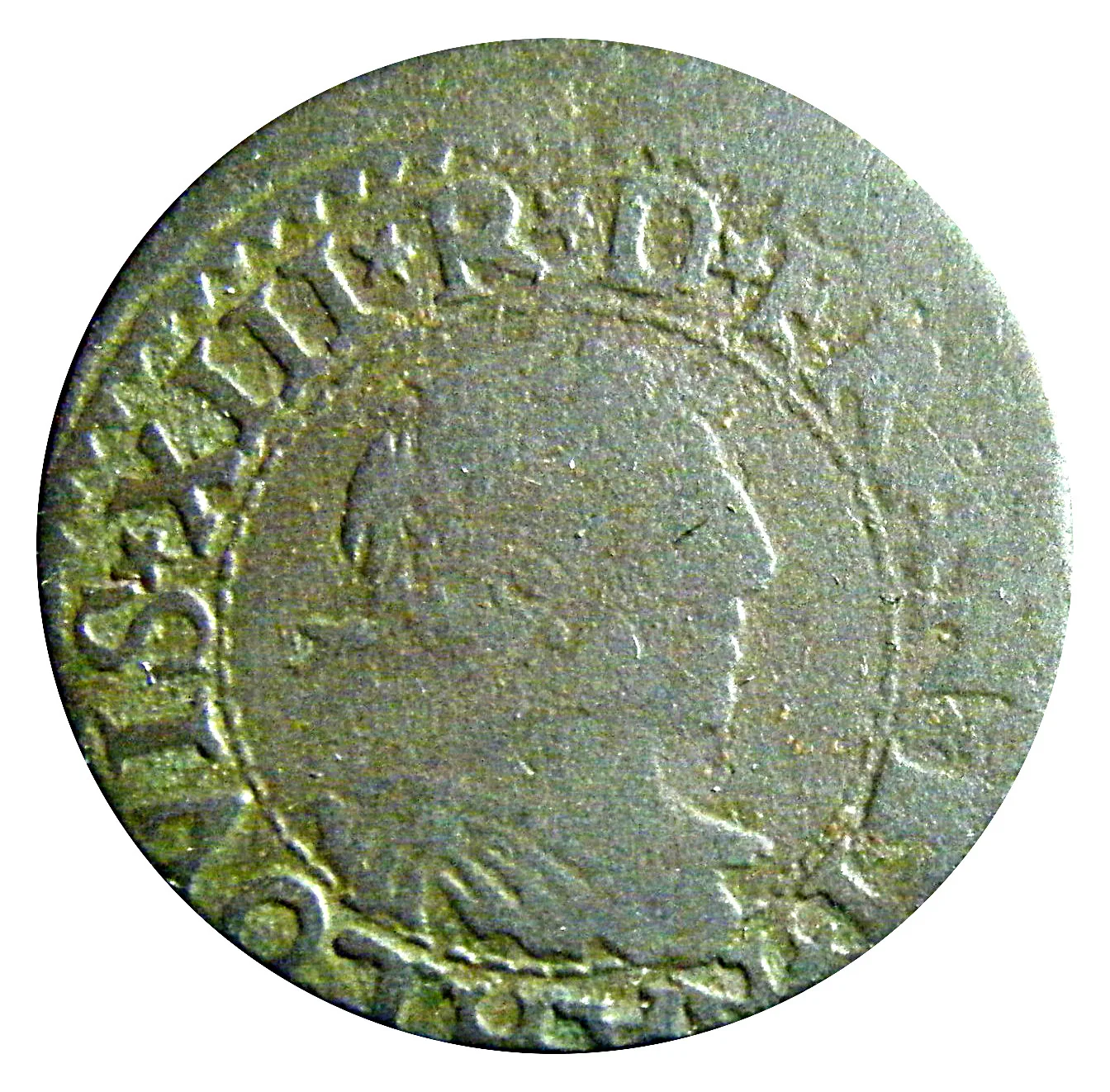
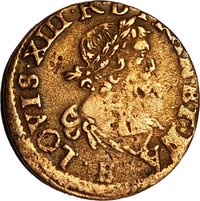
Obverse
Description:
Starting at 6 o'clock: smooth circle, beaded or plain.
Inscription:
LOVIS XIII R D FRAN ET NAV H (a)
LOVIS XIII R D FRAN ET NAV.H (b)
LOVIS.XIII.R.D.FRAN.ET.NAV H. (c)
LOVIS★XIII★R★D★FRAN★ET★NA H (d)
LOVIS★XIII★R★D★FRAN★ET★N H (e)
LOVIS XIII R D FRAN ET NA H (f)
LOVIS.XIII.R.D.FRAN.ET.NA.H. (g)
LOVIS XIII R D FRAN ET N H (h)
LOVIS XIII R D FRAN ET NA H. (i)
LOVIS XIII R D FRAN ET NAV.H (b)
LOVIS.XIII.R.D.FRAN.ET.NAV H. (c)
LOVIS★XIII★R★D★FRAN★ET★NA H (d)
LOVIS★XIII★R★D★FRAN★ET★N H (e)
LOVIS XIII R D FRAN ET NA H (f)
LOVIS.XIII.R.D.FRAN.ET.NA.H. (g)
LOVIS XIII R D FRAN ET N H (h)
LOVIS XIII R D FRAN ET NA H. (i)
Script: Latin
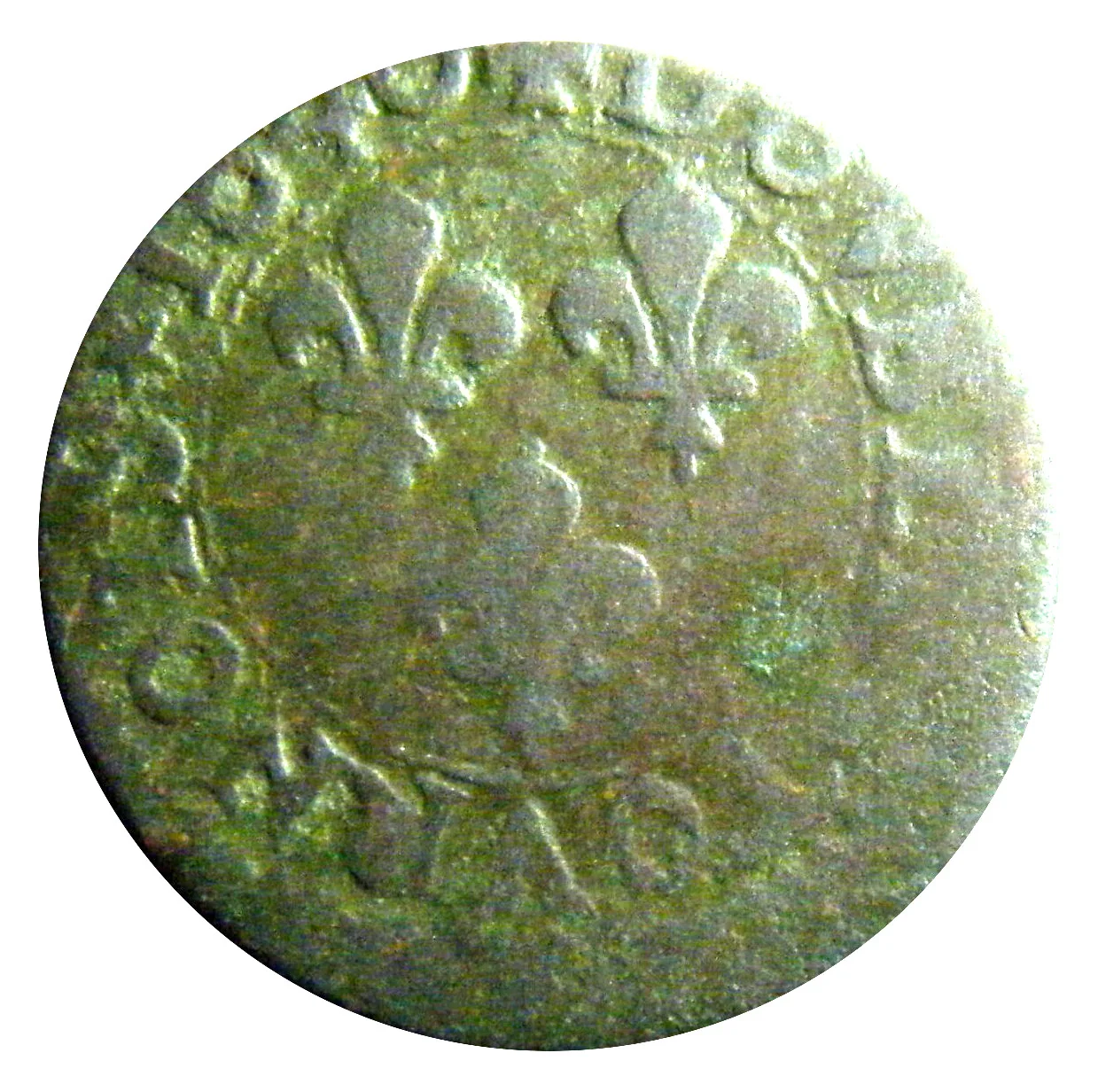
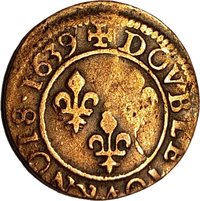
Reverse
Description:
Smooth or beaded circle starting at 12 o'clock.
Inscription:
+ DOVBLE TOVRNOIS (millésime) (1)
+ DOVBLE.TOVRNOIS (millésime) (2)
+ DOVBLE.TOVRNOIS.(millésime) (3)
+ DOVBLE.TOVRNOIS.(millésime). (4)
+.DOVBLE.TOVRNOIS.(millésime). (5)
+ DOVBLE★TOVRNOIS★(millésime) (6)
+ DOVBLE.TOVRNOIS (millésime) (2)
+ DOVBLE.TOVRNOIS.(millésime) (3)
+ DOVBLE.TOVRNOIS.(millésime). (4)
+.DOVBLE.TOVRNOIS.(millésime). (5)
+ DOVBLE★TOVRNOIS★(millésime) (6)
Script: Latin
Edge
Plain
Mintings
| Year | Mint Mark | Mintage | Quality | Collection |
|---|---|---|---|---|
| 1638 | H | — | ||
| 1639 | H | — | ||
| 1640 | H | — |
Historical background
In 1638, France was in the midst of the long and financially draining Thirty Years' War, a conflict that placed immense strain on the royal treasury under King Louis XIII and his chief minister, Cardinal Richelieu. The primary currency in circulation was the livre tournois, a money of account (a unit for bookkeeping), alongside physical coins like the écu (a gold coin) and the sol (a silver coin). However, the state's desperate need for revenue led to repeated manipulations of the coinage. The monarchy would officially raise the face value of coins (a practice called augmentation) or reduce their precious metal content, thereby creating more currency from the same amount of gold and silver to pay armies and settle debts.
This period was characterized by severe monetary instability and inflation. The manipulations created a chaotic system where the intrinsic value of a coin (its metal content) and its official legal value were constantly diverging. This led to Gresham's Law in action, where "bad money drives out good"—people hoarded older, full-weight coins and spent the newer, debased ones, further disrupting the economy. The situation was exacerbated by the actions of currency speculators and traitants (private financiers who advanced money to the crown in return for the right to collect taxes), who profited from the fluctuations, often at the expense of merchants and the peasantry.
Consequently, the currency situation in 1638 was one of profound crisis and loss of confidence. While providing short-term fiscal relief for the crown, the debasements eroded public trust, distorted prices and trade, and placed a heavy, hidden tax on the population. This financial turmoil was a key factor leading to the popular revolts known as the va-nu-pieds in Normandy in 1639 and contributed to the systemic fiscal problems that would culminate in the Fronde rebellions a decade later, challenging the authority of the young Louis XIV.
This period was characterized by severe monetary instability and inflation. The manipulations created a chaotic system where the intrinsic value of a coin (its metal content) and its official legal value were constantly diverging. This led to Gresham's Law in action, where "bad money drives out good"—people hoarded older, full-weight coins and spent the newer, debased ones, further disrupting the economy. The situation was exacerbated by the actions of currency speculators and traitants (private financiers who advanced money to the crown in return for the right to collect taxes), who profited from the fluctuations, often at the expense of merchants and the peasantry.
Consequently, the currency situation in 1638 was one of profound crisis and loss of confidence. While providing short-term fiscal relief for the crown, the debasements eroded public trust, distorted prices and trade, and placed a heavy, hidden tax on the population. This financial turmoil was a key factor leading to the popular revolts known as the va-nu-pieds in Normandy in 1639 and contributed to the systemic fiscal problems that would culminate in the Fronde rebellions a decade later, challenging the authority of the young Louis XIV.
⭐ Rare