Logo Title
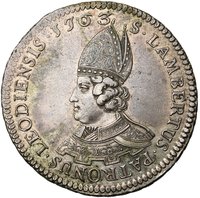
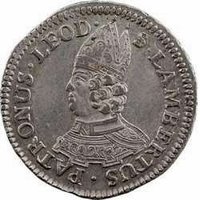
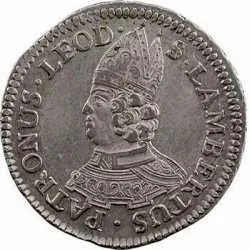
obverse
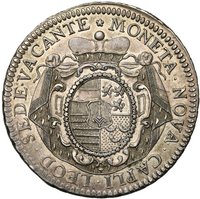
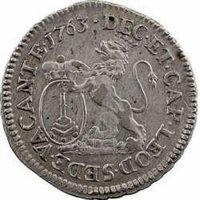
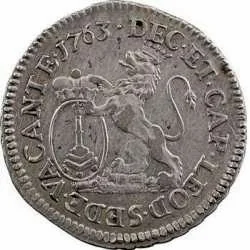
reverse
iNumis
Context
Year: 1763
Country: Belgium Country flag
Period:
(1723—1724)
Currency:
(1650—1795)
Demonetized: Yes
Total mintage: 1,000
Material
Shape: Round
Composition: Silver
Magnetic: No
Technique: Milled
References
KM: #Click to copy to clipboard170
Numista: #52355

Obverse

Description:
St. Lambert bust, facing left.
Inscription:
S.LAMBERTUS.PATRONUS.LEOD.
Script: Latin

Reverse

Description:
Crowned rampant lion grasping a crowned oval shield.
Inscription:
DEC ET CAP LEOD SEDE VACANTE 1763
Script: Latin

Edge

Mintings

YearMint MarkMintageQualityCollection
17631,000

Historical background

In 1763, the Prince-Bishopric of Liège was grappling with a severe and multifaceted monetary crisis, a common plight in the fragmented Holy Roman Empire. The circulation was a chaotic jumble of disparate coins, including local issues, Dutch guilders, French écus, and Austrian thalers, all fluctuating in value and metal content. This proliferation of foreign currency, particularly from the Austrian Netherlands and the Dutch Republic, undermined the bishopric's monetary sovereignty and created rampant confusion in commerce, as exchange rates were unstable and difficult to enforce.

The core of the problem lay in the repeated debasement of the local currency, the liard. Successive prince-bishops, facing chronic fiscal shortfalls, had reduced the silver content in these coins to fund state expenses, leading to a classic "bad money drives out good" scenario (Gresham's Law). Higher-quality foreign and older coins were hoarded or exported, leaving the economy flooded with inferior liards. This triggered inflation, eroded public trust, and placed a heavy burden on the common people, whose wages and small transactions were conducted in this depreciating currency.

Despite recognizing the crisis, the government of Prince-Bishop Charles-Nicolas d'Oultremont struggled to implement effective solutions. A major monetary ordinance was issued in 1763, attempting to fix the value of the myriad coins in circulation and stem the influx of foreign money. However, these measures were largely reactive and failed to address the structural fiscal deficits that prompted debasement. The situation remained unstable, reflecting the broader challenges of a small, sovereign territory within a complex European economic landscape, and would continue to plague the principality until its final dissolution in the 1790s.

Series: 1763 Prince-bishopric of Liege circulation coins

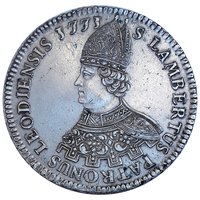
1 Patagon obverse
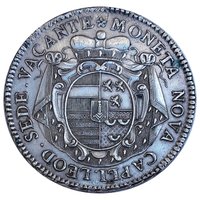
1 Patagon reverse
1 Patagon
1763
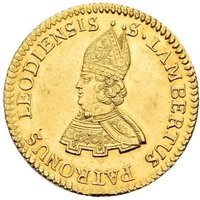
1 Ducat obverse
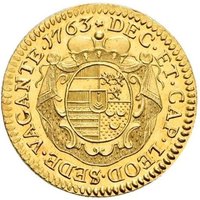
1 Ducat reverse
1 Ducat
1763
1 Escalin obverse
1 Escalin reverse
1 Escalin
1763
Legendary