

2 Gold Louis – France
France
Context

Material
References
KM: #Click to copy to clipboard109
Numista: #413346
Value
Bullion value: $2064.88
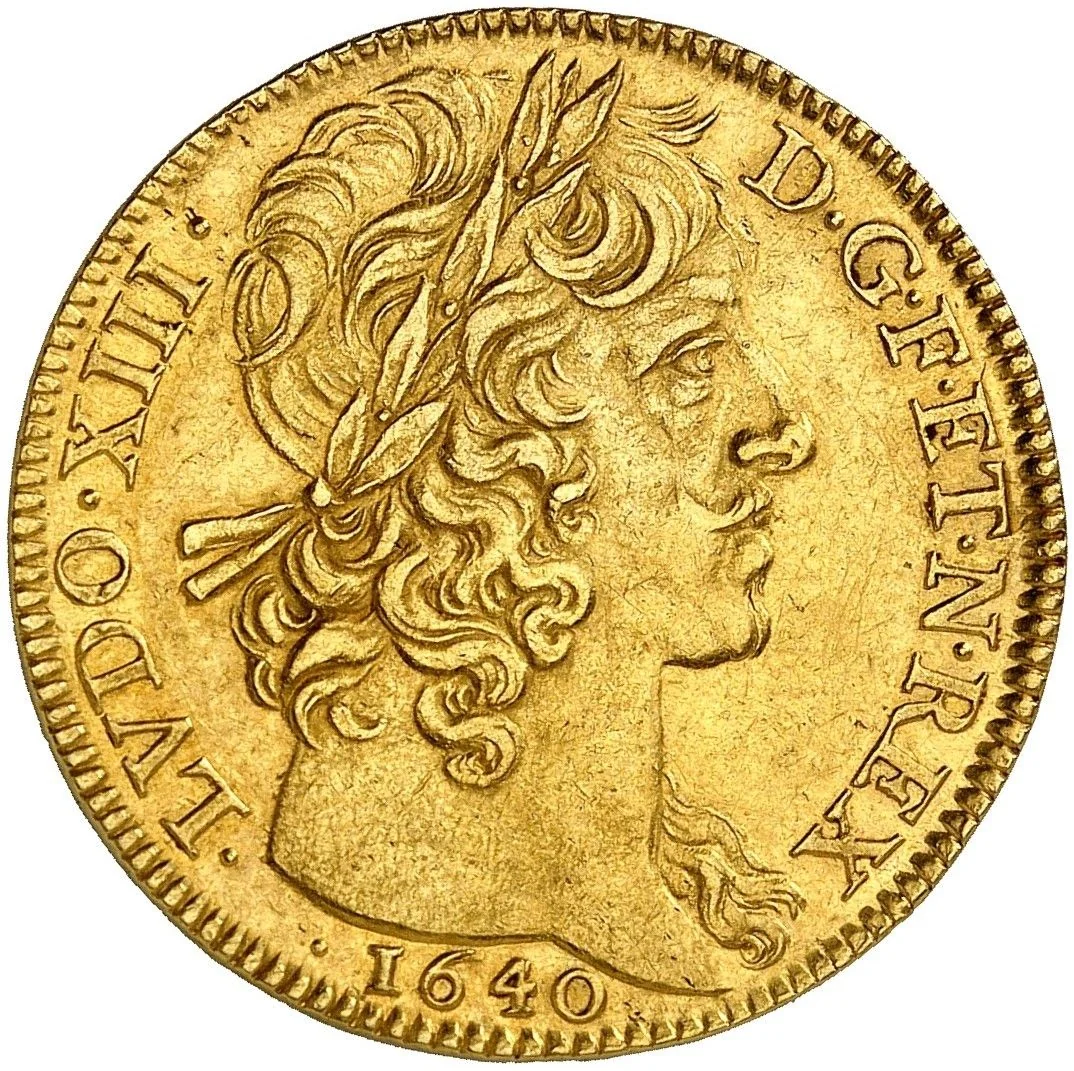
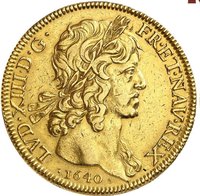
Obverse
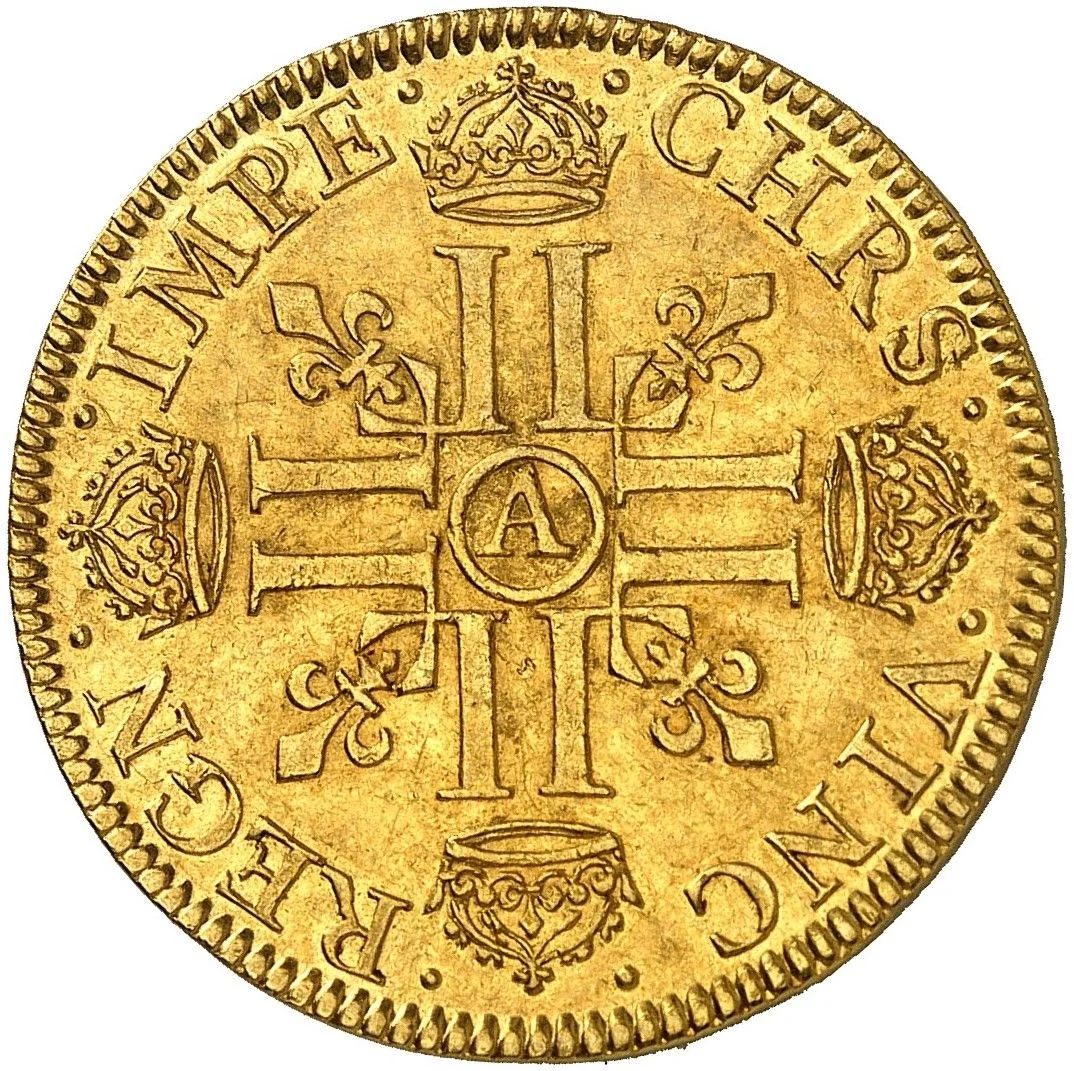
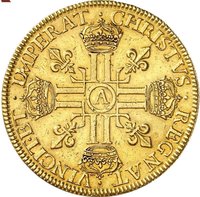
Reverse
Description:
Crowned L's cross with lilies in quarters.
Inscription:
CHRS VINC REGN IMPE
A
A
Script: Latin
Edge
Mints
| Name | Mark |
|---|---|
| Monnaie de Paris | A |
Mintings
| Year | Mint Mark | Mintage | Quality | Collection |
|---|---|---|---|---|
| 1640 | A | — |
Historical background
In 1640, France was in a state of profound monetary disorder, a legacy of decades of currency manipulation by the Crown. To finance its expensive foreign wars and domestic expenditures, the government had repeatedly engaged in the practice of augmentation—officially raising the face value of existing coins—followed by diminution, lowering it again. This created a chaotic system where the official louis d'or and écu coins circulated alongside a bewildering variety of older, debased, and foreign currencies, each with fluctuating values. Public trust was eroded, prices were unstable, and commerce suffered from the uncertainty, as savvy merchants and money-changers exploited the confusion.
Recognizing the crisis, Cardinal Richelieu, chief minister to King Louis XIII, and his special council on finances, spearheaded a sweeping monetary reform enacted between 1640 and 1641. The cornerstone was the introduction of a new, mechanically minted gold coin, the louis d'or, and a silver écu, both stamped with a milled edge to prevent clipping. Crucially, their value was directly tied to their precious metal content, not to arbitrary royal decree. This shift established a genuine bimetallic standard, aiming for stability by defining the louis d'or as equal to 10 livres tournois and the silver écu as equal to 3.
The immediate impact was positive, restoring a measure of confidence and simplifying transactions. However, the reform's long-term success was immediately challenged by the financial demands of France's ongoing involvement in the Thirty Years' War. Despite the new system, the temptation to extract revenue from the currency persisted, and the government soon resumed the practice of periodic re-evaluations. Thus, while the 1640 reform created a more modern and prestigious coinage that would define the French monetary system for centuries, it could not fully insulate the currency from the Crown's perennial fiscal pressures, setting a pattern of tension between monetary stability and fiscal necessity that would continue to shape French financial history.
Recognizing the crisis, Cardinal Richelieu, chief minister to King Louis XIII, and his special council on finances, spearheaded a sweeping monetary reform enacted between 1640 and 1641. The cornerstone was the introduction of a new, mechanically minted gold coin, the louis d'or, and a silver écu, both stamped with a milled edge to prevent clipping. Crucially, their value was directly tied to their precious metal content, not to arbitrary royal decree. This shift established a genuine bimetallic standard, aiming for stability by defining the louis d'or as equal to 10 livres tournois and the silver écu as equal to 3.
The immediate impact was positive, restoring a measure of confidence and simplifying transactions. However, the reform's long-term success was immediately challenged by the financial demands of France's ongoing involvement in the Thirty Years' War. Despite the new system, the temptation to extract revenue from the currency persisted, and the government soon resumed the practice of periodic re-evaluations. Thus, while the 1640 reform created a more modern and prestigious coinage that would define the French monetary system for centuries, it could not fully insulate the currency from the Crown's perennial fiscal pressures, setting a pattern of tension between monetary stability and fiscal necessity that would continue to shape French financial history.
✨ Legendary