

½ Larin – Maldives
Maldives
Context

References
KM: #Click to copy to clipboard9
Numista: #117824
Value
Bullion value: $6.81
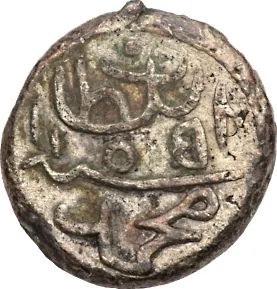
Obverse
Description:
Sultan's name and reign dates.
Inscription:
السلطان
١١٠٥
سنه
محمد
١١٠٥
سنه
محمد
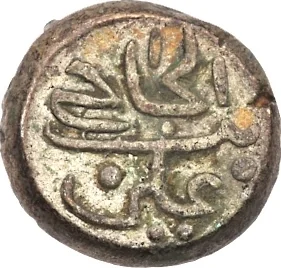
Reverse
Description:
Sultan's title
Inscription:
الحاج
بن
علي
بن
علي
Edge
Mintings
| Year | Mint Mark | Mintage | Quality | Collection |
|---|---|---|---|---|
| 1694 | — | — |
Historical background
In 1694, the Maldives operated within a complex web of traditional, regional, and emerging European monetary systems. The primary medium of exchange for daily transactions was the cowrie shell, specifically the Monetaria moneta variety imported from the Maldives' own atolls and, increasingly, from East Africa. This ancient shell currency, measured in bundles (hari), ropes (fati), and sacks (thun), underpinned the local economy, facilitating tax payments, small-scale trade, and wages. Alongside cowries, silver lari coins—elongated, finger-like strips of silver often bent into bracelets for storage—circulated for higher-value transactions. These were a legacy of the Sultanate's own minting tradition, which had flourished in previous centuries but was in a period of decline.
The archipelago's strategic location on Indian Ocean trade routes meant foreign coins were also prevalent. The most significant were silver Dutch rijksdaalders and Spanish pieces of eight (reales), which arrived via the powerful trade of the Dutch East India Company (VOC) and other European merchants. These coins were valued for their consistent silver content and were crucial for external commerce, particularly in the lucrative trade of dried tuna (Maldive fish), coir rope, and cowrie shells themselves, which were exported to Bengal and other regions as currency. The simultaneous use of cowries, lari, and European silver created a multi-tiered currency system where exchange rates between them fluctuated based on supply, trade balances, and the whims of merchants.
This period was one of quiet transition and external pressure. While the Maldivian Sultanate maintained nominal control over its currency, the influx of European silver and the globalizing trade networks were gradually diminishing the importance of the traditional lari. Furthermore, the export of vast quantities of cowries by European companies was beginning to sow the seeds for the eventual inflation and devaluation of this shell currency in world markets, though its local dominance in the Maldives remained unchallenged in 1694. The monetary landscape was thus a quiet reflection of a kingdom navigating its place between a self-sufficient past and an interconnected oceanic future.
The archipelago's strategic location on Indian Ocean trade routes meant foreign coins were also prevalent. The most significant were silver Dutch rijksdaalders and Spanish pieces of eight (reales), which arrived via the powerful trade of the Dutch East India Company (VOC) and other European merchants. These coins were valued for their consistent silver content and were crucial for external commerce, particularly in the lucrative trade of dried tuna (Maldive fish), coir rope, and cowrie shells themselves, which were exported to Bengal and other regions as currency. The simultaneous use of cowries, lari, and European silver created a multi-tiered currency system where exchange rates between them fluctuated based on supply, trade balances, and the whims of merchants.
This period was one of quiet transition and external pressure. While the Maldivian Sultanate maintained nominal control over its currency, the influx of European silver and the globalizing trade networks were gradually diminishing the importance of the traditional lari. Furthermore, the export of vast quantities of cowries by European companies was beginning to sow the seeds for the eventual inflation and devaluation of this shell currency in world markets, though its local dominance in the Maldives remained unchallenged in 1694. The monetary landscape was thus a quiet reflection of a kingdom navigating its place between a self-sufficient past and an interconnected oceanic future.

✨ Legendary