

1 Larin – Maldives
Maldives
Context
References
KM: #Click to copy to clipboard10
Numista: #117823
Value
Bullion value: $13.92
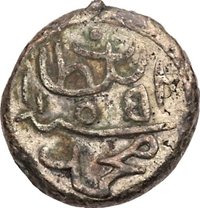
Obverse
Description:
Sultan, mint, date
Inscription:
ضرب محلى
١١٠۴
سنه في
١١٠۴
سنه في
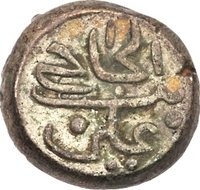
Reverse
Description:
Sultan [Name]
Inscription:
سلطان
البر والبحر
السلطان محمد
البر والبحر
السلطان محمد
Edge
Mintings
| Year | Mint Mark | Mintage | Quality | Collection |
|---|---|---|---|---|
| 1693 | — | — |
Historical background
In 1693, the Maldives operated within a complex web of regional trade and tribute, lacking a formal, state-minted coinage of its own. The archipelago's economy was fundamentally tied to the Indian Ocean trade routes, with the cowrie shell serving as the dominant and traditional unit of exchange for local and small-scale transactions. These shells, imported in vast quantities from the Maldives itself and other sources like the Laccadive Islands, were a widely recognized currency across Asia and Africa, giving the Maldives a unique, exportable monetary commodity.
However, the period was marked by significant political upheaval that directly impacted currency and trade. The islands were under a brief but disruptive 16-month occupation by the Ali Raja of Cannanore (in present-day Kerala, India), who sought to control the lucrative cowrie trade and extract tribute. This foreign intervention likely disrupted traditional economic patterns and siphoned wealth from the local sultanate. Concurrently, due to centuries of trade and cultural influence, various foreign silver coins—particularly Portuguese tangas and larins (a distinctive wire coin of Persian origin)—circulated for higher-value and external trade, especially with merchants from the Indian subcontinent and the Arabian Sea.
Therefore, the monetary situation was a layered one: a local shell-currency system supporting the domestic economy, overlaid with imported silver coins for regional commerce, all under the strain of a hostile foreign power seeking to monopolize the archipelago's key monetary export. The absence of a centralized Maldivian coinage at this time reflects both its integrated position in the pre-colonial Indian Ocean economy and the political instability that prevented the assertion of strong, independent fiscal authority.
However, the period was marked by significant political upheaval that directly impacted currency and trade. The islands were under a brief but disruptive 16-month occupation by the Ali Raja of Cannanore (in present-day Kerala, India), who sought to control the lucrative cowrie trade and extract tribute. This foreign intervention likely disrupted traditional economic patterns and siphoned wealth from the local sultanate. Concurrently, due to centuries of trade and cultural influence, various foreign silver coins—particularly Portuguese tangas and larins (a distinctive wire coin of Persian origin)—circulated for higher-value and external trade, especially with merchants from the Indian subcontinent and the Arabian Sea.
Therefore, the monetary situation was a layered one: a local shell-currency system supporting the domestic economy, overlaid with imported silver coins for regional commerce, all under the strain of a hostile foreign power seeking to monopolize the archipelago's key monetary export. The absence of a centralized Maldivian coinage at this time reflects both its integrated position in the pre-colonial Indian Ocean economy and the political instability that prevented the assertion of strong, independent fiscal authority.

✨ Legendary