

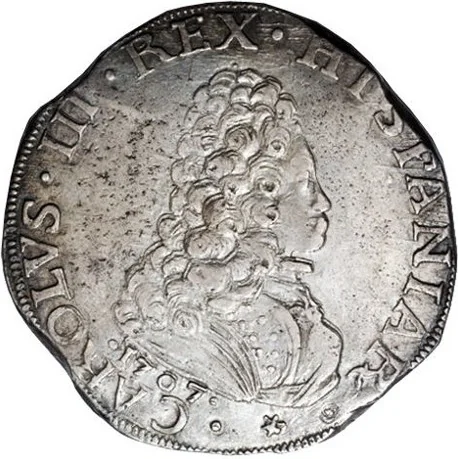
Obverse
Description:
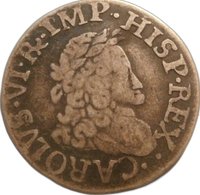
Armored bust right, date below shoulder.
Inscription:
CAROLVS·III·REX·HISPANIAR·
·1707·
·1707·
Script: Latin
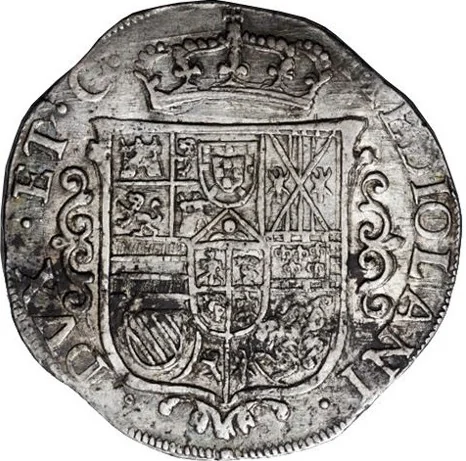
Reverse
Description:
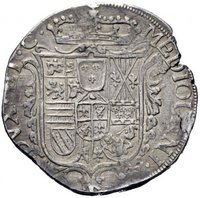
Ornately framed shield with many heraldic arms.
Inscription:
MEDIOLANI· DVX·ET·C·
Script: Latin
Edge
Categories
| Symbols> Coat of Arms |
| Object> Armour |
Mints
| Name | Mark |
|---|---|
| Milan | — |
Mintings
| Year | Mint Mark | Mintage | Quality | Collection |
|---|---|---|---|---|
| 1707 | — | — |
Historical background
In 1707, Milan found itself at a pivotal and turbulent juncture, caught in the final throes of the War of the Spanish Succession. For nearly two centuries, the Duchy of Milan had been a prized Spanish Habsburg possession, but the impending death of the childless King Charles II of Spain had triggered a continent-wide conflict over the inheritance. Following Charles's death in 1700, French Bourbon forces initially occupied Milan, but by 1707, the military tide had turned. The victorious Austrian Habsburg armies, led by Prince Eugene of Savoy, had decisively taken the city and the duchy, ending Spanish rule and setting the stage for a profound political and monetary transition.
The currency situation was consequently one of severe disruption and complexity. The period of French occupation and ongoing warfare had flooded the region with a chaotic mix of coins: Spanish reales, French louis d'or and écus, and various local Italian issues. This proliferation of currencies of differing weights and metallic values led to widespread confusion in trade, rampant counterfeiting, and exploitative exchange rates imposed by money-changers. The Milanese lira, a unit of account, was destabilized, as its value in relation to this jumble of physical specie became highly volatile, causing inflation and hardship for the populace.
Therefore, the primary monetary challenge in 1707 was not one of stability but of imperial consolidation. The new Austrian administration, under Emperor Joseph I, faced the urgent task of imposing order. This meant asserting Habsburg monetary authority by driving out French and Spanish coinage, regulating exchanges, and ultimately preparing for the introduction of a new, unified coinage system that would bear the image of the Austrian sovereign. The year thus represents a moment of limbo—the clear end of the old Spanish monetary order and the anxious, unsettled prelude to the imposition of a new Austrian one.
The currency situation was consequently one of severe disruption and complexity. The period of French occupation and ongoing warfare had flooded the region with a chaotic mix of coins: Spanish reales, French louis d'or and écus, and various local Italian issues. This proliferation of currencies of differing weights and metallic values led to widespread confusion in trade, rampant counterfeiting, and exploitative exchange rates imposed by money-changers. The Milanese lira, a unit of account, was destabilized, as its value in relation to this jumble of physical specie became highly volatile, causing inflation and hardship for the populace.
Therefore, the primary monetary challenge in 1707 was not one of stability but of imperial consolidation. The new Austrian administration, under Emperor Joseph I, faced the urgent task of imposing order. This meant asserting Habsburg monetary authority by driving out French and Spanish coinage, regulating exchanges, and ultimately preparing for the introduction of a new, unified coinage system that would bear the image of the Austrian sovereign. The year thus represents a moment of limbo—the clear end of the old Spanish monetary order and the anxious, unsettled prelude to the imposition of a new Austrian one.
✨ Legendary