

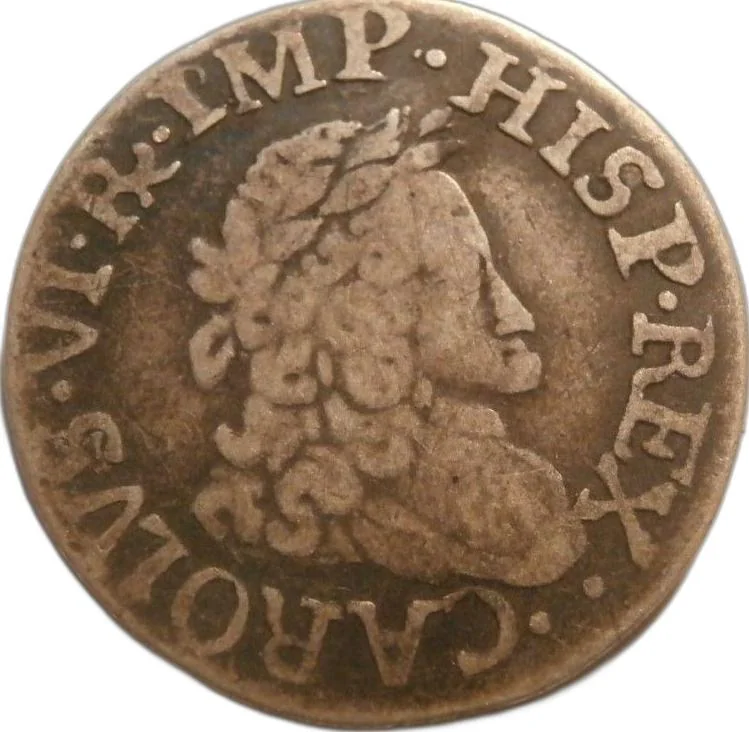
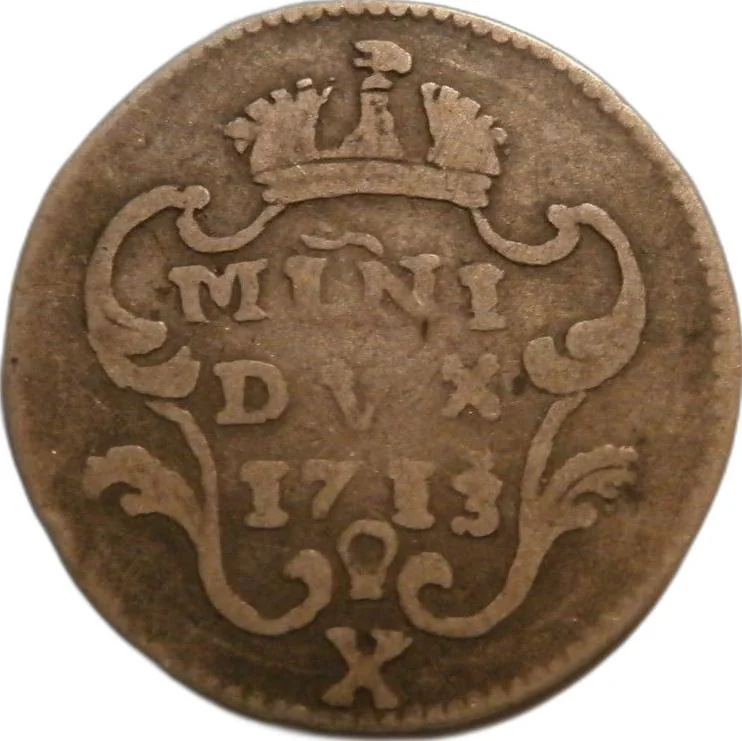
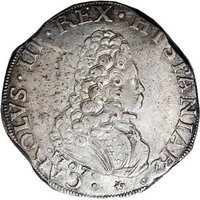
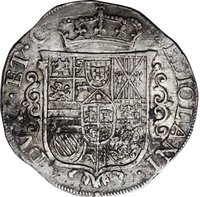
10 Soldi – Milan
Italy
Context
Years: 1711–1719
Country: Italy 
Issuer: Milan
Ruler: Charles III
Currency:
(1515—1796)
Subdivision: 10 Soldi = ½ Lira
Demonetized: Yes
Material
References
KM: #Click to copy to clipboard137
Numista: #397505
Value
Bullion value: $1.59
Obverse
Reverse
Edge
Mints
| Name | Mark |
|---|---|
| Milan | — |
Mintings
| Year | Mint Mark | Mintage | Quality | Collection |
|---|---|---|---|---|
| 1711 | — | — | ||
| 1713 | — | — | ||
| 1719 | — | — |
Historical background
In 1711, Milan found itself at a complex monetary crossroads, governed as the Duchy of Milan under Spanish Habsburg rule but with deep economic and political ties to both the Holy Roman Empire and neighbouring Italian states. The currency situation was characterised by a chaotic multiplicity of coins in circulation, a legacy of centuries of foreign dominion and regional trade. The official currency was the lira imperiale (imperial lira), subdivided into 20 soldi or 240 denari, but this served more as a unit of account than a physical reality. Instead, the actual coins in use were a bewildering array of domestic and foreign issues, including Spanish silver reales, gold zecchini from Venice, French louis d'or, and various German and Savoyard coins, all fluctuating in value against the accounting lira.
This proliferation created severe practical problems. The intrinsic value of a coin's metal content (its valore intrinseco) often differed significantly from its official legal value (valore estrinseco), leading to widespread clipping, counterfeiting, and the hoarding of "good" full-weight coins—a classic example of Gresham's Law. Merchants and money-changers had to constantly refer to official tariffe (bulletins) that listed the fluctuating exchange rates for dozens of coin types, making everyday transactions cumbersome and risky. This monetary fragmentation stifled commerce, complicated tax collection for the state, and created uncertainty for all economic actors, from large-scale silk merchants to ordinary laborers.
The Spanish authorities, aware of the dysfunction, had made sporadic attempts at reform, but with limited success. The core issue was a chronic shortage of high-quality, trusted silver coinage produced by the Milanese mint itself. While gold coins for large transactions were relatively stable, the small-change currency used by the populace was notoriously unreliable. Consequently, the monetary system of 1711 was one of imposed complexity and de facto decentralisation, where the actual value of money was negotiated daily in the market, reflecting Milan’s position as a wealthy yet politically subordinate hub within the turbulent finances of early 18th-century Europe.
This proliferation created severe practical problems. The intrinsic value of a coin's metal content (its valore intrinseco) often differed significantly from its official legal value (valore estrinseco), leading to widespread clipping, counterfeiting, and the hoarding of "good" full-weight coins—a classic example of Gresham's Law. Merchants and money-changers had to constantly refer to official tariffe (bulletins) that listed the fluctuating exchange rates for dozens of coin types, making everyday transactions cumbersome and risky. This monetary fragmentation stifled commerce, complicated tax collection for the state, and created uncertainty for all economic actors, from large-scale silk merchants to ordinary laborers.
The Spanish authorities, aware of the dysfunction, had made sporadic attempts at reform, but with limited success. The core issue was a chronic shortage of high-quality, trusted silver coinage produced by the Milanese mint itself. While gold coins for large transactions were relatively stable, the small-change currency used by the populace was notoriously unreliable. Consequently, the monetary system of 1711 was one of imposed complexity and de facto decentralisation, where the actual value of money was negotiated daily in the market, reflecting Milan’s position as a wealthy yet politically subordinate hub within the turbulent finances of early 18th-century Europe.
✨ Legendary