

1 filippo – Milan
Add to wishlist
Italy
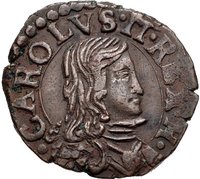
Obverse
Description:
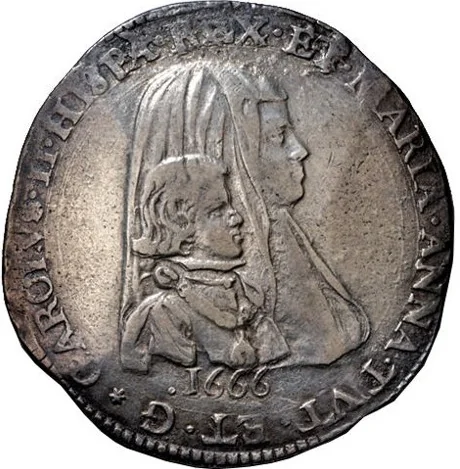
Carlo II and his mother facing right, busts accolated, date below.
Inscription:
CAROLVS·II·HISP·REX·ET·MARIA·ANNA·TVT·ET·G·
1666
1666
Script: Latin
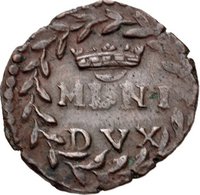
Reverse
Description:
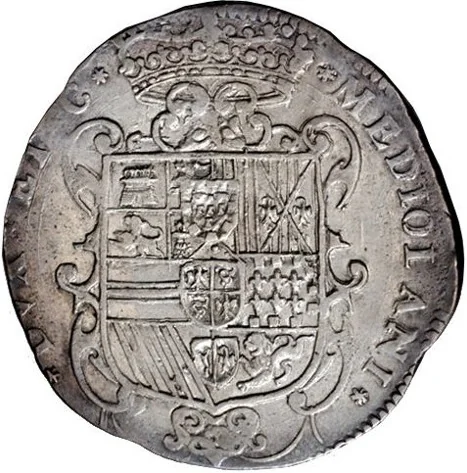
Crowned baroque shield with many arms.
Inscription:
·MEDIOLANI· DVX · ET · C ·
Script: Latin
Edge
Categories
| Object> Armour |
| Symbols> Coat of Arms |
Mints
| Name | Mark |
|---|---|
| Milan | — |
Mintings
| Year | Mint Mark | Mintage | Quality | Collection |
|---|---|---|---|---|
| 1666 | — | — |
Historical background
In 1666, Milan, then a prosperous Spanish dominion within the Duchy of Milan, was grappling with a severe and complex monetary crisis. The root cause was the widespread debasement of silver coinage, particularly the sesino, a low-denomination coin essential for daily transactions. The Spanish authorities, facing fiscal pressures from ongoing European conflicts, had reduced the silver content in these coins, leading to a classic manifestation of Gresham's Law: "bad money drives out good." Higher-quality silver coins, such as the scudo, were hoarded by the public or exported, leaving circulation flooded with unreliable, debased coinage that merchants and artisans deeply distrusted.
This situation crippled the local economy. Prices became unstable, credit markets tightened, and market confidence plummeted. Ordinary Milanese, especially wage earners and the poor, suffered as the purchasing power of the coins in their hands eroded, creating effective inflation for basic goods. The crisis was not merely economic but also social and political, fueling public discontent toward the Spanish administration and causing friction between the central monetary authorities and local merchants' guilds, who demanded sound and trustworthy currency for commerce.
The response culminated in a significant monetary reform decreed in 1666. The Spanish government, under the regency of Mariana of Austria, ordered a massive recall and demonetization of the debased sesini. These were to be replaced with new, full-weight copper coins (the denaro and sesino di rame), effectively shifting the small-change system from debased silver to pure copper. While this action aimed to restore order and clarity, the transition was disruptive, and the underlying tension between the crown's fiscal needs and the economy's requirement for stable currency would remain a persistent challenge for Milan in the subsequent decades.
This situation crippled the local economy. Prices became unstable, credit markets tightened, and market confidence plummeted. Ordinary Milanese, especially wage earners and the poor, suffered as the purchasing power of the coins in their hands eroded, creating effective inflation for basic goods. The crisis was not merely economic but also social and political, fueling public discontent toward the Spanish administration and causing friction between the central monetary authorities and local merchants' guilds, who demanded sound and trustworthy currency for commerce.
The response culminated in a significant monetary reform decreed in 1666. The Spanish government, under the regency of Mariana of Austria, ordered a massive recall and demonetization of the debased sesini. These were to be replaced with new, full-weight copper coins (the denaro and sesino di rame), effectively shifting the small-change system from debased silver to pure copper. While this action aimed to restore order and clarity, the transition was disruptive, and the underlying tension between the crown's fiscal needs and the economy's requirement for stable currency would remain a persistent challenge for Milan in the subsequent decades.
✨ Legendary