

Italy
Context
Years: 1675–1700
Country: Italy 
Issuer: Milan
Ruler: Charles II
Currency:
(1515—1796)
Demonetized: Yes
Material
References
KM: #Click to copy to clipboard68
Numista: #86722
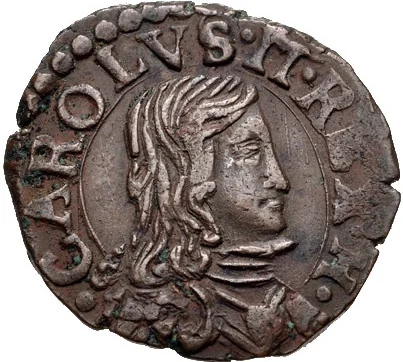
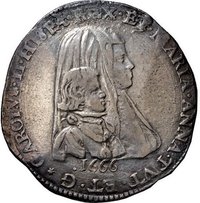
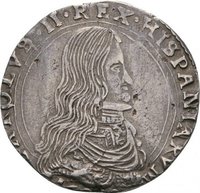
Obverse
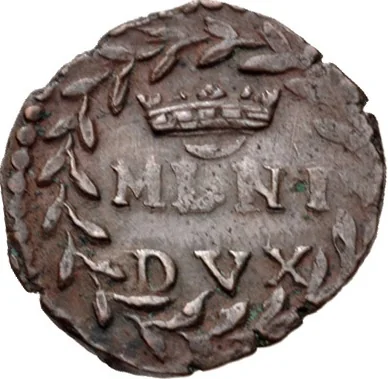
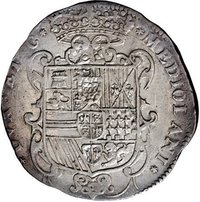
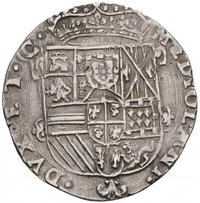
Reverse
Edge
Mints
| Name | Mark |
|---|---|
| Milan | — |
Mintings
| Year | Mint Mark | Mintage | Quality | Collection |
|---|---|---|---|---|
| — | — | — |
Historical background
In 1675, Milan, as the capital of the Spanish Duchy of Milan, operated within a complex and strained monetary system characteristic of early modern Europe. The currency in circulation was not a single, unified coinage but a mosaic of domestic and foreign coins. The primary unit of account was the lira imperiale (imperial lira), divided into 20 soldi or 240 denari. However, actual physical coins included local silver scudi and lire, alongside a flood of foreign silver from neighbouring states like Savoy, Venice, and Genoa, as well as Spanish reales and gold doppie. This proliferation created chronic confusion in exchange rates and facilitated clipping and counterfeiting, undermining trust in everyday transactions.
The situation was exacerbated by the fiscal demands of the Spanish Crown, which was frequently at war. Madrid often ordered the debasement of coinage or the minting of low-quality moneta nera (black money, or billon coinage) to extract seigniorage revenue to fund its military campaigns in the Netherlands and elsewhere. This practice, while providing short-term cash, triggered Gresham’s Law (“bad money drives out good”), as merchants and citizens hoarded older, higher-silver coins. The result was a chronic shortage of sound money for commerce, price inflation for goods priced in the debased currency, and a disconnect between the official accounting lira and its actual metallic value.
Consequently, Milanese merchants, bankers, and the public had to navigate a dual challenge: a volatile bimetallic ratio between gold and silver coins, and the fluctuating values of countless coin types. This environment necessitated the expertise of money-changers (banchi di cambio) and led to the increasing use of credit instruments like bills of exchange to conduct larger transactions without handling physical specie. Thus, in 1675, Milan’s currency situation was one of underlying instability, marked by a struggle between the disruptive fiscal policies of a distant sovereign and the pragmatic needs of a major European financial and commercial centre.
The situation was exacerbated by the fiscal demands of the Spanish Crown, which was frequently at war. Madrid often ordered the debasement of coinage or the minting of low-quality moneta nera (black money, or billon coinage) to extract seigniorage revenue to fund its military campaigns in the Netherlands and elsewhere. This practice, while providing short-term cash, triggered Gresham’s Law (“bad money drives out good”), as merchants and citizens hoarded older, higher-silver coins. The result was a chronic shortage of sound money for commerce, price inflation for goods priced in the debased currency, and a disconnect between the official accounting lira and its actual metallic value.
Consequently, Milanese merchants, bankers, and the public had to navigate a dual challenge: a volatile bimetallic ratio between gold and silver coins, and the fluctuating values of countless coin types. This environment necessitated the expertise of money-changers (banchi di cambio) and led to the increasing use of credit instruments like bills of exchange to conduct larger transactions without handling physical specie. Thus, in 1675, Milan’s currency situation was one of underlying instability, marked by a struggle between the disruptive fiscal policies of a distant sovereign and the pragmatic needs of a major European financial and commercial centre.
⭐ Rare