

1 Sovrano – Milan
Italy
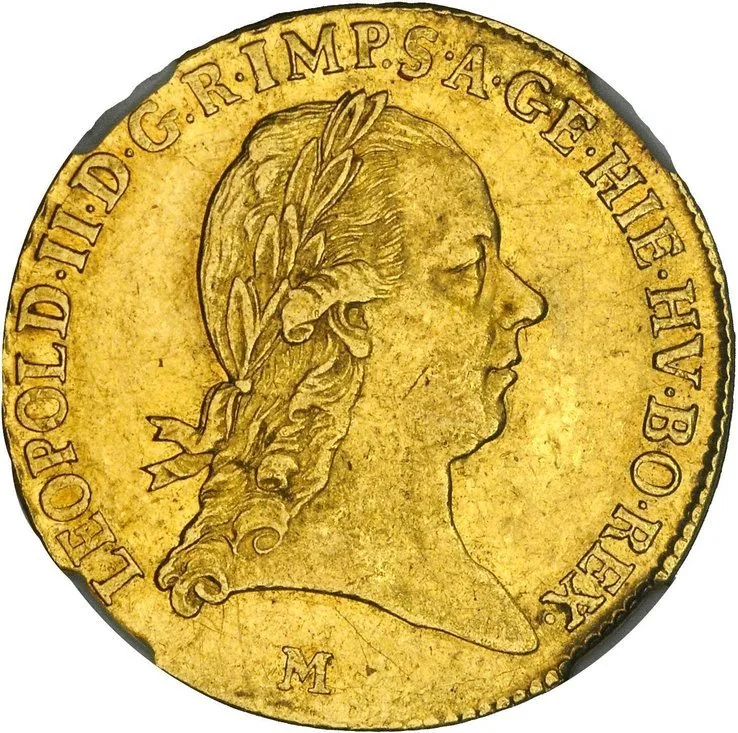
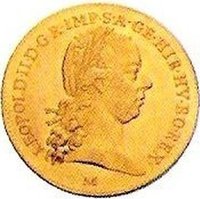
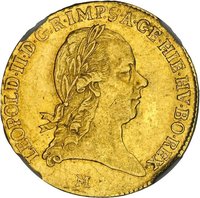
Obverse
Description:
Laureate bust right, mintmark below.
Inscription:
LEOPOLD·II·D·G·R·IMP·S·A·GE·HIE·HV·BO·REX·
M
M
Script: Latin
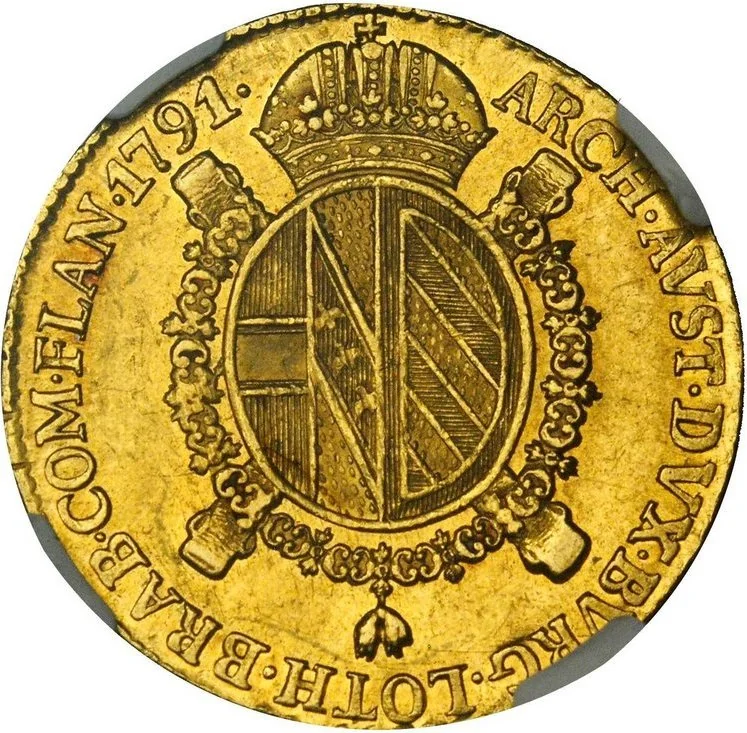
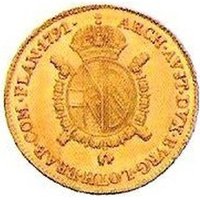
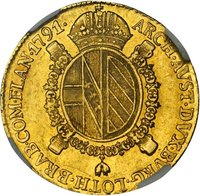
Reverse
Description:
Shield with Austro-Burgundian arms, encircled by the Golden Fleece, date in legend.
Inscription:
ARCH·AVST·DVX·BVRG·LOTH·BRAB·COM·FLAN·1791·
Script: Latin
Edge
Categories
| Object> Armour |
| Symbols> Coat of Arms |
Mints
| Name | Mark |
|---|---|
| Milan | — |
Mintings
| Year | Mint Mark | Mintage | Quality | Collection |
|---|---|---|---|---|
| 1790 | M | — | ||
| 1791 | M | — | ||
| 1792 | M | — |
Historical background
In 1790, Milan found itself at a complex economic and political crossroads, still firmly under the control of the Habsburg Monarchy as the Duchy of Milan. The official currency was the Milanese scudo, which was part of a intricate bimetallic system. Coins were minted locally at the Milan Mint, but their value and very existence were dictated by Vienna. The system was theoretically based on both silver (lira, soldi, and denari) and gold (zecchino), but in practice, chronic shortages of small-denomination coins plagued daily commerce, causing significant inconvenience for the populace.
This monetary environment was not isolated. The Duchy's currency coexisted with a multitude of foreign coins circulating freely, a common feature of the ancien régime. Venetian zecchini, French louis d'or, and various German thalers were all accepted in trade, their values fluctuating based on metallic weight and market confidence. This created a perpetually unstable exchange environment, requiring money changers (banchieri) to be central figures in the marketplace. Furthermore, the Habsburg state's fiscal demands, aimed at funding its military and bureaucratic apparatus, often led to inflationary pressures and debasement concerns.
Beneath this operational complexity, the 1790 monetary situation reflected a deeper tension. The rigid, state-controlled system symbolized Habsburg central authority, yet its inefficiencies and the reliance on foreign specie highlighted the limitations of that control. For Milan's growing commercial and intellectual classes, these monetary frustrations were a microcosm of broader grievances. Within a few years, the winds of change from revolutionary France would arrive, making the stability of the old currency a poignant symbol of an old order on the brink of collapse.
This monetary environment was not isolated. The Duchy's currency coexisted with a multitude of foreign coins circulating freely, a common feature of the ancien régime. Venetian zecchini, French louis d'or, and various German thalers were all accepted in trade, their values fluctuating based on metallic weight and market confidence. This created a perpetually unstable exchange environment, requiring money changers (banchieri) to be central figures in the marketplace. Furthermore, the Habsburg state's fiscal demands, aimed at funding its military and bureaucratic apparatus, often led to inflationary pressures and debasement concerns.
Beneath this operational complexity, the 1790 monetary situation reflected a deeper tension. The rigid, state-controlled system symbolized Habsburg central authority, yet its inefficiencies and the reliance on foreign specie highlighted the limitations of that control. For Milan's growing commercial and intellectual classes, these monetary frustrations were a microcosm of broader grievances. Within a few years, the winds of change from revolutionary France would arrive, making the stability of the old currency a poignant symbol of an old order on the brink of collapse.

✨ Legendary