

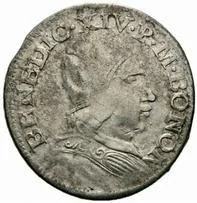
1 Bianco – Bologna
Italy
Context
Years: 1743–1754
Country: Italy 
Issuer: Bologna
Ruler: Benedict XIV
Currency:
(1534—1835)
Demonetized: Yes
References
KM: #Click to copy to clipboard229
Numista: #117317
Value
Bullion value: $9.13
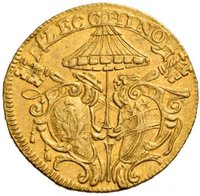
Obverse
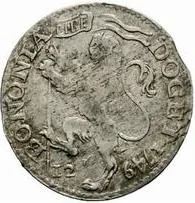
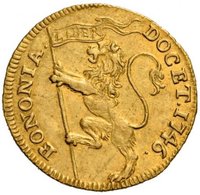
Reverse
Description:
Rampant lion left, flag above, value below.
Inscription:
BONONIA DOCET·1749
12
12
Script: Latin
Edge
Mintings
| Year | Mint Mark | Mintage | Quality | Collection |
|---|---|---|---|---|
| 1743 | — | — | ||
| 1745 | — | — | ||
| 1749 | — | — | ||
| 1754 | — | — |
Historical background
In 1743, Bologna existed within a complex monetary landscape typical of the Italian peninsula prior to unification. The city was part of the Papal States, and while the official currency was the Papal scudo (divided into 100 baiochi or 10 giuli), its daily economic life was dominated by a cacophony of foreign coins. Spanish silver reales, Venetian ducats and zecchini, and French louis d'or circulated widely alongside local imitations, their value determined not by decree but by fluctuating market agios based on metal content and wear. This created a constant challenge for merchants and citizens, requiring specialized money-changers (banchieri) to assess and exchange this heterogeneous mix.
The situation was further complicated by Bologna’s own historic institutions. The city’s famous Monte di Pietà, a public pawnbroker founded in 1473, issued its own paper obligations, which acted as a form of local credit currency. More significantly, the ancient University and its thousands of students from across Europe injected a steady stream of foreign currency into the local economy, making Bologna a particularly active exchange hub. However, this also made it vulnerable to the periodic debasements and monetary manipulations enacted by the papal authorities in Rome, who sought to profit from seigniorage, often to the detriment of local price stability.
Consequently, 1743 was a year of practical calculation and quiet frustration. Prices and contracts were often stipulated in the stable imaginary unit of the lira di bolognini (a money of account), while actual payment was made in a jumble of physical coins of variable worth. This system was inefficient and prone to fraud, burdening commerce. The monetary chaos reflected the broader political fragmentation of Italy, where Bologna’s formal subordination to papal rule clashed with its vibrant, international urban economy, demanding a de facto flexibility that official edicts could not provide.
The situation was further complicated by Bologna’s own historic institutions. The city’s famous Monte di Pietà, a public pawnbroker founded in 1473, issued its own paper obligations, which acted as a form of local credit currency. More significantly, the ancient University and its thousands of students from across Europe injected a steady stream of foreign currency into the local economy, making Bologna a particularly active exchange hub. However, this also made it vulnerable to the periodic debasements and monetary manipulations enacted by the papal authorities in Rome, who sought to profit from seigniorage, often to the detriment of local price stability.
Consequently, 1743 was a year of practical calculation and quiet frustration. Prices and contracts were often stipulated in the stable imaginary unit of the lira di bolognini (a money of account), while actual payment was made in a jumble of physical coins of variable worth. This system was inefficient and prone to fraud, burdening commerce. The monetary chaos reflected the broader political fragmentation of Italy, where Bologna’s formal subordination to papal rule clashed with its vibrant, international urban economy, demanding a de facto flexibility that official edicts could not provide.
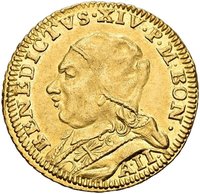
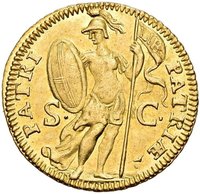
✨ Legendary