

4 xerafins – Portuguese India
Add to wishlist
India
Context
Years: 1795–1803
Country: India
Issuer: Portuguese India
Ruler: Maria I
Currency:
(1706—1880)
Subdivision: 4 xerafins = 2 Rupias
Demonetized: Yes
Material
Diameter: 13 mm
Weight: 1.6 g
Gold Weight:: 1.60 g
Shape: Irregular round
Composition: Gold
Magnetic: No
Technique: Hammered
References
KM: #
Numista: #51141
Value
Bullion value: $249.10
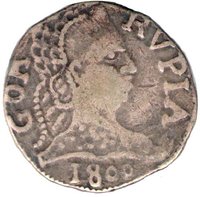
Obverse
Description:
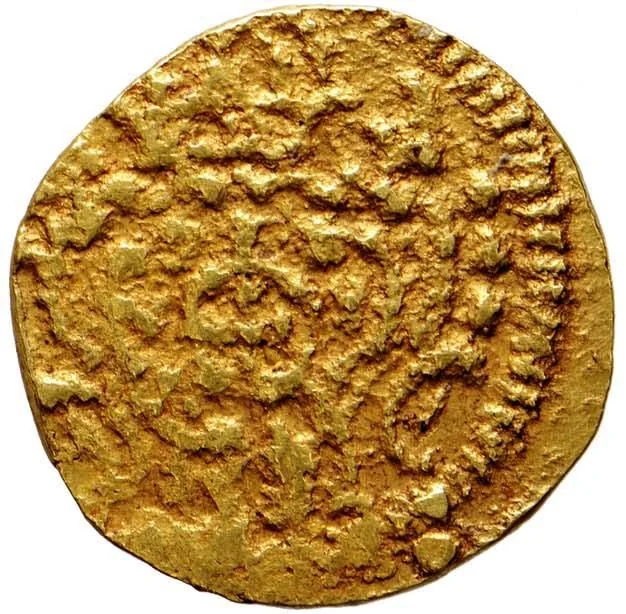
Heraldic emblem
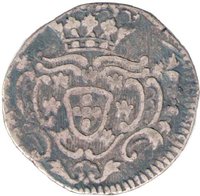
Reverse
Edge
Mints
| Name | Mark |
|---|---|
| Goa | — |
Mintings
| Year | Mint Mark | Mintage | Quality | Collection |
|---|---|---|---|---|
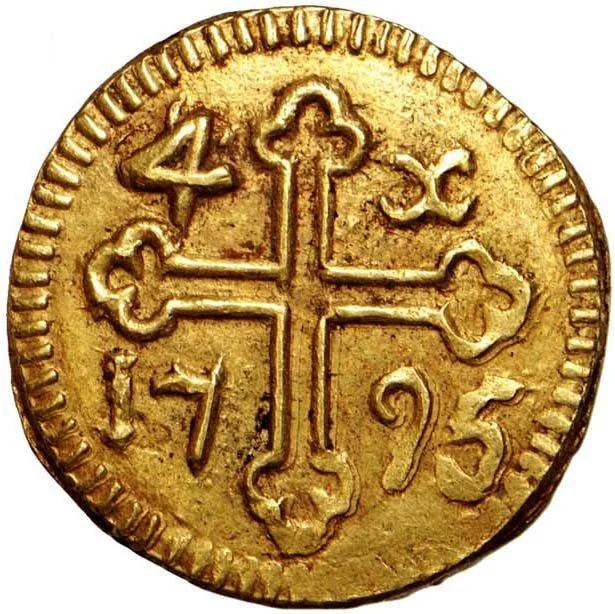
| 1795 | — | — | ||
| 1803 | — | — |
Historical background
In 1795, the currency situation in Portuguese India, centered on Goa, was complex and reflected its position as a commercial crossroads and a declining imperial power. The official currency was the Portuguese xerafim, but the reality was one of significant monetary pluralism. The most important and trusted currency in daily trade, especially for larger transactions, was the Spanish silver peso or piece of eight (known locally as the pataca or peso), a testament to the enduring influence of global Spanish silver from the Americas. Alongside these, various gold mohurs and silver rupias from neighboring Indian princely states, particularly the Maratha Confederacy, circulated freely, as did older Portuguese coins like the cruzado.
This multiplicity created chronic problems of exchange and valuation. The different coins fluctuated in value against each other based on metallic purity, weight, and local demand, requiring a class of money-changers (sarafs) to facilitate commerce. The Portuguese administration attempted to fix official exchange rates (bando) between the xerafim and other currencies, but these decrees often failed to hold against market forces, leading to confusion and arbitrage. Furthermore, a persistent shortage of specie, especially small-denomination coins for everyday use, plagued the local economy, often forcing people to cut larger coins into fragments.
The underlying issue was Portugal's economic weakness and its loss of regional commercial dominance. Goa no longer controlled the lucrative spice trade routes, and the Portuguese state lacked the silver reserves to impose a unified, trusted currency. Consequently, the monetary system was essentially driven by the needs of intra-Asian trade and the credibility of foreign, particularly Spanish and Indian, coinage. This situation would persist until the early 19th century, symbolizing how local market realities in Portugal's eastern empire ultimately overrode Lisbon's attempts at monetary control.
This multiplicity created chronic problems of exchange and valuation. The different coins fluctuated in value against each other based on metallic purity, weight, and local demand, requiring a class of money-changers (sarafs) to facilitate commerce. The Portuguese administration attempted to fix official exchange rates (bando) between the xerafim and other currencies, but these decrees often failed to hold against market forces, leading to confusion and arbitrage. Furthermore, a persistent shortage of specie, especially small-denomination coins for everyday use, plagued the local economy, often forcing people to cut larger coins into fragments.
The underlying issue was Portugal's economic weakness and its loss of regional commercial dominance. Goa no longer controlled the lucrative spice trade routes, and the Portuguese state lacked the silver reserves to impose a unified, trusted currency. Consequently, the monetary system was essentially driven by the needs of intra-Asian trade and the credibility of foreign, particularly Spanish and Indian, coinage. This situation would persist until the early 19th century, symbolizing how local market realities in Portugal's eastern empire ultimately overrode Lisbon's attempts at monetary control.
✨ Legendary