

1 Rupia – Portuguese India
India
Context
Years: 1796–1807
Country: India 
Issuer: Portuguese India
Ruler: Maria I
Currency:
(1706—1880)
Demonetized: Yes
Material
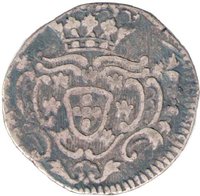
References
KM: #Click to copy to clipboard205
Numista: #45587
Value
Bullion value: $27.76
Obverse
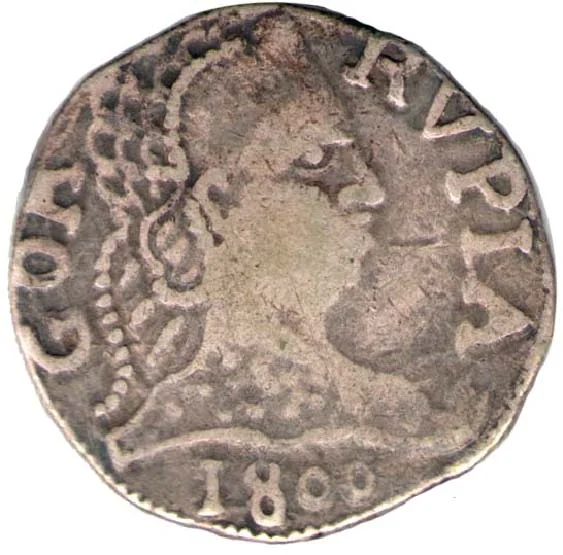
Inscription:
GOA RVPIA
1800
1800
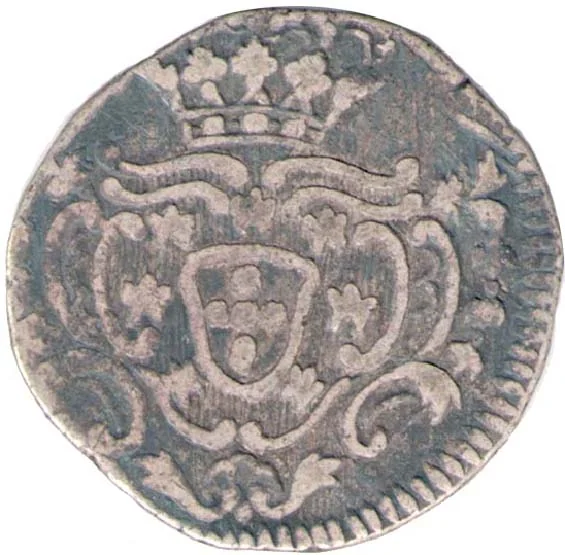
Reverse
Edge
Mintings
| Year | Mint Mark | Mintage | Quality | Collection |
|---|---|---|---|---|
| 1796 | GOA | — | ||
| 1797 | GOA | — | ||
| 1798 | GDA | — | ||
| 1798 | GOA | — | ||
| 1799 | GOA | — | ||
| 1800 | GDA | — | ||
| 1800 | GOA | — | ||
| 1801 | GOA | — | ||
| 1802 | GOA | — | ||
| 1803 | GOA | — | ||
| 1804 | DGOA | — | ||
| 1804 | GOA | — | ||
| 1805 | GOA | — | ||
| 1806 | GOA | — | ||
| 1807 | GOA | — |
Historical background
In 1796, the currency situation in Portuguese India, centered on Goa, was complex and reflected its position as a commercial crossroads and a declining imperial power. The official currency was the Portuguese Indian Rupia (Xerafim), but its value and circulation were unstable. Decades of debasement by the local mint, intended to generate revenue for the cash-strapped administration, had eroded public confidence in the coinage. This created a chronic shortage of reliable specie, hampering both official finance and daily trade.
The vacuum was filled by a multitude of foreign coins, making the territory a de facto multi-currency zone. Most prominent were gold mohurs and silver rupees from neighboring Maratha territories and other Indian princely states, which were trusted for their consistent purity. Furthermore, coins from other European colonial powers, particularly Spanish-American silver reales (the famous "pieces of eight") and British Indian rupees, circulated widely due to Goa's extensive trade networks. This reliance on foreign currency underscored Lisbon's diminishing economic control and the integration of Goa's economy with the wider Indian Ocean world.
Attempts at reform were sporadic and largely ineffective. The Portuguese administration, under the Viceroy D. Francisco António da Veiga Cabral, faced immense fiscal pressure from the cost of maintaining defenses and the impact of the global Napoleonic Wars. While recognizing the need for a stable, standardized currency to facilitate tax collection and commerce, Lisbon lacked the precious metal reserves and local economic strength to impose a uniform system. Consequently, the monetary landscape remained fragmented and insecure, a tangible symptom of Portuguese India's waning power amidst the dynamic economies of 18th-century India.
The vacuum was filled by a multitude of foreign coins, making the territory a de facto multi-currency zone. Most prominent were gold mohurs and silver rupees from neighboring Maratha territories and other Indian princely states, which were trusted for their consistent purity. Furthermore, coins from other European colonial powers, particularly Spanish-American silver reales (the famous "pieces of eight") and British Indian rupees, circulated widely due to Goa's extensive trade networks. This reliance on foreign currency underscored Lisbon's diminishing economic control and the integration of Goa's economy with the wider Indian Ocean world.
Attempts at reform were sporadic and largely ineffective. The Portuguese administration, under the Viceroy D. Francisco António da Veiga Cabral, faced immense fiscal pressure from the cost of maintaining defenses and the impact of the global Napoleonic Wars. While recognizing the need for a stable, standardized currency to facilitate tax collection and commerce, Lisbon lacked the precious metal reserves and local economic strength to impose a uniform system. Consequently, the monetary landscape remained fragmented and insecure, a tangible symptom of Portuguese India's waning power amidst the dynamic economies of 18th-century India.

💎 Extremely Rare