

1 Grosso – Papal States
Vatican City
Context
Years: 1769–1774
Country: Vatican City 
Issuer: Papal States
Ruler: Clement XIV
Currency:
(1534—1835)
Demonetized: Yes
Material
References
KM: #Click to copy to clipboard1055
Numista: #508410
Value
Bullion value: $3.44
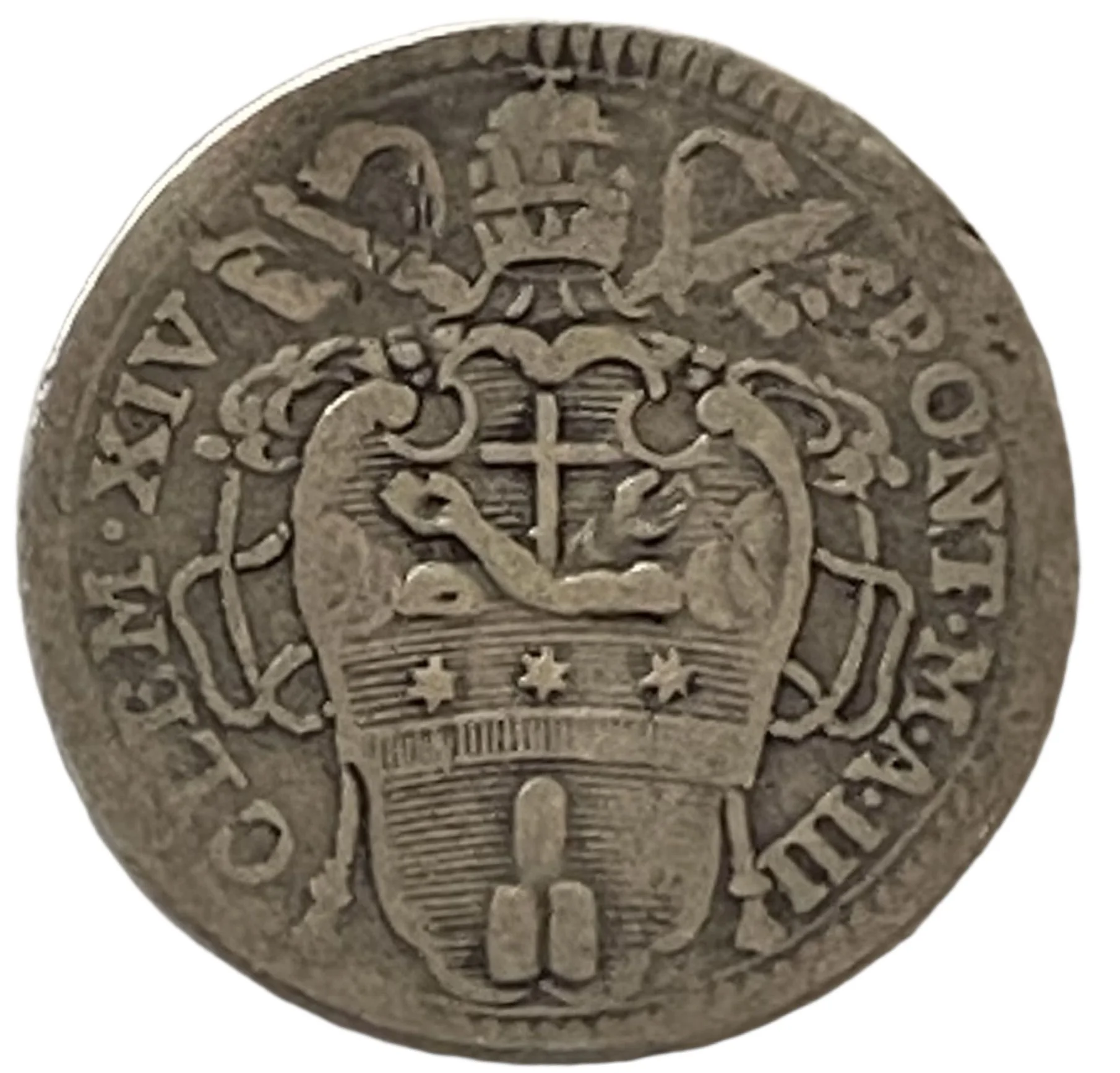
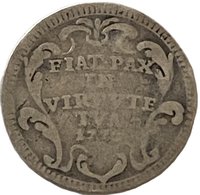
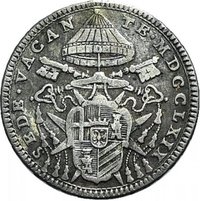
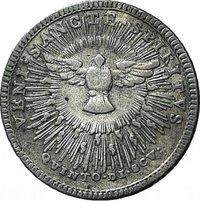
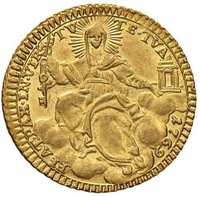
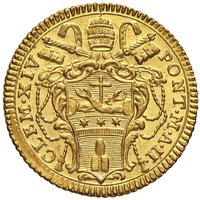
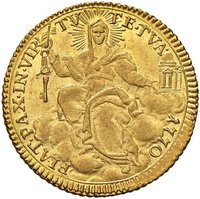
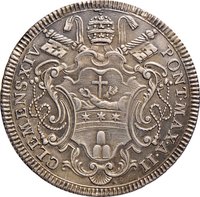
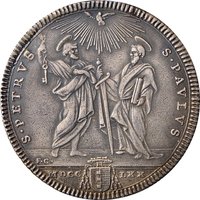
Obverse
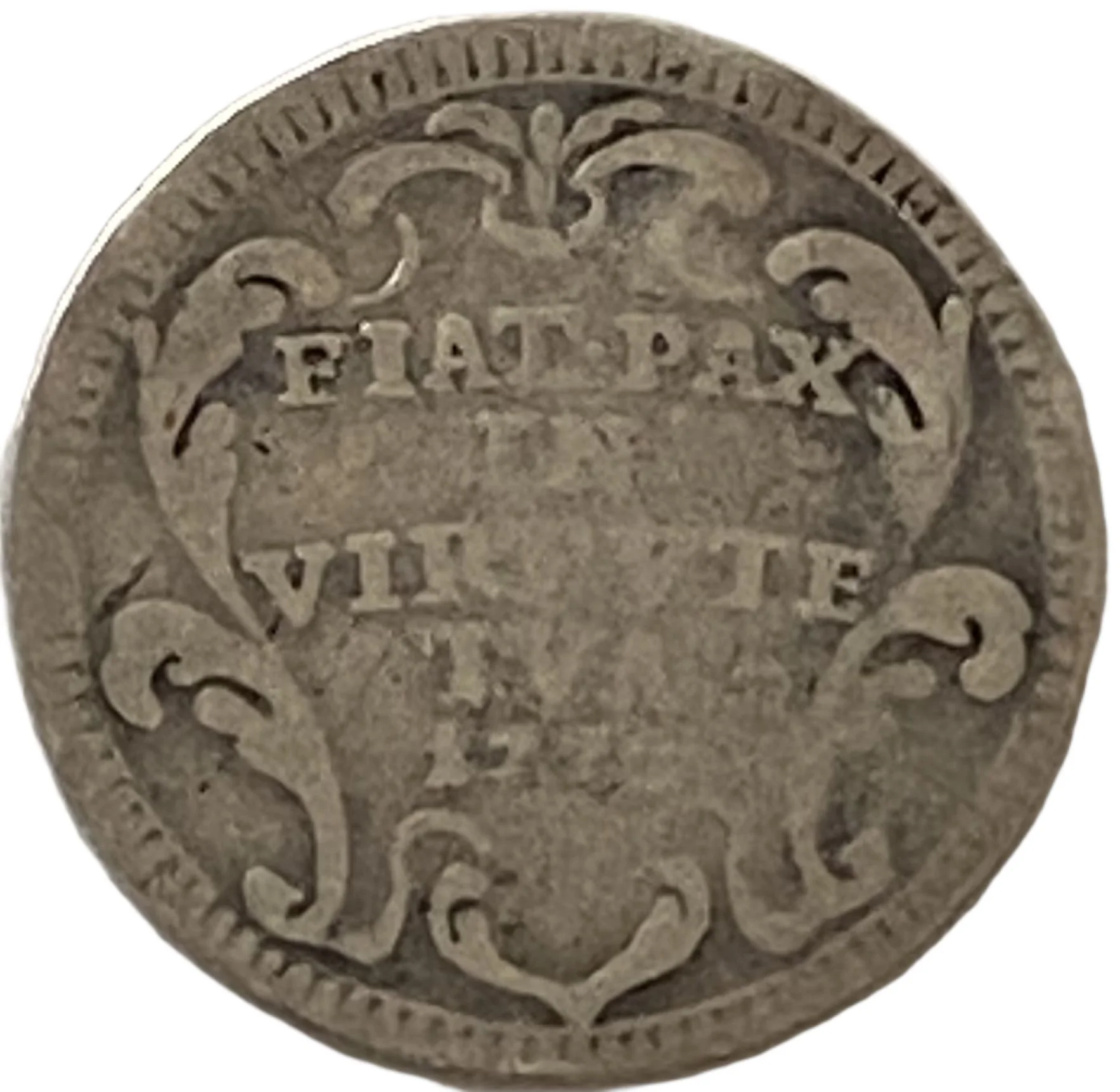
Reverse
Edge
Plain
Mints
| Name | Mark |
|---|---|
| Rome | — |
Mintings
| Year | Mint Mark | Mintage | Quality | Collection |
|---|---|---|---|---|
| 1769 | — | — | ||
| 1771 | — | — | ||
| 1772 | — | — | ||
| 1773 | — | — | ||
| 1774 | — | — |
Historical background
In 1769, the Papal States' currency system was a complex and fragmented reflection of its political and economic condition. The primary unit was the scudo (plural: scudi), which was subdivided into 100 baiochi, each of which was further divided into 5 quattrini. However, the reality was far messier, as various cities within the Papal territories—such as Bologna, Ancona, and Ravenna—often minted their own subsidiary coinage with varying weights and alloys. This created a confusing monetary landscape where exchange rates between local coins and the Roman scudo could fluctuate, hindering internal trade and commerce. Furthermore, the state frequently struggled with debasement, reducing the silver content in coins to finance budgetary shortfalls, which eroded public trust in the currency.
The broader European context placed additional strain on the system. The Papal States were not a major economic power, and its currency was influenced by the monetary policies and bullion flows of its larger neighbors, particularly France and the Spanish-controlled Duchies in Italy. Counterfeiting was also a persistent problem, exacerbated by the long and porous borders of the Papal territories. The treasury, often depleted by the costs of administration and the patronage demands of the papal court, had limited capacity to enforce monetary uniformity or stability.
Pope Clement XIII, who died in February 1769, had presided over a period of significant financial difficulty, and his successor, Clement XIV (elected in May 1769), inherited these monetary challenges. The new pope would soon face pressing fiscal decisions, including the need to fund large-scale public works and service debts. While a comprehensive monetary reform was not an immediate priority in his first year, the unstable and heterogeneous currency system of 1769 represented a fundamental weakness that would require attention, foreshadowing the more centralized reforms that would be attempted by his successors later in the century.
The broader European context placed additional strain on the system. The Papal States were not a major economic power, and its currency was influenced by the monetary policies and bullion flows of its larger neighbors, particularly France and the Spanish-controlled Duchies in Italy. Counterfeiting was also a persistent problem, exacerbated by the long and porous borders of the Papal territories. The treasury, often depleted by the costs of administration and the patronage demands of the papal court, had limited capacity to enforce monetary uniformity or stability.
Pope Clement XIII, who died in February 1769, had presided over a period of significant financial difficulty, and his successor, Clement XIV (elected in May 1769), inherited these monetary challenges. The new pope would soon face pressing fiscal decisions, including the need to fund large-scale public works and service debts. While a comprehensive monetary reform was not an immediate priority in his first year, the unstable and heterogeneous currency system of 1769 represented a fundamental weakness that would require attention, foreshadowing the more centralized reforms that would be attempted by his successors later in the century.
✨ Legendary