

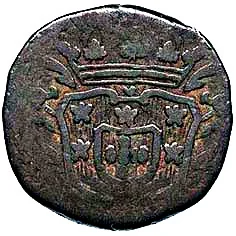
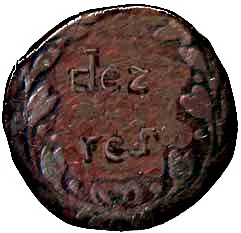
10 Réis – Portuguese India
India
Context
Years: 1750–1760
Country: India 
Issuer: Portuguese India
Ruler: Joseph I
Currency:
(1706—1880)
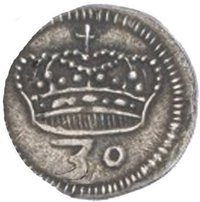
Subdivision: 10 Réis = ⅙ Tanga
Demonetized: Yes
Material
Diameter: 21 mm
Weight: 7.3 g
Shape: Irregular round
Composition: Copper
Magnetic: No
Technique: Hammered
References
KM: #Click to copy to clipboardA119
Numista: #50830
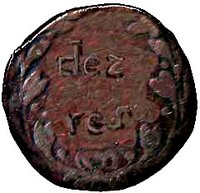
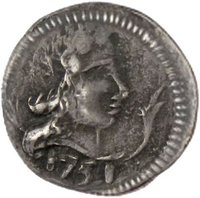
Obverse
Description:
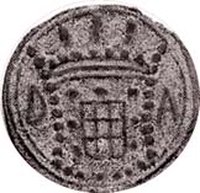
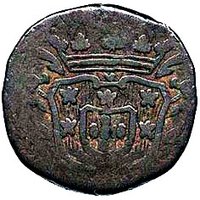
Heraldic emblem
Reverse
Edge
Mints
| Name | Mark |
|---|---|
| Goa | — |
Mintings
| Year | Mint Mark | Mintage | Quality | Collection |
|---|---|---|---|---|
| — | — | — |
Historical background
In 1750, the currency situation in Portuguese India was a complex tapestry of official and unofficial systems, reflecting the colony's diminished economic power and its integration into wider Indian Ocean trade networks. The official currency, minted by the Estado da Índia in Goa, primarily consisted of the gold mohur, the silver rupia (Portuguese rupee), and smaller copper coins like bazarucos and reis. However, the value and supply of these coins were unstable, often debased due to the crown's chronic financial difficulties and the high cost of maintaining its far-flung possessions. The official Portuguese system nominally operated on a standard of réis, but in practice, local transactions were dominated by silver rupees.
The reality on the ground was one of profound monetary pluralism. A vast array of foreign coins circulated freely and were essential for commerce. Most prominent were Mughal silver rupees, particularly those from Surat, which served as a trusted benchmark for high-value trade. Other major currencies included Venetian ducats, Spanish-American pieces of eight (which flowed in via Manila and Macau), and various gold pagodas from neighbouring South Indian kingdoms like Mysore. This de facto system emerged because these foreign coins, especially Mughal rupees, had higher and more consistent silver content and were widely accepted across the subcontinent, making them more reliable for merchants than the often-depreciated local Portuguese issues.
This fragmented currency environment created significant challenges for the Portuguese administration. Exchange rates between the myriad coins fluctuated constantly, leading to confusion, arbitrage, and loss of seigniorage revenue. While the Estado attempted to fix official rates (tábuas de conversão), the market rates dictated by merchants and money-changers (sarafs) invariably prevailed. Thus, in 1750, Portuguese India functioned with a dual monetary reality: a strained official currency system struggling to assert authority, and a vibrant, merchant-driven bazaar economy that operated on the intrinsic value of imported silver and gold, underscoring Goa's commercial subordination to regional and global bullion flows.
The reality on the ground was one of profound monetary pluralism. A vast array of foreign coins circulated freely and were essential for commerce. Most prominent were Mughal silver rupees, particularly those from Surat, which served as a trusted benchmark for high-value trade. Other major currencies included Venetian ducats, Spanish-American pieces of eight (which flowed in via Manila and Macau), and various gold pagodas from neighbouring South Indian kingdoms like Mysore. This de facto system emerged because these foreign coins, especially Mughal rupees, had higher and more consistent silver content and were widely accepted across the subcontinent, making them more reliable for merchants than the often-depreciated local Portuguese issues.
This fragmented currency environment created significant challenges for the Portuguese administration. Exchange rates between the myriad coins fluctuated constantly, leading to confusion, arbitrage, and loss of seigniorage revenue. While the Estado attempted to fix official rates (tábuas de conversão), the market rates dictated by merchants and money-changers (sarafs) invariably prevailed. Thus, in 1750, Portuguese India functioned with a dual monetary reality: a strained official currency system struggling to assert authority, and a vibrant, merchant-driven bazaar economy that operated on the intrinsic value of imported silver and gold, underscoring Goa's commercial subordination to regional and global bullion flows.

✨ Legendary