

½ tanga – Portuguese India
Add to wishlist
India
Context
Years: 1751–1764
Country: India
Issuer: Portuguese India
Ruler: Joseph I
Currency:
(1706—1880)
Demonetized: Yes
Material
Diameter: 12 mm
Weight: 0.6 g
Silver Weight:: 0.60 g
Shape: Irregular round
Composition: Silver
Magnetic: No
Technique: Hammered
References
KM: #
Numista: #49258
Value
Bullion value: $1.51
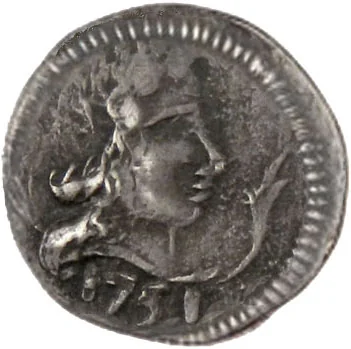
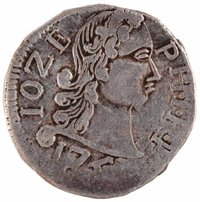
Obverse
Description:
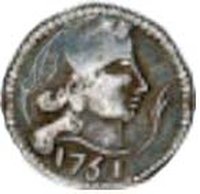
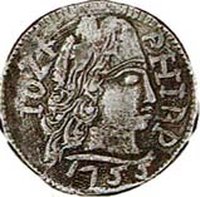
King's bust above date.
Inscription:
1751
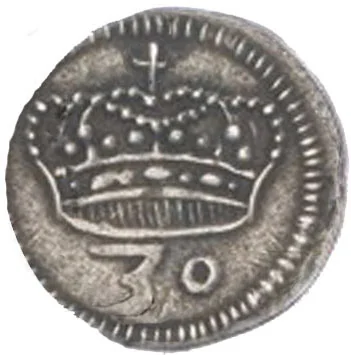
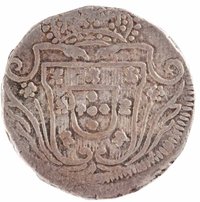
Reverse
Edge
Mints
| Name | Mark |
|---|---|
| Goa | — |
Mintings
| Year | Mint Mark | Mintage | Quality | Collection |
|---|---|---|---|---|
| — | — | — | ||
| 1751 | — | — | ||
| 1755 | — | — | ||
| 1756 | — | — | ||
| 1761 | — | — | ||
| 1764 | — | — |
Historical background
In 1751, the currency situation in Portuguese India, centered on Goa, was a complex tapestry of official and unofficial systems, reflecting the colony's diminished economic power and its integration into wider Indian Ocean trade networks. The official currency was the Portuguese Indian rupia (roupia), a silver coin minted at the Goa Mint. However, its value and circulation were under severe strain. Decades of declining Portuguese imperial fortunes, rampant corruption, and the costly defense of their enclaves against local powers and European rivals like the Marathas had led to chronic debasement. The silver content of the rupia was often reduced to fund the state, undermining public trust in the official currency.
In practice, the economy relied heavily on a multitude of foreign coins, making Goa a vibrant but chaotic monetary bazaar. The most important of these were gold hons from the neighbouring Maratha Empire and silver Mughal rupees, which were widely trusted for their consistent purity. Other currencies in circulation included Venetian ducats, Ottoman sequins, and Spanish-American pieces of eight. This proliferation occurred because Portuguese currency was insufficient for large-scale trade, and merchants, both local and international, preferred the reliability of these foreign coins. The Portuguese administration was forced to acknowledge this reality by publishing official exchange rates (tábuas de cambio) for various foreign coins against the rupia.
Consequently, the monetary landscape was one of official weakness and practical hybridity. The Portuguese state struggled to assert monetary sovereignty, while the market operated on a de facto system of commodity money based on the intrinsic value of precious metals. This situation created significant challenges for tax collection, government accounting, and internal trade, as constant conversion and fluctuating values caused confusion and fraud. Thus, in 1751, the currency scenario was a clear symptom of a colonial power clinging to formal authority while being compelled to operate within economic and monetary systems it could no longer control.
In practice, the economy relied heavily on a multitude of foreign coins, making Goa a vibrant but chaotic monetary bazaar. The most important of these were gold hons from the neighbouring Maratha Empire and silver Mughal rupees, which were widely trusted for their consistent purity. Other currencies in circulation included Venetian ducats, Ottoman sequins, and Spanish-American pieces of eight. This proliferation occurred because Portuguese currency was insufficient for large-scale trade, and merchants, both local and international, preferred the reliability of these foreign coins. The Portuguese administration was forced to acknowledge this reality by publishing official exchange rates (tábuas de cambio) for various foreign coins against the rupia.
Consequently, the monetary landscape was one of official weakness and practical hybridity. The Portuguese state struggled to assert monetary sovereignty, while the market operated on a de facto system of commodity money based on the intrinsic value of precious metals. This situation created significant challenges for tax collection, government accounting, and internal trade, as constant conversion and fluctuating values caused confusion and fraud. Thus, in 1751, the currency scenario was a clear symptom of a colonial power clinging to formal authority while being compelled to operate within economic and monetary systems it could no longer control.
✨ Legendary