

10 kreuzers – Austrian Empire
Add to wishlist
Austria
Context
Years: 1784–1790
Country: Austria
Issuer: Austrian Empire
Ruler: Joseph II
Currency:
(1754—1857)
Demonetized: Yes
Material
References
KM: #
Numista: #50808
Value
Bullion value: $4.82
Obverse
Description:
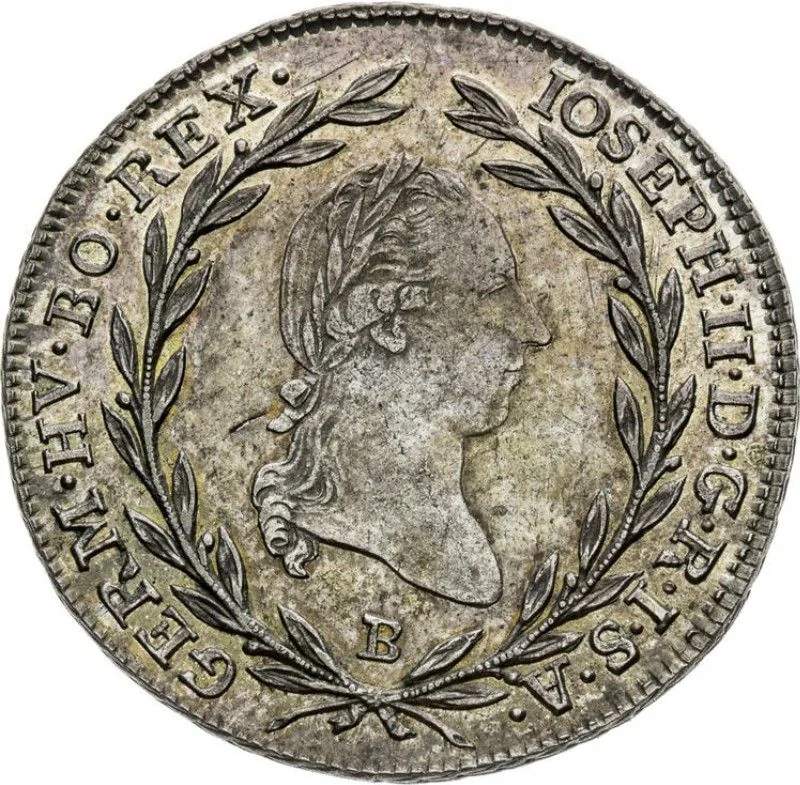
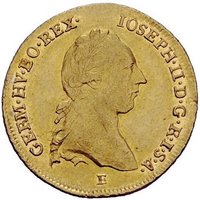
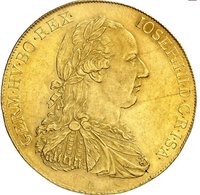
Joseph II portrait right in wreath, mintmark below, legend around.
Inscription:
IOSEPH . II . D . G . R . I . S . A . GERM . HV . BO . REX .
B
B
Script: Latin
Reverse
Description:
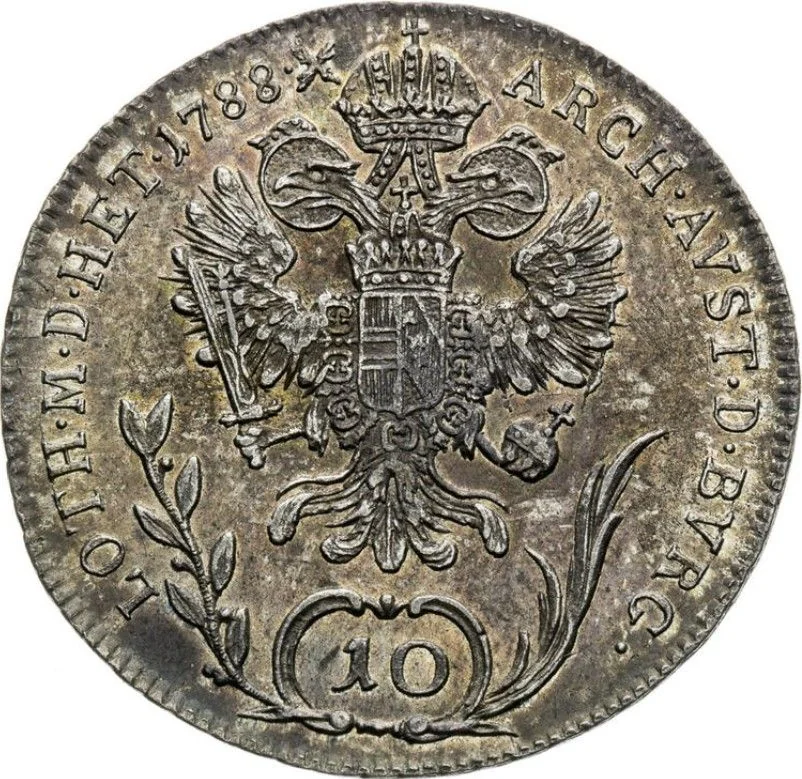
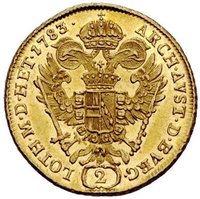
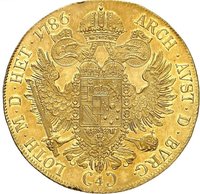
Imperial double-headed eagle with Austria-Lorraine breast shield, framed value below, legend surrounding.
Inscription:
ARCH . AUST . D . BVRG . LOTH . M . D . HET . 1788 X
10
10
Script: Latin
Edge
Plain
Categories
| Symbol> Crown |
| Symbols> Coat of Arms |
| Symbol> Double-headed eagle |
Mints
| Name | Mark |
|---|---|
| Münze Österreich | A |
| Kremnica | B |
| Alba Iulia | E |
Mintings
Historical background
In 1784, the currency situation within the Habsburg Monarchy, often referred to as the Austrian Empire, was characterized by significant complexity and ongoing reform under Emperor Joseph II. The monetary system was a fragmented patchwork, with different regions using distinct conventions and valuations for the same coins. The Empire officially operated on a bimetallic standard based on the Conventionsthaler (a large silver coin) and the gulden (florin), governed by the 1753 Conventionsmünzfuß which set the silver-to-gold ratio. However, in practice, numerous legacy currencies from inherited lands, such as the Hungarian forint and the Austrian kreuzer, remained in circulation, creating confusion for commerce and state administration.
This monetary disarray was a major obstacle to Joseph II’s centralizing and modernizing ambitions. His policy of "Josephinism" sought to streamline the state apparatus and create a unified economic space. A chaotic currency system hindered efficient tax collection, state payments, and internal trade. Furthermore, the state's frequent military engagements throughout the 18th century, particularly the War of the Bavarian Succession (1778-1779) just years prior, had been financed through debt and the debasement of coinage, eroding public trust in the currency's value and fueling inflation.
Consequently, the period around 1784 was one of attempted consolidation and control. Joseph II continued the work of his mother, Maria Theresa, in trying to suppress the circulation of foreign and debased coins while promoting the uniform use of imperial currency. However, these efforts met with limited success due to entrenched regional interests, a lack of sufficient precious metal reserves, and the sheer practical difficulty of recoining the money of a vast, multi-ethnic empire. Thus, while 1784 fell within a pivotal era of attempted monetary reform, the Austrian Empire still grappled with a disordered and unstable currency system that reflected its broader challenges of integration and centralization.
This monetary disarray was a major obstacle to Joseph II’s centralizing and modernizing ambitions. His policy of "Josephinism" sought to streamline the state apparatus and create a unified economic space. A chaotic currency system hindered efficient tax collection, state payments, and internal trade. Furthermore, the state's frequent military engagements throughout the 18th century, particularly the War of the Bavarian Succession (1778-1779) just years prior, had been financed through debt and the debasement of coinage, eroding public trust in the currency's value and fueling inflation.
Consequently, the period around 1784 was one of attempted consolidation and control. Joseph II continued the work of his mother, Maria Theresa, in trying to suppress the circulation of foreign and debased coins while promoting the uniform use of imperial currency. However, these efforts met with limited success due to entrenched regional interests, a lack of sufficient precious metal reserves, and the sheer practical difficulty of recoining the money of a vast, multi-ethnic empire. Thus, while 1784 fell within a pivotal era of attempted monetary reform, the Austrian Empire still grappled with a disordered and unstable currency system that reflected its broader challenges of integration and centralization.
⭐ Somewhat Rare