

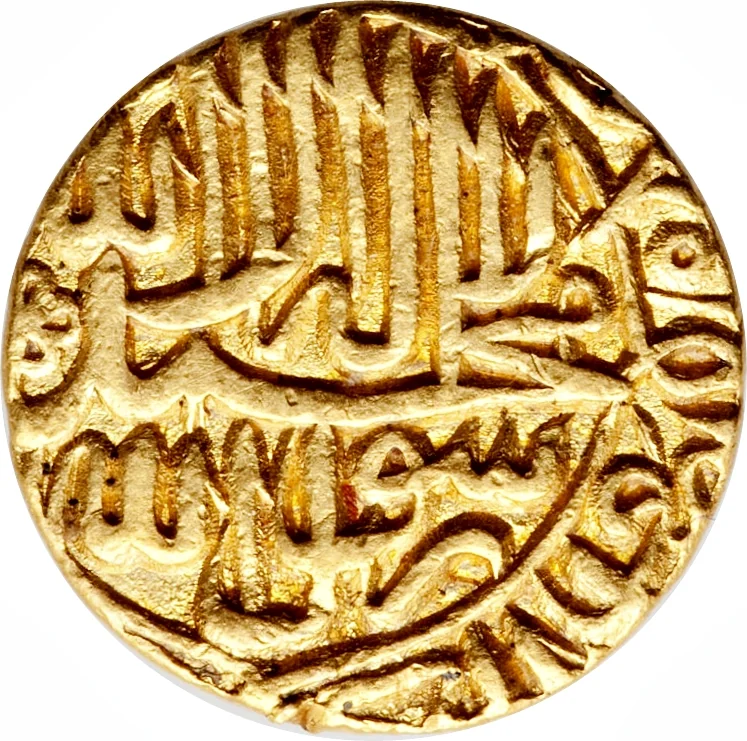
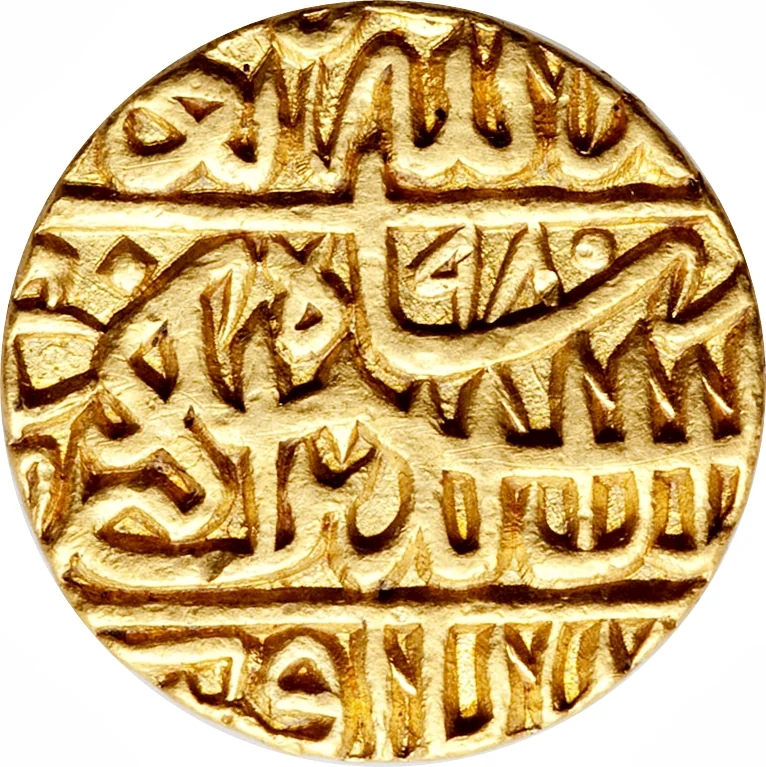
1 Mohur – Mughal Empire
India
Context
Years: 1569–1573
Country: India 
Issuer: Mughal Empire
Ruler: Akbar
Currency:
(1540—1842)
Demonetized: Yes
Material
References
KM: #Click to copy to clipboard106.1
Numista: #50535
Value
Bullion value: $1834.78
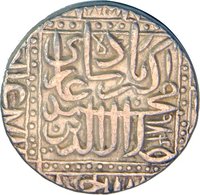
Obverse
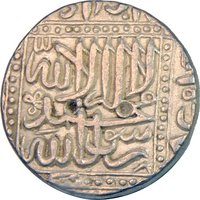
Reverse
Edge
Mintings
| Year | Mint Mark | Mintage | Quality | Collection |
|---|---|---|---|---|
| 1569 | — | — | ||
| 1570 | — | — | ||
| 1571 | — | — | ||
| 1572 | — | — | ||
| 1573 | — | — |
Historical background
In 1569, during the reign of Emperor Akbar, the Mughal Empire's currency system was robust and highly organized, serving as a critical pillar of imperial administration and economic integration. The foundation was the silver rupee (or rupya), a standardized coin of high purity that was the primary medium for revenue collection, large-scale trade, and state expenditure. Alongside it circulated the copper dam (worth 1/40th of a rupee), which facilitated everyday local transactions for the common populace. This bimetallic system, managed through a network of imperial mints (dar-ul-zarb), allowed the economy to function at both the macro and micro levels, linking agrarian tax payments to a centralized fiscal structure.
This period was one of active monetary reform and expansion under Akbar's keen supervision. Having consolidated his power, Akbar was systematically centralizing control over minting rights, which had previously been granted to provincial governors. New mints were established in major cities like Lahore, Delhi, and Ahmedabad, ensuring a wide and reliable supply of currency. The coins themselves were not yet adorned with Persian couplets or the Islamic calendar, as these features would be introduced later; instead, they typically bore the ruler's name and titles in Arabic, along with the place and year of minting, asserting imperial authority across diverse regions.
The stable currency was vital for the empire's growing prosperity, funding Akbar's military campaigns, monumental architecture, and the elaborate mansabdari system—a bureaucratic and military ranking structure where salaries were paid in cash. Furthermore, the reliable rupee became a preferred currency in Indian Ocean trade, attracting merchants and enhancing the empire's commercial reach. Thus, in 1569, the Mughal currency system was not merely a financial tool but a key instrument of political consolidation, economic unity, and imperial ambition.
This period was one of active monetary reform and expansion under Akbar's keen supervision. Having consolidated his power, Akbar was systematically centralizing control over minting rights, which had previously been granted to provincial governors. New mints were established in major cities like Lahore, Delhi, and Ahmedabad, ensuring a wide and reliable supply of currency. The coins themselves were not yet adorned with Persian couplets or the Islamic calendar, as these features would be introduced later; instead, they typically bore the ruler's name and titles in Arabic, along with the place and year of minting, asserting imperial authority across diverse regions.
The stable currency was vital for the empire's growing prosperity, funding Akbar's military campaigns, monumental architecture, and the elaborate mansabdari system—a bureaucratic and military ranking structure where salaries were paid in cash. Furthermore, the reliable rupee became a preferred currency in Indian Ocean trade, attracting merchants and enhancing the empire's commercial reach. Thus, in 1569, the Mughal currency system was not merely a financial tool but a key instrument of political consolidation, economic unity, and imperial ambition.
✨ Legendary