

1 Rupee – Mughal Empire
India
Context
Years: 1568–1578
Country: India 
Issuer: Mughal Empire
Ruler: Akbar
Currency:
(1540—1842)
Demonetized: Yes
Material
Diameter: 25 mm
Weight: 11.34 g
Silver weight: 11.34 g
Shape: Irregular round
Composition: Silver
Magnetic: No
Alignment: Coin alignment
flip
References
KM: #Click to copy to clipboard80.1A
Numista: #302876
Value
Bullion value: $32.89
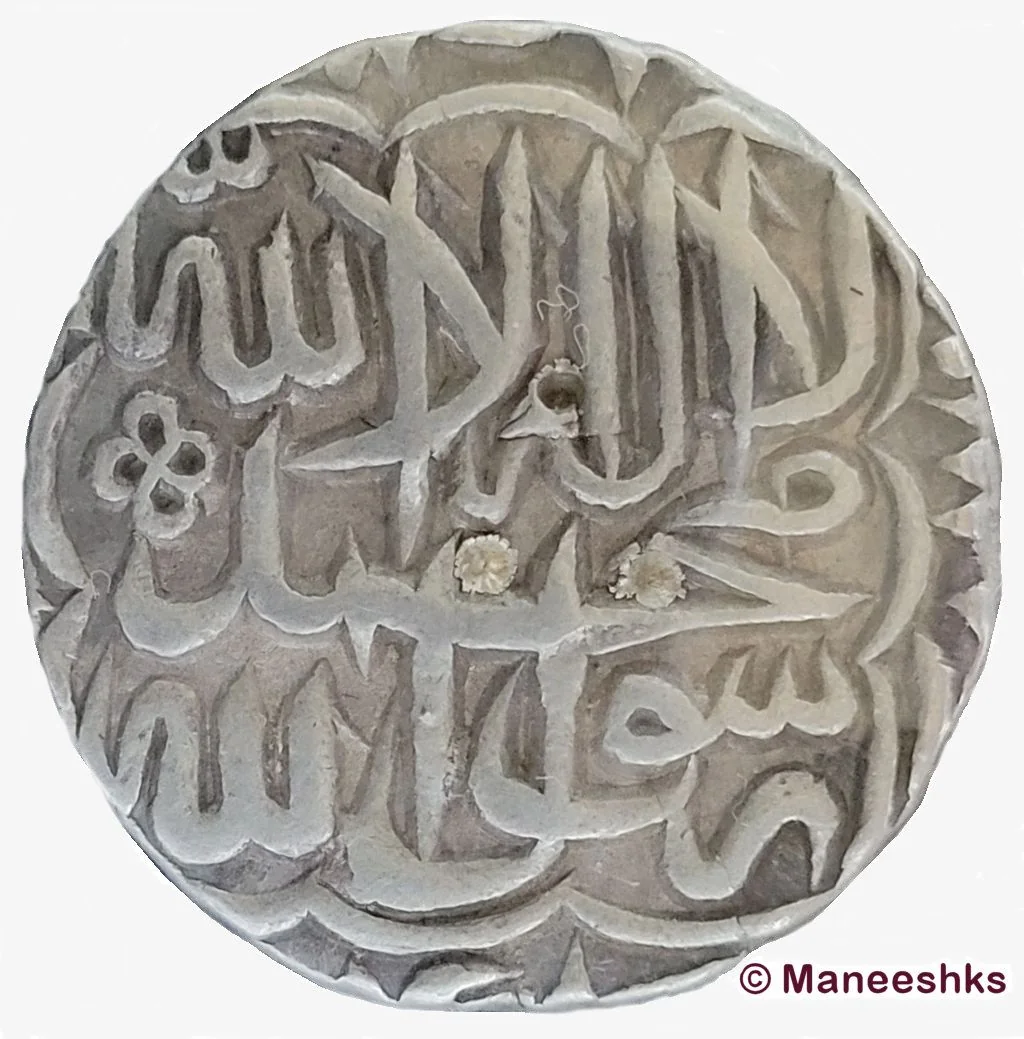
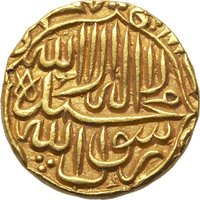
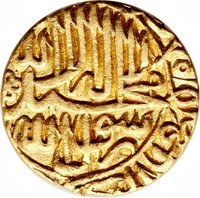
Obverse
Inscription:
Kalima-e-Tayyab: La ilaha illallah Mohammad Rasool Allah
Script: Arabic
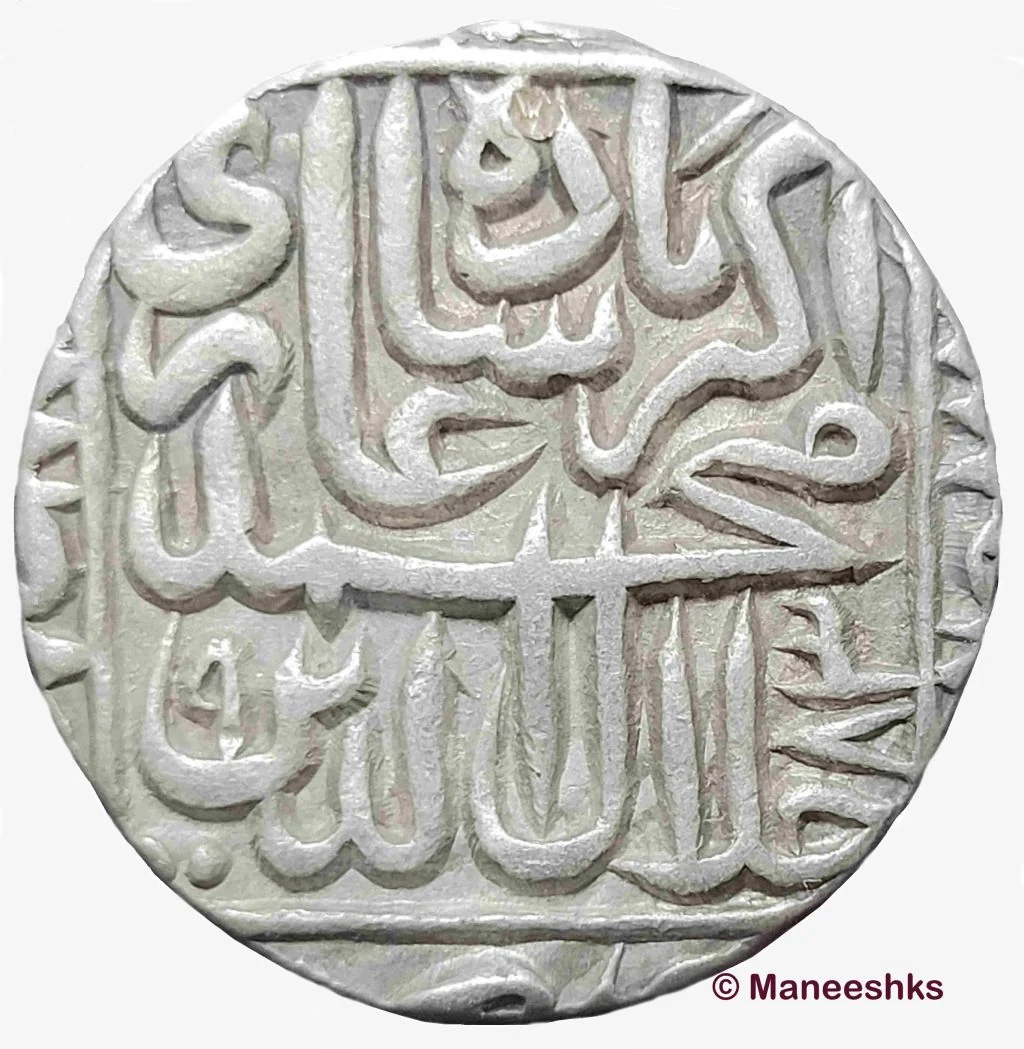
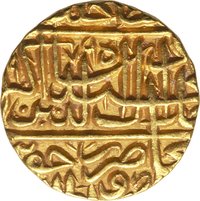
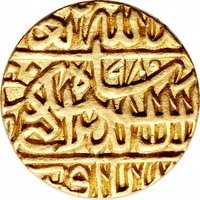
Reverse
Inscription:
Jalal-al din Muhammad Akbar Badshah Ghazi
٩٨٣
٩٨٣
Script: Arabic
Edge
Plain
Mints
| Name | Mark |
|---|---|
| Agra | — |
Mintings
| Year | Mint Mark | Mintage | Quality | Collection |
|---|---|---|---|---|
| 1568 | — | — | ||
| 1569 | — | — | ||
| 1570 | — | — | ||
| 1571 | — | — | ||
| 1572 | — | — | ||
| 1573 | — | — | ||
| 1574 | — | — | ||
| 1575 | — | — | ||
| 1576 | — | — | ||
| 1577 | — | — | ||
| 1578 | — | — | ||
| 1578 | — | — |
Historical background
In 1568, the Mughal Empire's currency system was in a state of consolidation and expansion under the reign of Emperor Akbar (r. 1556–1605). Having recently secured his authority after the Second Battle of Panipat in 1556, Akbar was actively extending his control over northern and central India. The monetary landscape he inherited was fragmented, with various regional sultanates and older Afghan Suri dynasty coinages still in circulation. Akbar's immediate priority was to impose a standardized imperial currency to facilitate administration, trade, and the payment of his vast army, thereby asserting his sovereignty and economic control over newly conquered territories like the Rajput kingdoms.
The foundation of the system was the silver rupee (or rupya), which was becoming the primary unit of account. However, in 1568, the empire was still transitioning from the earlier coinage of the Sur Empire, particularly the fine silver rupya of Sher Shah Suri, which Akbar initially continued to mint with only minor modifications. Coins were struck in gold (mohur), silver (rupee), and copper (dam), with the dam serving as the essential base-metal coin for smaller, everyday transactions. A key feature was the absence of monarchical portraiture; coins were inscribed with pious Islamic inscriptions, including the Kalima, the names of the first four caliphs, and the mint name and regnal year, following the established tradition of Islamic coinage in India.
This period, just before Akbar's major administrative and monetary reforms of the 1570s and beyond, was one of pragmatic continuity. The currency situation was functional but not yet fully unified under a distinct "Mughal" aesthetic or weight standard. The successful collection of land revenue (hasil), often assessed and paid in copper dams, was crucial for the treasury. Thus, in 1568, the currency system was a vital tool for political consolidation, reflecting Akbar's ongoing project of building an integrated imperial economy from a diverse and recently conquered realm.
The foundation of the system was the silver rupee (or rupya), which was becoming the primary unit of account. However, in 1568, the empire was still transitioning from the earlier coinage of the Sur Empire, particularly the fine silver rupya of Sher Shah Suri, which Akbar initially continued to mint with only minor modifications. Coins were struck in gold (mohur), silver (rupee), and copper (dam), with the dam serving as the essential base-metal coin for smaller, everyday transactions. A key feature was the absence of monarchical portraiture; coins were inscribed with pious Islamic inscriptions, including the Kalima, the names of the first four caliphs, and the mint name and regnal year, following the established tradition of Islamic coinage in India.
This period, just before Akbar's major administrative and monetary reforms of the 1570s and beyond, was one of pragmatic continuity. The currency situation was functional but not yet fully unified under a distinct "Mughal" aesthetic or weight standard. The successful collection of land revenue (hasil), often assessed and paid in copper dams, was crucial for the treasury. Thus, in 1568, the currency system was a vital tool for political consolidation, reflecting Akbar's ongoing project of building an integrated imperial economy from a diverse and recently conquered realm.
💎 Extremely Rare